Plan lake shore weed control around the dock route you actually use. Map access, choose suitable tools, collect loose plants, and track routine follow-up work.
Docks can look surrounded by weeds while only a few places cause real trouble. A boat may snag plants during the last turn into its slip. A swimmer may struggle near the ladder. A kayak may need a short opening from shore. Those problems deserve specific fixes, not an automatic decision to clear everything visible.
Start with the movement you want to make easier. Then work backward through the route, plant type, local rules, equipment, and cleanup. This approach gives you a useful project boundary and a way to judge the result. It can also reveal that changing where you enter the water would solve more than removing another patch.
Draw the route before choosing a method
Make a simple overhead sketch of the dock, shore, lift, mooring, ladder, and nearest open water. Add the paths a boat, swimmer, and paddler take. Use separate pencil lines so you can see where activities overlap. The sketch does not need survey accuracy to help you notice a tight turn or an awkward entry.
Walk through each activity with the person who usually does it. A boat operator may need turning space that is invisible to someone standing on shore. A person using the ladder may need a clear landing point and hand support. Do not choose a route only because it makes a neat rectangle on the drawing.
Now write one goal in plain language. For example: maintain a usable route from the kayak entry to open water while keeping the surrounding vegetation. Avoid goals such as making the shoreline perfect. A task with no stopping point is hard to maintain, budget, or explain to the agency reviewing it.
Separate attached plants from drifting material
Before planning removal, find out what you are looking at. Plants rooted along the route, floating-leaf growth, loose cut stems, and surface algae need different responses. A pile that appears after a windy afternoon may have arrived from elsewhere. Removing rooted plants beside it would not necessarily stop that incoming material.
Use the lake weed identification guide to take clear overview and close-up photos. Record where the patch begins, where it reaches the surface, and whether it changes after wind shifts. If identification is uncertain, ask a local aquatic plant specialist before starting a method that could spread fragments.
Mark uncertainty on the sketch rather than filling it with guesses. You can label a patch unknown submerged plant and send that information for review. That is more useful than choosing a treatment for the wrong species. If an invasive plant is suspected, follow local instructions for reporting and handling it.
Keep habitat around the access route
Aquatic plants do useful work near shore. Wisconsin DNR’s aquatic plant guidance describes their role in stabilizing bottom sediment, reducing wave effects, and providing fish and wildlife habitat. It recommends keeping native-plant control focused on high-use access areas when control is necessary. A working route can coexist with plants beside it.
On your sketch, mark areas to leave alone as clearly as the area to work. This helps a helper or contractor understand the boundary. A short note such as keep the vegetation beyond the ladder route gives better direction than clear around the dock. A photo with a marked boundary can be even easier to discuss.
Review the route when water levels change. A path that worked earlier may become shallow or awkward later. Do not simply expand the removal area to follow the water without checking whether the approval covers the change. Revisit the access design first, especially if the planned route now crosses a different plant community.
Check plant rules separately from dock rules
Having permission for a dock does not automatically authorize plant removal beside it. Minnesota DNR’s dock guidance treats aquatic plant removal as a regulated activity under a separate program. It also asks owners to place docks and lifts without interfering with neighbors’ use of the water. These are related planning questions, but they are not the same approval.
State rules can depend on the method, plant, location, and area. For example, Wisconsin’s plant-management permit guidance describes a limited manual-removal exemption around a dock and lists situations where a permit is still needed, including wild rice, sensitive areas, and other conditions. Do not transfer a rule or measurement from one state to another.
Send the agency your map, photos, intended method, and proposed dimensions. Ask how the boundary should be measured and whether earlier work counts toward the allowed area. Also ask about material disposal and any seasonal limits. Keep the reply available for whoever performs the work, especially when a family member or contractor takes over later.
Choose the smallest workable task
Break the project into tasks rather than shopping for a single device to do everything. You may need to gather loose material, remove selected rooted plants, collect fragments, and carry the material to a disposal point. A tool that reaches the far side of the dock may still be awkward to unload from that position.
For a limited manual project, check your reach, balance, and retrieval path before buying. Can you work from a stable position? Can you draw a loaded tool back without catching dock hardware? Where will wet material go as it comes out? If the job requires leaning far over the edge or entering uncertain footing, change the plan or use qualified help.
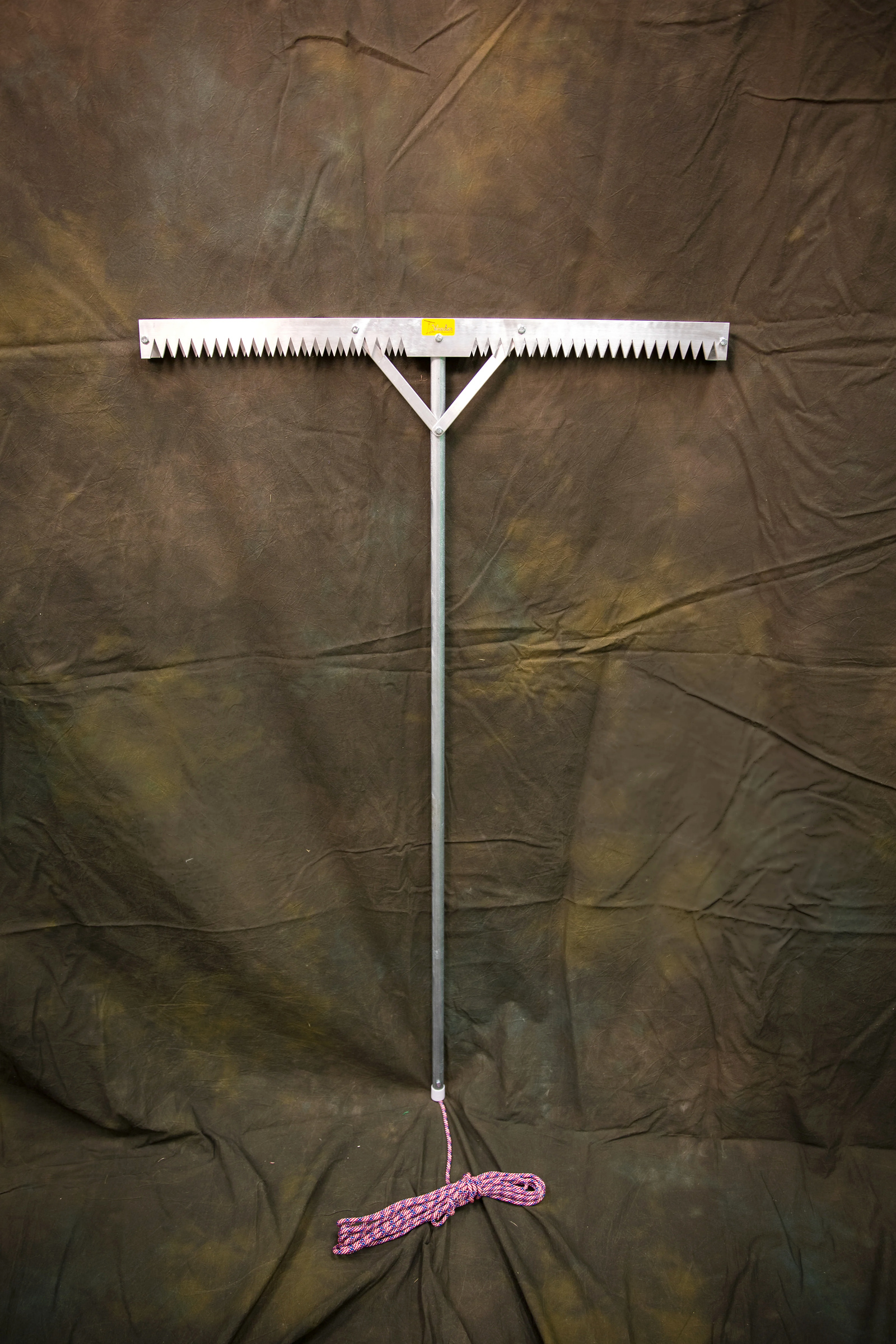
The lake weed rake buying guide explains how to compare tasks and reach. If the approved work suits a hand tool, compare the T-Weeder Tool and order one for your dock maintenance plan. Match its design to your route and collection needs. Choose it because the task fits, not because every plant beside a dock is treated the same way.
Keep work away from active dock traffic
Pick a time when the work area can stay clear of swimmers and moving boats. Tell everyone using the dock where the task begins and ends, where equipment will be placed, and when normal use can resume. Do not rely on a person noticing a tool or a rope in the water.
Clear the walking surface of loose lines and piles of plants as you go. Keep retrieval lines out of travel routes and handle tools according to their instructions. If a tool catches something solid, stop and identify the obstruction rather than pulling harder from an unstable position. Dock supports, utility lines, and mooring gear should already be marked in the work plan.
Watch conditions during the job. Changing wind, boat wakes, poor visibility, or worsening footing can make a previously manageable task unsuitable. Stopping at the planned boundary is part of doing the job well. You do not need to finish every patch in one visit if conditions no longer support safe work.
Make collection part of the removal pass
Cutting or pulling is only part of the work. Minnesota DNR’s plant-control explanation says mechanically controlled plants must be taken out of the lake for proper disposal. The broader practical lesson is to plan where loose material will go before creating it. A clear route should not leave a drifting pile for the next dock.
Set up the collection point on land where drainage and handling are manageable and material cannot readily wash back into the lake. Confirm local requirements for the plant and destination, especially for invasive species. Do not assume that hauling a wet pile to another property, compost site, or public bin is allowed.
Check beneath and downwind of the dock before calling the task finished. Work in small enough portions that you can keep up with the fragments you produce. Record cleanup time separately from removal time. That number often reveals whether the current method is practical for the person maintaining the area.
Use a short follow-up log
After the first session, record the date, method, work area, time spent, material collected, and whether the route was usable. Add a photo from the same shore position each time. A quick record helps distinguish regrowth from a fresh drift of plants and makes future advice more specific.
Choose the next inspection based on what you observe and any permit or contractor instructions. There is no single interval that fits every lake. Check sooner when the route changes quickly, and review it after notable wind or water-level changes. The purpose is to catch a small access problem before it becomes a rushed weekend cleanup.
If the same place repeatedly becomes blocked, revise the diagnosis. Is the material arriving from outside the work area? Is the route too close to shallow growth? Is the selected tool leaving more loose material than you can collect? A larger cleared area is only one possible response, and it may not address the cause.
Reduce repeat work through better placement
When a dock or entry is due for redesign, consider the natural site before asking for more plant removal. University of Minnesota Extension’s recreation guidance recommends choosing access locations that limit shoreline changes and avoiding disturbance to aquatic plant beds. Use that principle when discussing options with a dock professional and the responsible agency.
For an existing dock, even a planning conversation can help: which side receives drifting plants, where the ladder meets suitable water depth, and whether the current boat position forces a tight turn. Moving a structure may require its own approval, so compare approved options before changing anything. Keep neighbors and shared users involved when the layout affects their access.
Finish with a defined route, an allowed method, a collection plan, and a named person responsible for follow-up. Our lake weed removal guide can help organize the full job. For more access-specific topics, browse Docks, Swimming and Shorelines. The useful result is a route that works and a maintenance plan you can repeat.
If loose material keeps gathering beside the dock, read what lake weed blowers actually move before choosing equipment. It helps separate local debris movement from collecting plants and removing them from the lake.
Related planning guides cover a focused swim-access area, work near a boat lift, and work around boats and busy docks. Each setting adds different access and coordination questions.
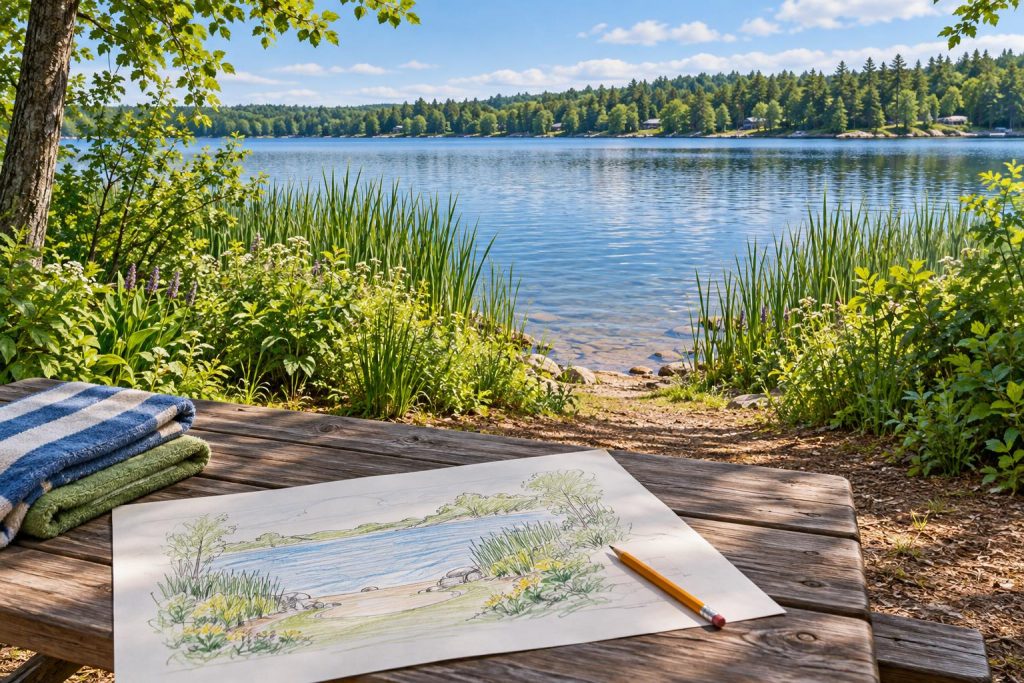
Featured image: AI-generated illustration of a dock and a limited access route through aquatic vegetation. It shows a planning concept, not a permitted design or a photograph of completed work.