
Plan lake weed control around a swim area, clear entry, and plants worth keeping. Check water safety and all local rules before changing the lake shoreline.
Planning starts with the way people will reach and use the water. A family may need one clear entry and room to stand near it. That does not mean every plant along the property must go. A small, well-defined project is easier to explain, review, and maintain. It also makes it easier to notice when the work has grown beyond its goal.
Define the swim area before choosing a tool
Write down the main use in one sentence. For example: the goal is an entry for adults who want to swim from shore, away from the dock and boat traffic. That sentence says more than a wish for a clean beach. It helps you judge locations and decide which tasks matter.
List the people who will use the area and the help they need. An easy entry for a strong adult swimmer may not serve a person who needs stable steps or close support. A shoreline that works for looking at the water may not work for swimming. Be willing to choose another access point or a managed beach if the site cannot meet those needs.
Do not choose the project size from a tool’s reach or a package’s coverage. Start with the smallest useful footprint. Then check whether the location and proposed work are allowed. A large purchase should not become a reason to expand the swim area.
Draw three simple zones
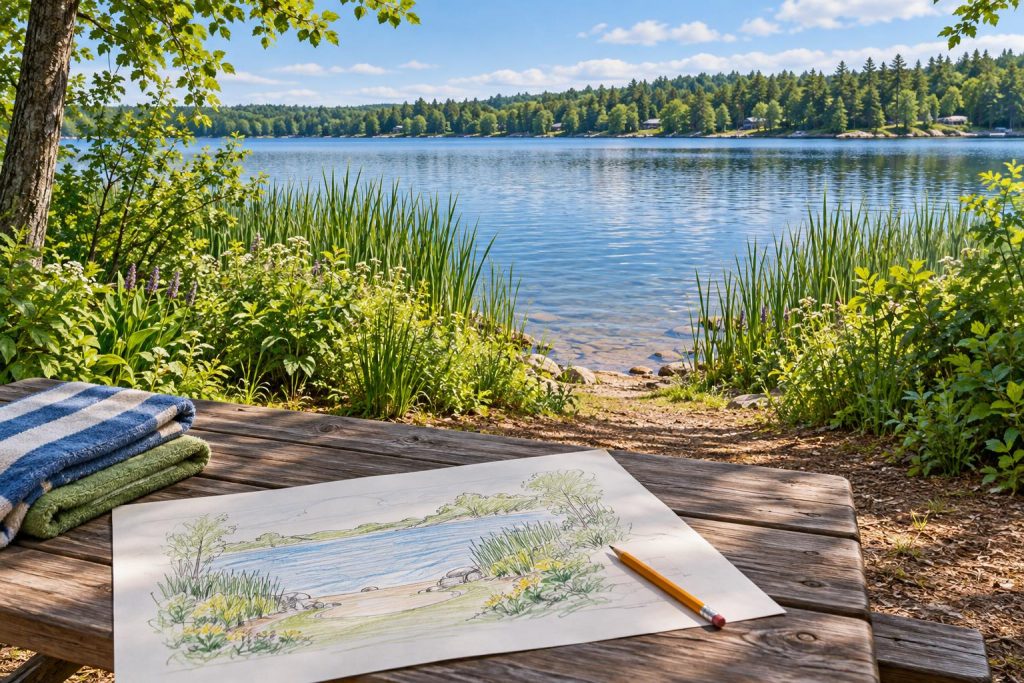
Make a rough sketch from a dry, stable viewing point. Show the path from the house, the water entry, nearby plant beds, and the place people will rest. Add the dock, lift, moored boats, drains, and any known change in depth. Label unknown areas as unknown. A neat drawing is less useful than an honest one.
Use three zones on this plan: access, swimming, and plants to retain. The access zone includes the land route and entry. The swimming zone describes the intended use, subject to safety and local review. The retained zone marks beds you do not plan to disturb. These are planning marks on paper, not instructions to install ropes or buoys in the lake.
Mark a separate spot on land for tools and collected plants. Keep it out of the path people use with bare feet. Also think about how a helper would reach the shore without stepping over wet ropes or bags. A worksite and a swim area have different needs, even when they occupy the same space on different days.
Keep useful plant beds in the plan
Aquatic plants do important work. They give fish and other animals shelter, help hold the lake bottom in place, and reduce the force of waves. Wisconsin DNR explains these roles in its guide to aquatic plants and lake management. The agency generally discourages removal of native plants except where access or other high-use areas justify limited work.
On your sketch, put a clear edge around the proposed work. Use existing landmarks in photos to show that edge. Do not assume an entire bed is unwanted because its outer stems touch the entry. Ask for plant identification when you are unsure. The shape of a leaf alone may not answer whether a plant is native, invasive, or protected.
A useful success measure is that people can use the agreed entry while the marked beds remain intact. A plant-free view is a different goal and may call for much more disturbance. Discuss that difference with anyone who shares the property before a weekend project starts.
Check hazards that weed removal cannot solve
Plant cover is only one part of a swim-site review. Unknown depth, soft footing, sharp debris, boat traffic, and nearby equipment still matter after stems are removed. Do not enter unclear water to discover whether the bottom is suitable. Have the site assessed by someone qualified for the conditions when you cannot check it safely from shore.
Electric power deserves separate attention. Michigan DNR warns about electric shock drowning near powered boats and docks. Faulty wiring can put current in the water. Its guidance says not to enter water near a marina or dock and calls for qualified electrical help. A cleared patch next to a powered lift is not proof of a suitable swim location.
Keep the swimming plan separate from the boat route. Consider how people arrive, turn, tie up, and leave on busy days. If those movements cross the proposed swim area, revise the plan. Plant removal cannot make a conflict between swimmers and boats disappear. Our dock weed-control guide helps you assess access needs around the structure itself.
Build water quality and supervision into each visit
The water’s appearance does not prove that it is fit for swimming. Before a visit, check whether the area is monitored and whether an advisory or closure is in effect. CDC’s natural-water swimming guidance stresses this check, especially after heavy rain. It also advises staying out when water looks unusually cloudy, discolored, or smells bad, and near draining pipes.
Save the local beach or health department’s page with your project notes. Include a backup activity for days when conditions change. That small step reduces pressure to swim just because guests have traveled or cleanup took effort. A weed project should never be treated as a water-quality test.
CDC’s drowning prevention guidance calls for close, constant adult supervision of children near water. It recommends life jackets for children in and around natural water and for weaker swimmers. Pool toys are not safety devices. Swimming lessons and a clear view do not replace supervision.
Decide who will supervise before anyone goes near the water. Make handoffs explicit when that adult needs a break. Put emergency contact information and the site’s location where visitors can find them. These tasks belong on the swim-area plan alongside plant work, even though no weed tool can do them.
Check the rules for the exact footprint
Take the sketch and plant photos to the agency that manages aquatic plants in your area. Ask about the specific species, location, size, method, and timing. Describe whether the work affects rooted plants, stems above the water, or loose material. Also ask about disposal and any separate rules for shore changes.
Wisconsin provides one example of why details matter. Its aquatic plant guidance lists several activities that need permits and advises contacting the local plant-management coordinator before work. That example is not a rule for every state. Nor does a small project automatically qualify for an exemption.
Keep the written reply, approved map, and any permit conditions with your plan. If the proposed area changes, check again before expanding it. The lake may have a management plan or habitat area that is not obvious from the property line. Shared ownership also does not by itself settle public-water rules.
Choose a method after the site review
Once the site and scope are settled, compare methods for the actual plants and access problem. A limited manual project, a professional treatment, and a barrier each involve different tasks. None should be chosen only because a neighbor uses it. The plant type, bottom, work access, and local approval all affect the choice.
Our small swim-area method comparison takes that next step in more detail. If treatment is proposed, use the exact product label and local requirements to plan water use. The swimming restrictions guide explains why there is no single wait time for all products and uses.
For a permitted manual project, compare tool handling from the position you can safely use. Include the wet load, collection method, storage, and follow-up work in the choice. View the T-Weeder Tool and order one if its listed design fits your planned work. Buying a tool does not change a permit boundary or make an unsuitable entry usable.
Plan cleanup before the first work session
A project is not finished when stems leave the target spot. Decide how material will be collected, carried, and placed in an allowed location. Keep wet plants away from the entry and out of routes used by neighbors. Ask about local disposal and transport requirements before loading a vehicle.
For the first session, choose a small part of the approved area. Record how long setup, work, and cleanup each take. Include breaks and tool care. This gives you a useful estimate for the rest of the job without turning the first day into a test of endurance.
Pause when the task changes. Examples include finding an unknown cable, uncovering sharp debris, losing sight of the bottom, or needing to reach farther than planned. Record the problem and get the right help. Do not let a short list of weeds become an unplanned repair, dredging, or diving job.
Review the area by use, not by bare ground
After the work, compare the site with the original sketch. Are the retained beds still outside the work area? Can people reach the planned entry without crossing stored equipment? Is collected material dealt with? What remains unknown? These checks are more useful than judging the result from a distant photo.
Keep dated photos from the same shore position. Note plant return, drifting material, water levels, and any change in how the area is used. If maintenance keeps expanding, revisit the location and goal. The answer may be a smaller project, a different entry, or professional advice rather than a larger tool.
Share a short explanation with guests: where swimming is planned, who supervises, which areas are off limits, and where to check current conditions. Browse the Docks, Swimming and Shorelines guides for related access planning. A useful plan leaves room for both lake plants and the people who enjoy the shore.
For other shared access needs, see keeping a kayak launch route small and agreeing on a shared shoreline project. Define the route and responsibilities before expanding the work area.
The featured image is an AI-generated planning illustration. It does not show a tested swim site, a completed weed-removal project, or a guarantee of water safety.

