A lake weed blower moves water and loose material. Learn what it can shift, what stays rooted and how to judge results before buying one for your shoreline.
Shoreline equipment often comes with a simple promise: keep the dock area clear. The word clear can mean several things. It may mean fewer floating leaves, less scum beside a boat, fewer rooted plants, or less soft mud underfoot. Those are different jobs. A water mover cannot be judged well until you choose one.
This guide focuses on the result of using a lake weed blower. It explains what may move, what a cleaner view cannot prove, and what to watch beyond your own dock. It is a planning guide, not an installation guide or a review based on product testing.
Start with the material you want to move
Look at the nuisance from shore before you shop. Does it drift across open water? Does it rise from a fixed patch on the bottom? Does it look like leaves, broken stems, tiny floating plants, or a surface film? Take photos on more than one day. Note the wind and whether boats recently passed.
Loose material can gather where currents slow. That pile may have grown elsewhere in the lake. A rooted bed is different. Its stems may bend in a current while the plants remain attached. Moving the leaves at the surface does not show that roots were removed.
Use our lake weed growth-form guide to sort the broad groups. Ask a local plant expert for help when the identity is unclear. A shopping term such as lake weeds is too broad to tell you whether a blower suits the job.
A blower usually means a water mover
In this setting, blower is often a sales name for equipment that creates a current underwater. It is not usually a fan that blows air across the lake. Names such as circulator, thruster, and water mover may describe related designs. Check what the actual model does.
For example, Kasco describes its AquatiClear as a water circulator intended to move floating debris and algae from local waterfront areas. That is the maker’s description of the product category. It is not an independent test of performance at your dock.
Ask the seller to explain the path of the material. Does the machine collect anything in a container for shore disposal? Or does it move material into other water? If the answer is the second, the task is local displacement. This can be useful in some settings, but it is not the same as removing plant material from the lake.
Separate a cleaner surface from a changed bottom
A bright patch of water beside a dock may look like a clean beach. The bottom can still be soft, steep, rocky, or covered with rooted growth. Judge the surface and the lakebed as separate parts of the site. Do not use a photo of open water as proof that the footing is firm.
The University of Florida’s guide to lake muck describes how water currents move sediment and where it settles. Some devices shift that material to another part of a basin. The material has changed location; it has not vanished. Where it settles depends on the lake and its currents.
That distinction matters if your true goal is to change bottom depth. Write down whether you want fewer leaves at the surface or less sediment underfoot. If you need to assess both, our guide to lake weeds and muck can help separate the work. Ask the local water agency about sediment work before attempting it.
Find out what happens beyond the dock
Draw a simple shoreline sketch. Include nearby docks, swim ladders, boat routes, inlets, and places where leaves already collect. The sketch does not need exact engineering detail. Its purpose is to show who and what may be affected if debris moves away from your starting point.
Consider a common example. Leaves collect beside a boat on a quiet morning. A current moves them past the bow, so the berth looks better. Later they settle near a shared ladder. The first goal was met locally, but the shared access problem grew. A useful result must account for both places.
Talk with neighboring owners before a trial that may affect their frontage. Agree on what each person will watch and whom to contact if a problem appears. A shared conversation does not replace a permit or grant rights over someone else’s shore. It can still reveal concerns that a sales photo will never show.
Check the rules for what the device will actually do
Rules can depend on the mounting point, waterway, bottom effects, and use of the unit. The word blower on a product page does not settle those questions. Send the agency the model details and your site sketch. Explain whether you aim to move floating material, disturb plants, or shift sediment.
As one state example, Wisconsin DNR sets conditions for mixing devices. Its listed exemption requires a legal supporting structure, no bottom disturbance, an underwater discharge, and no problems for other lake users or neighbors. Jetting sediment is treated as dredging and requires a separate permit. These are Wisconsin rules, not national approval.
Get the answer before purchase when the site is doubtful. Keep the agency’s response with the model manual and any permit. A change in aim, mounting, or intended work may change the review. Ask again if the final plan differs from the plan that was assessed.
Do not use surface appearance as a health test
Surface algae can be unpleasant, but appearance alone does not tell you whether a bloom contains toxins. A blower should not be treated as a way to make a posted beach safe. Moving visible material also does not cancel a swim advisory.
The CDC explains that looking at a bloom cannot show whether it is harmful. Follow local health notices, and stay out of water with signs of a harmful bloom. Keep pets away too. Get advice from the local health or water agency about a suspect bloom.
Choose a result you can honestly observe. Fewer drifting leaves beside a boat is an observation. Safe water, toxin removal, or improved whole-lake health would require different evidence. Keeping those claims separate helps you judge a demonstration without expecting it to answer questions it cannot answer.
Set up a useful record before any approved trial
Take photos from the same dry viewing spot before the trial. Record the date, recent rain, wind direction, and the problem area. A rough count of blocked access points may be more useful than an estimate of total lake weeds. Use measures that match the reason you are considering the machine.
For a boat berth, note how often drifting material blocks the usual entry area. For a dock corner, note where the loose pile forms. Keep a record of cleanup time as well. A small notebook can show whether the new approach reduces work or merely changes when you do it.
During an approved trial, have the installer or operator follow the model instructions. Compare results in similar conditions when possible. A windy day and a calm day may look different even without a machine. Do not credit every change to the equipment. Record changes outside the target area too.
Agree on reasons to stop and get advice. Examples include a new sediment cloud, debris gathering at another access point, a loose mount, or a damaged cord. A trial is useful only if someone can respond to a problem. Do not leave an unfamiliar setup running while everyone is away.
Account for power, service, and daily use
Ask for the full cost of the approved setup. The base unit may be only part of it. Mounts, controls, suitable power, installation, winter storage, and service can affect the total. Ask which tasks the owner can do and which need a trained person.
Waterfront power deserves its own review. Michigan DNR’s electric shock drowning guidance warns about faulty wiring near water and recommends qualified electrical help and suitable protective devices. Do not plan to swim near energized dock equipment. Follow the manual and local electrical requirements for the entire site.
A remote control does not remove the need for oversight. Decide who checks the unit after storms, changing water levels, or dock work. Keep the shutdown method clear to the people responsible for it. Ask how the unit is retrieved for service without unsafe entry into the water.
Compare with a small, targeted cleanup plan
A blower may be worth assessing when loose material is the main issue and the site permits its use. It may offer little value when a few rooted plants block a narrow route. The least complicated plan that meets your access goal deserves a fair comparison.
For a permitted manual project within safe reach, a hand tool may let you collect plant material for removal. Plan the collection and disposal before you begin. A powered water mover does not replace that step when your goal is to carry weeds out of the lake.
Compare the T-Weeder Tool and order one for your planned manual project if its reach and design fit your site. Check the product details and local removal rules first. It is a tool to consider for suitable manual work, not a treatment for algae blooms or a machine for removing deep sediment.
Keep your final choice tied to a specific job. Write down the target, the allowed method, who will do the work, and how you will judge it. For more equipment comparisons, explore our weed mats, rollers, and blowers guides. A good decision starts with the material and the site, then moves to the machine.
If a water mover still seems worth considering, use the fan and thruster site checklist before requesting a quote. It covers depth changes, mounts, power, and shared water access that a surface-debris comparison cannot settle.
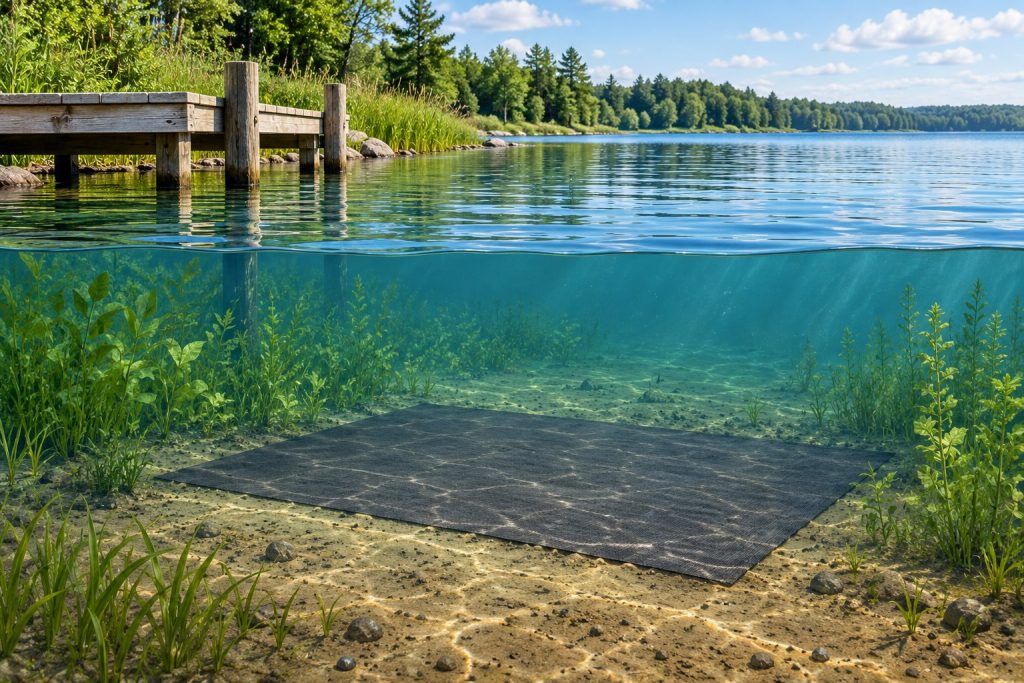
Featured image: AI-generated conceptual illustration of floating leaves beside a dock. It does not show a product test, a blower installation, or a measured cleanup result.