A lake weed puller can lift stems while leaving roots behind. Learn when hand pulling fits, how to judge results, and what to check when these weeds return.
Pulling up a plant can feel more complete than cutting its top. Sometimes it is. But what comes out of the water is only part of the evidence. A long stem may have broken near its base. A bundle with roots may still leave other parts behind. Some underwater plants do not have true roots at all.
The useful question is what hand pulling removes from the plant you actually have. This guide shows how to judge that result and decide whether a lake weed puller belongs in your plan.
Separate a clear path from complete plant removal
Start by naming the result you need. Clearing a short access route is one goal. Removing a small, confirmed target plant while leaving nearby plants intact is another. Proving that the plant is gone for good is a much larger claim.
The University of California aquatic weed project describes hand pulling as useful for small populations and individual plants found during surveys. It also stresses the need to remove plant parts that can regrow. That supports a careful, focused job with follow-up. It does not promise lasting control from a single pull.
Keep those outcomes separate in your notes. You may restore the launch route without removing every growth-producing part. That can still meet the access goal, provided the method fits the plant and local plan.
Know what people mean when they say roots
In casual conversation, “roots” often means everything below the green stem. Plant guides are more precise. Knowing a few terms helps you understand why the same pulling method can have different results.
- Roots help anchor a plant and take up water or nutrients.
- A root crown is the area near the plant’s base where roots and shoots meet.
- A rhizome is a stem that grows along or beneath the bottom and may produce new shoots.
- A tuber is a swollen storage structure that can support later growth.
- A turion is a compact bud that can survive a resting period and start new growth.
Not every aquatic plant has all these parts. You do not need to memorize the list. Ask which ones matter for your identified plant and what they look like. Then judge the removed material against that answer instead of assuming that any brown piece is a root.
Three plants show why the distinction matters
Coontail is a useful exception. The Minnesota DNR coontail description states that it grows underwater without roots. It can also regrow from fragments. Searching for coontail roots is therefore the wrong way to judge the task. Its growth form calls for a different set of observations.
Hydrilla presents another issue. The UF/IFAS hydrilla management guide explains that tubers can remain after hand pulling and lists both fragmentation and the difficulty of removing tubers among the method’s limits. A bundle of pulled stems does not show that the underground supply of new growth is gone.
Curly-leaf pondweed adds a seasonal clue. Rutgers Extension’s curly-leaf pondweed guide describes growth from rhizomes and turions, which are resting buds. A later return can involve those structures rather than a failure to pull the visible stalk firmly enough.
These examples are reasons to ask plant-specific questions. They are not a suggestion to test removal on a suspected invasive plant. Confirm the identification and the approved response first.
Judge whether you can work selectively
Hand pulling is most useful as a selective method when you can tell the target from the plants around it. “Selective” means choosing which plants to remove and which to leave. A large tangled handful may not preserve that choice.
Look at how the stems are arranged. Can you follow the target to its base? Are other plants threaded through it? Is the water clear enough to see what is moving? If the answer is unclear, the job may need a different setup or trained help.
Set a simple test before expanding the work: can you remove the intended material without taking a mixed bundle? Check the first small result on land. If it contains several plants you cannot name, pause and improve the identification. A bigger load is not a better result when it hides what was removed.
Read the first pull before repeating it
Use the method allowed for the plant and follow any tool instructions or specialist guidance. The point of a trial is to learn what happens, not to prove that you can pull harder. Keep the trial small enough to inspect the result.
Look at the lower end of the removed plant. Is the base present, or does the stem end in a fresh break? Do you see the parts that your identification contact said to expect? If you cannot tell, take a clear photo and record the uncertainty.
Also look at the worked spot when the water is clear enough. A remaining stem, a cloud of disturbed sediment, and a cleanly visible gap are different observations. None alone proves complete removal. Together with the retrieved plant, they help you decide whether the method is doing what you intended.
When stems snap, change the question
Repeated breakage is information. It may show that the grip, plant condition, or access does not fit the intended method. It may also mean that a bundle is too tangled to handle as one load.
Do not respond by adding force without understanding the cause. A snag may involve a rock, line, or other object rather than a root. Stop when resistance changes unexpectedly, when your stance becomes unstable, or when you can no longer control the tool.
Ask a precise follow-up question: “These stems keep breaking above the base. Is pulling suitable for this plant and bottom type?” Send photos of both the retrieved ends and the patch. That gives an expert a useful problem to assess. Simply buying a heavier tool may leave the same cause unresolved.
Keep root removal separate from digging
Trying to retrieve a plant is different from excavating the lake bottom. If the work starts to involve repeated digging, deep scraping, or moving sediment, stop and review the scope. Do not assume that permission for plant removal includes changing the bottom.
The lake weed removal planning guide covers the broader site and approval checks. Use it to settle those questions before the trial. Here, the key point is that the desire to retrieve one last root should not quietly turn the task into a different project.
This limit also helps you judge equipment claims. Ask what the product is designed to lift and how it should contact the bottom. A name such as “root remover” does not replace instructions or evidence for your specific plant. Avoid treating force, weight, or a deeper bite as proof of better removal.
Inspect what came ashore without losing the clues
Place a small sample of the removed material where it will stay contained and cannot wash back. Keep it separate from earlier loads long enough to see the base and the stem ends. Follow local handling and disposal guidance for the identified plant.
For a photo, include the whole piece first, then a closer view of the part in question. Add a size reference beside it. Keep the original image so an expert can zoom in. Do not label the picture “roots removed” unless the structures have actually been identified.
Use neutral file notes such as “first trial, lower stem end” or “base present, other parts uncertain.” These descriptions preserve what you know. They also make it easier to compare a later trial without turning an early guess into a fact.
A clear patch can still need follow-up
The Minnesota DNR explanation of aquatic plant control notes that plants may return from root crowns, seeds, and other plant parts. That is why the follow-up view matters even when the first result looks complete.
Return to the same viewpoint and note where new material appears. Growth in the old worked spot, growth at its edge, and loose stems against the dock are three different patterns. Record the pattern before guessing at the cause.
Use plant-specific guidance to choose the follow-up timing. A fixed rule such as “check again next month” may miss the useful stage for one species and be too soon for another. Ask what change you should expect to see and which observation would call for a new plan.
Keep a short record that answers useful questions
A record does not need to become a long report. One line for each small work area can show whether pulling is practical over time.
- Date and exact location of the worked patch
- Confirmed plant name, or the remaining identification question
- Tool or method used and the area actually completed
- What was retrieved: stems only, visible base, or parts still uncertain
- Visible breakage and any plants removed by mistake
- Time spent pulling, collecting, and carrying
- Condition at the next visit
Use the same labels each time. If the notes say “base uncertain” on several visits and the same spot quickly fills again, that pattern gives you a reason to seek advice. If a small route stays usable with modest follow-up, that is a different result. Both are more informative than counting containers alone.
Compare hand pulling with a tool-assisted method
Direct hand work may let a trained person choose an individual plant and inspect its base. It also requires suitable access to that base. A long-handled tool changes the reach and grip, but it may make the exact point of contact harder to see.
Compare those tradeoffs at your site. Ask whether you can control the tool through the full movement, see enough to avoid nearby plants, and bring the load ashore without losing pieces. Do not assume that added reach is useful if the plant disappears from view.
Our lake weed rake buying guide can help you judge reach and retrieval. The identification guide helps with the other half of the decision: knowing what the tool is contacting.
Use the result to decide what happens next
After a small trial, choose one clear next step. Continue within the plan if the target is clear, the method is controlled, and you can finish collection. Adjust the scope if the work is heavier or slower than expected. Seek specialist help if the plant parts, repeated breakage, or regrowth leave the result unclear.
Avoid a promise to remove every root before leaving. That promise can push a sensible access task past its limits. A better finish is a completed, recorded section with a clear plan for the next look.
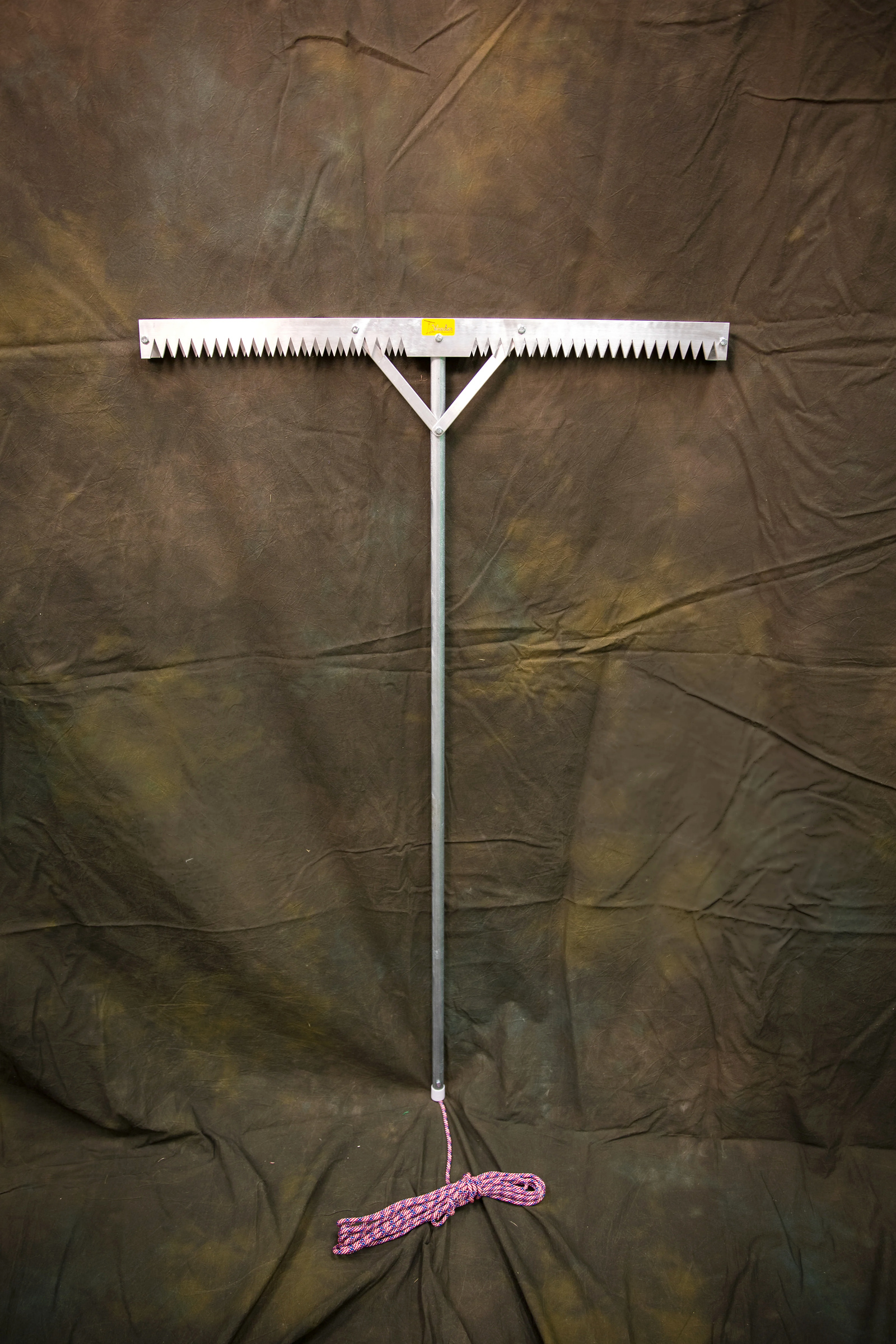
If the confirmed task fits a manual tool, review the T-Weeder Tool and order it for your planned removal work. Check its current product details against the plant, reach, and method you need. Root removal and lasting control cannot be assumed for every species or site.
Continue with the Lake Weed Removal guides when you are ready to plan collection, follow-up, or another method. Keep the photos of the plant base with your notes; they make the next decision easier to explain.
Seeing new shoots after hand work? Read why lake weeds grow back to separate surviving plant parts from new arrivals. Then use the small-area removal plan to track whether the route stays useful and how much effort it takes.
Before entering a work area, review footing and visibility for shallow-water weed work. A small depth does not remove the need for a stable position and clear plan.
Featured image: AI-generated illustration of a lakeside inspection setup. The inline T-Weeder image is a supplied product photo.