A lake weed rake should match your plants, reach, and ability to retrieve a load. This guide helps you compare tools for a manageable shoreline job.
Understanding the work matters more than buying the widest head. A rake that looks strong in a photo may be awkward beside a narrow dock. A long rope may reach a distant patch, but that does not tell you how hard the return pull will be.
Think of the purchase as a short list of questions you need answered. What will the tool collect? Where will you stand? How will you bring it back? What happens to the wet plants afterward? Once those points are clear, product details become much easier to compare.
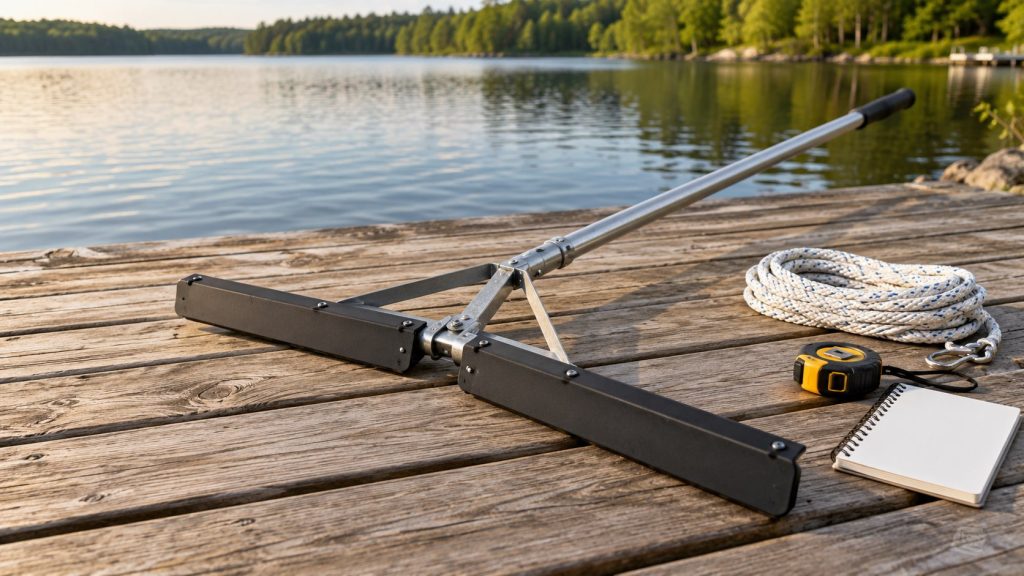
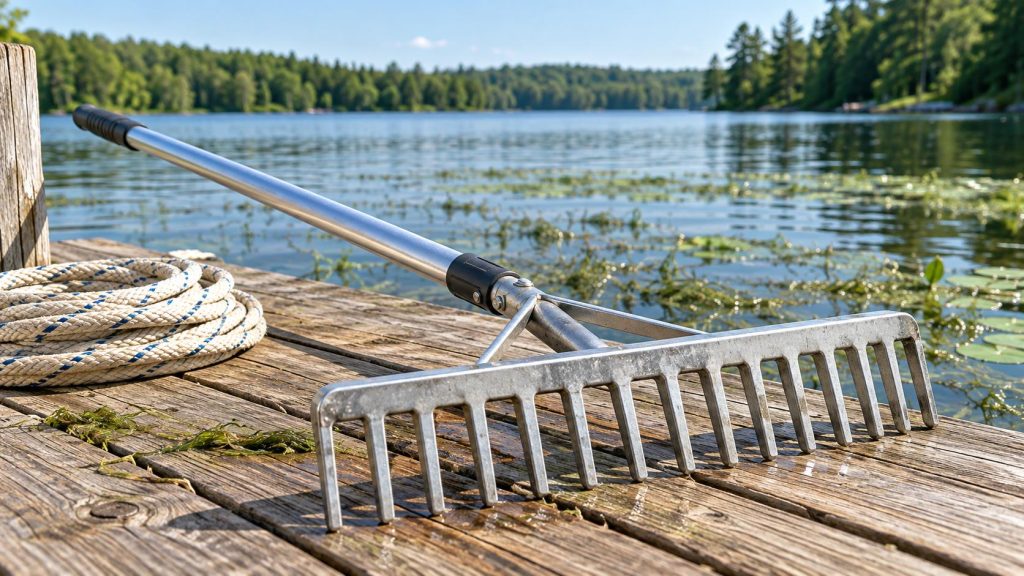
Featured image: AI-generated illustration of generic equipment, not a T-Weeder product photograph.
Make sure a rake fits the plant problem
Start with the plants, not the catalog. Rooted stems, loose fragments, tiny floating plants, and algae are not the same kind of load. A broad head designed to grab larger stems may not be a good way to collect small floating pieces.
Take clear photos and use our lake weed identification guide to narrow the possibilities. If you suspect an invasive plant, ask the proper agency before disturbing it. A buying guide cannot tell you whether a particular patch should be raked.
For a broader explanation of management choices, see Alabama Cooperative Extension’s lake and pond weed guide. It explains that methods and equipment depend on site conditions. Use that point to frame your shopping: fit comes before size, price, or a bold performance claim.
Write a short job description before shopping
Describe the area in everyday terms. “A small route beside the dock ladder” is a useful start. “The whole lakefront” is too broad to compare hand tools well. Add the place you will stand, the distance to the patch, and the path you will use to carry collected material.
Next, list any limits. You may have little storage space, a steep bank, or a dock with a narrow walking area. You may need to carry the tool from a shed. These details are part of the purchase, even though they rarely appear in a product comparison chart.
Our practical lake weed removal plan includes a work sheet you can use. Bring the same notes to each seller. That makes the answers easier to compare and keeps a sales pitch from changing the job you actually need done.
Compare reach and retrieval as a pair
Working with a handle
A handle gives you a direct connection to the head. Look at its length, grip, joints, and storage needs. Ask whether the length is fixed or adjustable and what the maker says about normal use. A long handle can be awkward near railings, other people, or a tight storage door.
Do not count on extra reach from leaning beyond stable footing. The useful reach is the distance you can work while staying in control. A stated handle length does not account for your position, the bank angle, or the part you need to hold.
Working with a rope
A rope can change where you place and retrieve the tool. Compare the attachment, rope condition, grip, and retrieval instructions. Plan where the loose rope will lie so it does not cross a busy walkway or tangle around other equipment.
Also consider what happens when the head catches. Do not improvise with a boat, vehicle, or powered pull unless the equipment is designed for that use and the method is allowed. Ask the maker how to handle a snag. A clear answer is more useful than a claim that the tool can pull anything.
Head width is only one part of the load
A wide head may cover a broader strip, but wet material can make the return load bulky. Look at the whole path from the water to the holding area. You may need to guide the head past a dock post, turn it on a narrow platform, and remove the plants without blocking access.
Use a tape measure to picture the tool at home. Mark the stated width on a flat surface in your work area. Can you store it? Can you pass through the route to the shore? This simple check is often more helpful than guessing from a product photo.
Do the same with the full length. A tool can fit your shoreline and still be awkward to move from the shed. If the design comes apart, ask which parts detach, how they reconnect, and what needs checking before each use. Do not assume that every joint is meant for frequent removal.
Look closely at teeth, edges, and attachments
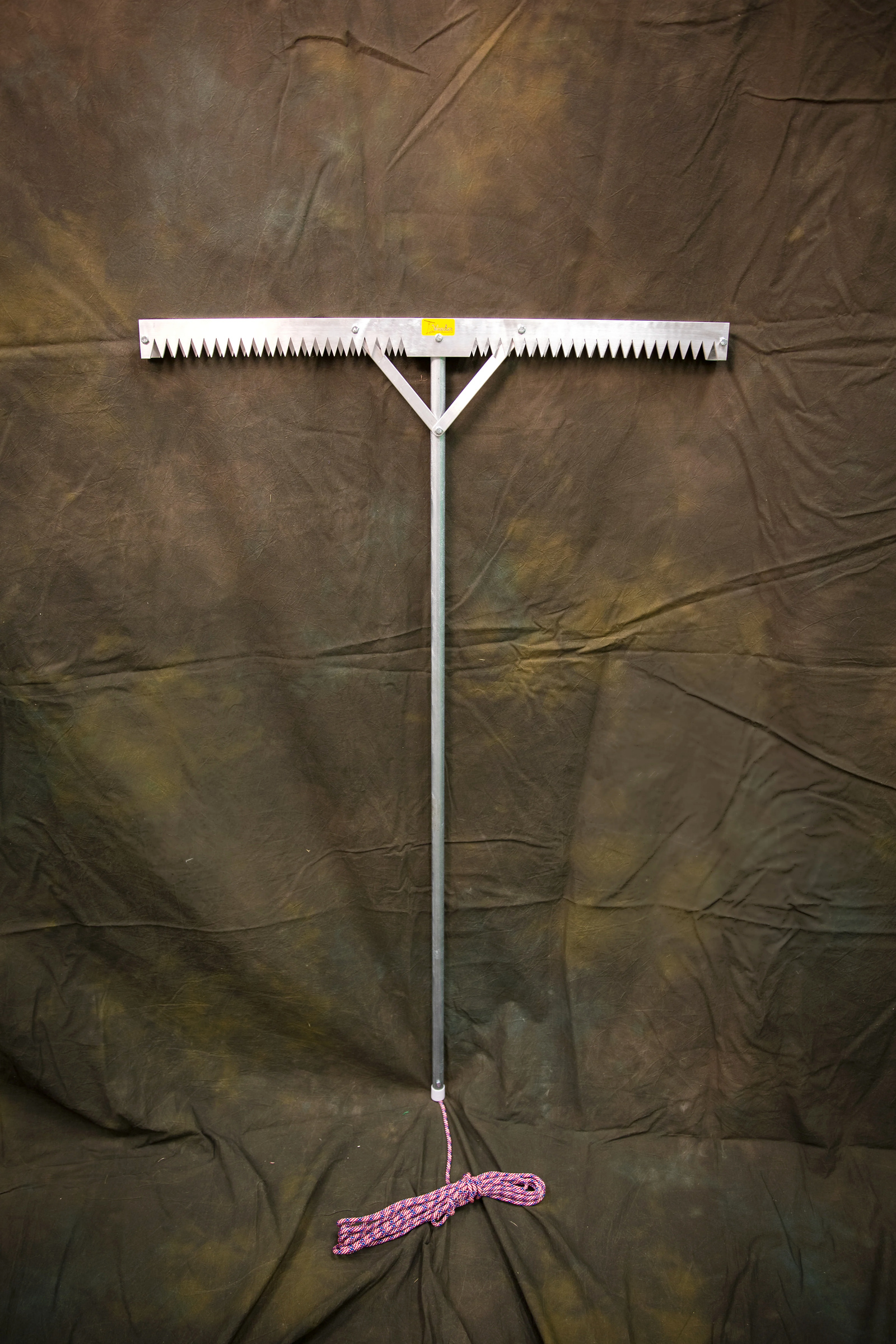
Study the head in clear photos. Ask what the teeth are meant to grab and how collected plants are removed. Separate a rake’s collection function from a cutter’s cutting function. A product may combine features, but you still need to understand what each part does.
Check the handle connection and rope point. Ask whether replacement parts are available and which fasteners the user should inspect. These questions do not require you to be a mechanic. You are looking for clear instructions and a design you can maintain as directed.
For used equipment, ask for close photos of the head, joints, and attachment points. Damage may be hard to see in a distant listing photo. If the seller cannot explain the model or provide the instructions, factor that uncertainty into your choice rather than guessing at a repair.
Read lake weed rake reviews with your site in mind
A helpful review describes the actual work. Look for the plant type, area size, water depth, footing, and amount of cleanup. “Worked great” tells you less than a calm account of what the person tried and what happened after several visits.
Be careful with claims that a tool removes all roots or prevents weeds forever. Mississippi State University Extension describes mechanical removal as a method that may need follow-up because plants can return. A useful review should leave room for that reality.
Also distinguish a verified product detail from a user’s impression. Weight, head width, and included rope can be checked against the current seller page. Ease of use depends on the person and the site. You do not need to dismiss either kind of information; just give each the right job in your decision.
Include cleanup in the buying decision
The rake is only part of the work. You need a place to set the load and a route for moving it. Think about whether plants can drain without washing back into the water and whether the holding area blocks a path people use.
Ask how the maker recommends clearing material from the head. Follow those instructions, especially around edges, teeth, and stored tension. Keep other people away from the work area while you retrieve and clear the tool.
Check disposal rules before you fill a container. Minnesota’s aquatic plant transport guidance is a starting point for owners in that state. Unknown or invasive material should not become an afterthought once it is on land.
Use a comparison sheet instead of a score out of ten
A single rating can hide the feature that matters most to you. Make a short sheet with one column for each tool. Write down facts from the maker and mark unanswered questions clearly.
- Intended plant material and method of use
- Head width and overall stored length
- Handle design and included rope
- Stated weight and attachment details
- Retrieval and snag instructions
- How collected material is cleared from the head
- Care, replacement parts, and storage instructions
- Current price, delivery terms, and return policy
Then add a final row: “Fits my work plan?” This is where you connect the facts to the site. A lower price does not fix an unsuitable design. A larger tool is not automatically an upgrade if it makes the return load harder for you to handle.
Check local rules before placing an order
Manual equipment still operates within aquatic plant rules. The type of plant, size of the area, and method can affect what is allowed. Describe the tool and intended action when you contact the responsible agency.
The Minnesota DNR aquatic plant program provides the starting point for Minnesota owners. In Wisconsin, the DNR’s mechanized aquatic plant guidance shows why device design and method matter. Do not apply one state’s rules to another lake.
If you are comparing raking with chemical treatment, our aquatic herbicide questions guide explains a different set of checks. Choosing manual work does not remove the need to identify plants, contain debris, and respect the approved work area.
Where the T-Weeder fits in your comparison
The current T-Weeder product page describes a four-foot handle, a three-foot-wide head, and a 25-foot rope. It lists a weight of six pounds. Use those stated details in your comparison sheet, then read the current page for the full design and purchasing information.
Those measurements describe the tool. They do not promise that every person can retrieve every load or that every plant is a suitable target. Match the design with your planned work area, follow the maker’s instructions, and keep the first session manageable.
Looking for a manual option for your shoreline? Compare the T-Weeder Tool’s features and order yours here. The page lets you check the current details before buying.
Common lake weed rake questions
Is the widest rake the best choice?
Not necessarily. Width affects coverage, handling, and storage. Consider the material you expect to collect and the route you must use to retrieve it. Choose a size that fits the full task rather than just the open water in front of you.
Can one rake replace every other tool?
Different plant forms and site conditions call for different approaches. Confirm what the product is designed to collect. If the main problem is fine floating material or an uncertain invasive plant, a rake purchase may not be your next step.
What should I do before the first use?
Read the instructions, inspect the tool, confirm the allowed area, and prepare your cleanup route. Check weather, footing, and nearby people. Your first use should help you learn how the tool fits your site while you remain in control of the work.
Explore more Lake Weed Tools guides as you compare options. Keep your site notes beside the product page. They are the link between a tool that looks good online and a purchase that makes sense for your shoreline.
If cutting remains an option, compare reach, guards, parts, and cleanup with the lake weed cutter buying guide.
For a closer look at reach, compare long-handle lake weed rakes with throw rakes and their return paths. Both guides help you match the working position and collection route to your shoreline.
Before buying, compare how rake size and strength, routine tool maintenance, and customer rake reviews affect the full season of ownership. These guides cover handling, care, and the evidence behind product claims.