Manual lake weed removal has limits. Learn when plant type, access, cleanup, or local rules make a smaller job or professional assessment the better next step.
Understanding the limits before you start can save an unfinished weekend and a second cleanup. Use this guide to decide whether the next step is a manageable hand-tool job, more information, or a professional site assessment.
Start with the problem you want to solve
Imagine a dock ladder surrounded by a few stems. Now picture a dense plant bed across an entire bay. Both may lead someone to search for lake weed removal pros, but they are very different jobs. The first question is what access you actually need.
Write a goal you can check from shore: reach the ladder, launch a kayak, or keep a short route to open water. Avoid starting with a goal like ‘remove every weed.’ That makes it hard to tell when the work is enough, and it can lead you beyond the original project.
A manual tool may fit a small, allowed task. It may be a poor fit for the larger problem that prompted the purchase. Separate those decisions. You can maintain a narrow access route while asking for advice on growth elsewhere, provided the local rules and plant-management plan allow it.
Our small-area removal plan shows how to record a specific work area. If you cannot describe its boundaries, settle that question before comparing tools or asking a crew for a price.
Pause when the plant is still unknown
Green growth is not a single target. A floating plant, a rooted stem, and a tangled algal mat can need different responses. A tool that catches one may pass through another. A plant that looks familiar may also be mixed with a second species.
The Pacific Northwest university Extension handbook explains that hand pulling and raking can make fragments that spread to new places. It also notes that roots, underground stems, or other growth structures can limit lasting control. Identification therefore changes more than the tool choice.
Take photos from a stable place and ask the appropriate local plant program for help. Include the whole patch and useful close views when you can get them safely. Tell the reviewer whether the growth appears attached or drifting. Do not label it invasive based only on a search result.
Use our plant identification photo guide to prepare the request. If an invasive species is suspected, follow the receiving program’s instructions before collecting a sample or disturbing the patch.
Stop when the material may be a harmful bloom
An unusual surface film or mat is a reason to reassess the job. Do not treat every green layer as something to rake toward shore. Some growth needs a health or water-quality assessment before anyone handles it.
The CDC’s harmful bloom guidance lists unusual color, scum, paintlike patches, and bad smells among possible warning signs. Stay out of suspicious water, keep children and pets away, and avoid touching washed-up algae. Check local advisories and report concerns through the local health or water program.
A clear patch beside suspicious material is not a safe-work certificate. Neither is the absence of a warning sign. Agencies cannot monitor every waterbody, and appearance alone cannot confirm whether a bloom contains toxins.
Keep this decision separate from plant control. You can record what you see from a safe place and postpone the physical work. Buying a stronger rake does not answer a water-safety question.
Treat uncertain footing and reach as a site problem
Consider where you will stand, where the loaded tool will travel, and where you will put the material. A long handle does not make an unstable bank stable. A rope does not remove the need for a clear retrieval path.
Look for a crowded dock, loose boards, steep edges, unseen drop-offs, soft bottom, and obstacles near the intended route. Do not enter unknown water simply to check whether a tool might work there. If the job requires reaching beyond a controlled position, change the plan.
Watch the conditions on the day. Waves, poor visibility, boat traffic, and strong wind can change a small job. A plan made during calm weather should not push you to continue when you cannot control the tool or track loose material.
Describe these limits when asking for help. ‘The patch is beyond safe reach from the dock’ is useful information. ‘I need a bigger tool’ skips the site assessment. A qualified contractor may suggest a different method, timing, or smaller work area.
Be realistic about the entire cleanup
The pulling or cutting stage can look quick in a demonstration. Your site may have a long carry, stairs, a narrow gate, or no suitable staging area. Include those parts before deciding that a large patch is a reasonable manual job.
Make a route on paper from the water to the approved destination. Identify who will collect loose pieces, move the material, and clean equipment. Check disposal and transport requirements for the actual plant and receiving facility. Do not assume a yard-waste site accepts aquatic vegetation.
Wet vegetation can be awkward to handle. Use manageable loads and keep the route clear. Stop expanding the work when cleanup falls behind. A neat-looking patch in the water is not a finished job if debris remains where it can wash back.
The lake weed disposal guide helps organize these questions. If you cannot arrange a complete cleanup route, solve that problem before starting or ask a service to include removal and disposal in its written scope.
Check permission before scaling up
Doing the work by hand does not automatically make it exempt from local rules. Plant type, location, area, equipment, and the person doing the work can all matter. Ask the agency responsible for your waterbody about the specific proposed task.
For example, the Minnesota DNR’s aquatic plant management program distinguishes several kinds of plant control and lists activities that require permits. It also directs people considering hired mechanical removal to the program coordinator. These are Minnesota requirements, not a national allowance.
Share the lake name, location, method, plant information, and a sketch of the intended area. Ask whether a permit, review, or other condition applies. Save the answer with the project notes, and confirm any conditions before a contractor or helper begins.
A neighbor’s project is useful context but not permission for yours. Likewise, buying a device does not approve its use at a particular lake. If the authorization is unclear, waiting for an answer is part of planning the job.
Separate access maintenance from whole-lake management
A few repeat visits to a known access route are one kind of commitment. Trying to control a large invasive population is another. Avoid measuring a hand tool against a goal that requires a coordinated lake plan.
The Penn State Extension overview of aquatic plant control notes that harvesting may need repeated work and warns about plants that spread through fragments. Its farm-pond discussion is useful background; it does not authorize the same methods in a public lake.
Record how quickly the actual access problem returns. Use the same viewpoint, note the dates, and describe what you removed. Also note wind and drifted material, so you do not mistake every new pile for regrowth from the bottom.
If the recurring work is beyond your time or reach, bring those records to a specialist or lake association. Ask what outcome is realistic for that plant and site. A wider management discussion may be more useful than repeatedly clearing a bigger strip.
Know when the target is sediment instead of plants
Sometimes a homeowner wants a firmer bottom or deeper water. That is not the same goal as removing vegetation from an access route. A rake full of stems can leave the underlying bottom condition unchanged.
Describe the concern carefully: plants blocking movement, loose leaves, soft sediment, or water that is too shallow for the intended use. More than one issue may exist. Avoid choosing a method before you have separated them.
Dragging equipment to reshape the bottom or removing sediment can raise different approval questions from plant work. Ask the relevant water or shoreline agency before attempting those changes. Do not convert a small weed-maintenance job into an excavation project as you go.
Our guide to weeds and muck explains how to frame the two problems. It can also help you ask contractors to state clearly what their service will and will not change.
Ask a professional for a decision, not just a machine
Prepare a short project note before calling lake weed removal pros. Include the goal, photos, approximate area, known plant identity, access limits, and any agency response. Mark uncertain details clearly rather than filling them in with guesses.
Ask what method they propose and why it fits the target. Discuss collection of fragments, protection of other plants, disposal, and follow-up. Find out who obtains any required permits and which tasks the quoted price includes.
Request a written description of the expected result. ‘Improve access in this marked route’ can be checked. ‘Make the lake perfect’ cannot. Ask what would cause work to stop or change, such as a different plant being found or conditions becoming unsuitable.
Keep an assessment separate from a commitment to treatment. A useful professional may recommend leaving an area alone, identifying the growth first, or reducing the project. You want a clear reason for the next action, not simply the largest available service.
Choose the smallest suitable next step
A practical decision can be modest. If identification is missing, get identification. If permission is unclear, contact the agency. If the work is beyond safe reach, ask for a site assessment. None of those steps requires clearing more plants while you wait.
If the target is known, the work is allowed, and a small manual task fits your access and cleanup plan, a hand tool may still be useful. Match the tool to the actual task and your ability to control it. Start within the agreed scope and review the result.
Ready for an appropriate small-area plant task? See the T-Weeder Tool’s features and order one for your shoreline work. Check its reach, handling, and intended use against your site before buying. It is not a substitute for plant identification, permission, or professional help where those are needed.
Browse Lake Weed Removal for related planning guides. The best decision is the one that solves the specific access problem, includes cleanup, and leaves you with a manageable plan for the next visit.
When the job needs a different approach, compare professional help near deep water, questions before hiring a removal service, and how lake weed harvesters work. Choose the assessment and service around the site’s needs.
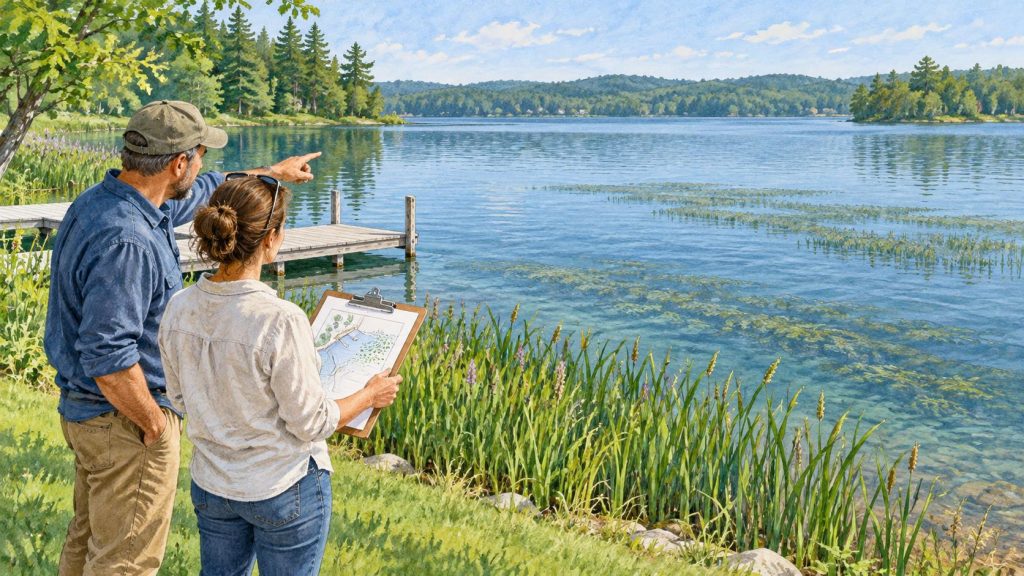
Image note: The featured image is an original AI-generated illustration of shoreline planning. It does not show a tested removal method or identify a plant species.