Lake weed and muck removal solve different problems. See what plants, soft sediment, and lost water depth reveal before choosing tools or a removal service.
Removing a load of green stems can make a dock easier to use while leaving the bottom just as soft. Digging out sediment may change depth while leaving a need for future plant management. When both problems occur together, it helps to give each one a name, a goal, and a separate line in the project plan.
Start with what prevents you from using the area. Are leaves tangling around a paddle? Are your feet sinking into soft material? Has a boat begun touching bottom at a known water level? Those observations point to different questions. A broad request to “clean up the lake bottom” gives a contractor too much room to guess what success means.
Separate plants, loose debris, and sediment
Living plants have recognizable structures such as leaves and stems. Loose debris may include detached vegetation, fallen leaves, or other material resting on the bottom. Sediment is the material that forms the bottom layer. These can overlap, but they are not interchangeable items in a work estimate.
UF/IFAS explains that lake muck contains a mix of materials, including plant and animal remains and mineral particles. Some arrive from the surrounding land; others form within the waterbody. Soft, dark sediment is not automatically proof of pollution. Its makeup and location matter.
| Main complaint | Useful observation | Question to resolve |
|---|---|---|
| Plants block a route | Stems occupy the water you need to pass through | Which plant and which selective method fit? |
| Loose material gathers | Detached pieces settle in a particular pocket | What is arriving, and from where? |
| The bottom feels soft | Soft material persists below visible growth | What is the sediment made of and how deep is it? |
| Water is too shallow | Depth is low at a known water level | Is the cause sediment, water level, or both? |
Use this table to sort the problem, not to diagnose it from shore. A green surface mat may hide the bottom completely. A dark patch may be a shadow or plant bed. If you cannot see the layers, mark that as an unanswered question instead of treating a first impression as a measurement.
Define what you want to change
Write a result that someone else could check. “Reduce tall stems along the route from the ladder to open water” is a plant goal. “Assess why the launch is shallower than it used to be” is a depth question. “Create a firm sandy bottom” is a much larger request that may not match the natural site or allowed work.
Keep comfort, appearance, navigation, and plant control separate. You might improve one without changing the others. A clear view of the bottom does not prove the bottom is firm. A larger gap between stems does not show that sediment was removed. This prevents a pleasing photo from becoming the only measure of success.
For a vegetation goal, our lake weed removal guide explains how to choose an approach for a defined area. If you are comparing cutting with root-focused work, use the cutting-versus-pulling comparison. Neither decision should quietly expand into a plan to excavate the lakebed.
Check depth without guessing at sediment thickness
Water depth and muck thickness are different measurements. Water depth runs from the surface to the top of the bottom material. Sediment thickness describes the layer below that point. A pole pushed into soft material can continue downward, making the reading look deeper without showing where a firm layer truly begins.
For a small observation record, use fixed locations and note the water level and date. Do not compare a reading beside the dock in spring with one several feet away in late summer. If measurements will support a dredging estimate, ask a qualified professional how the survey will distinguish water, soft sediment, and the proposed final bottom.
Imagine a launch that seems six inches shallower than last year. A six-inch drop in water level could explain the change without any new sediment. If the water level is unchanged, the cause still needs checking. A remembered feeling of depth is a useful concern to raise, but it is not enough to calculate removal volume.
Old surveys, dated photographs, and records from the lake association may help. Ask what was measured and how. A drawing marked “approximate” should stay approximate when it enters a quote. Good planning keeps uncertainty visible until better information replaces it.
Understand what sediment removal involves
NOAA defines dredging as removing sediment and debris from the bottom of a waterbody. It is often used to maintain or increase navigable depth. That makes it a different task from simply trimming plants above the bottom.
Ask a service to describe its method in plain language. Will it cut stems, pull plants, lift loose debris, remove bottom material, or move material elsewhere? A label such as “lake cleaning” does not answer those questions. A machine that disturbs the bottom deserves a description of what leaves the water and what remains.
A useful proposal should show the work boundary, expected removal depth, estimated quantity, and where the material will go. It should also identify who measures the result. If those details are absent, two bids may use the same service name while offering very different projects.
Avoid buying a plant tool to solve a depth problem. Removing vegetation can reveal the bottom more clearly, but the tool’s name is not evidence that it excavates sediment. Review the stated purpose of any equipment and ask about limits before deciding that a wider or heavier head will solve both jobs.
Be specific about bacteria and aeration claims
Products sold for muck reduction often appeal to owners who want an easier alternative to excavation. Evaluate the exact result being promised. Does the claim concern odor, water quality, organic matter, or a measured increase in water depth? Those outcomes should not be treated as the same thing.
UF/IFAS notes that bacteria are already present and that sediment includes material that will not readily break down. It also explains that adding oxygen does not automatically carry it deep into the sediment. These limits matter when evaluating a claim that a treatment will remove a substantial bottom layer.
Ask for evidence from conditions like yours, including sediment type, treated area, measurement method, and time period. A photo of clearer water cannot establish how much material disappeared. A change measured at one soft spot may not represent the whole work area.
- What exact change is the product or system intended to produce?
- How will that change be measured at the same locations?
- What part of the sediment is expected to remain?
- Does the evidence include a comparison area or other explanation for the change?
- What ongoing expense is needed to maintain the stated benefit?
Keep these questions neutral. A system may have a useful purpose without being a substitute for sediment removal. The aim is to match a supported benefit to the problem you actually have.
Plan for the removed material
Sediment handling does not end at the water’s edge. Wet material may need a place to drain, equipment to move it, and an approved destination. The space and access needed for those steps can change whether a project is practical.
The Minnesota Pollution Control Agency’s dredged material guidance addresses storage, dewatering, reuse, and disposal. It explains that runoff and water released from dredging operations can affect surface water and groundwater. Material characteristics help determine how it may be managed.
Ask a contractor to walk through the whole route: from the bottom, to a temporary handling area, to the final destination. Will trucks cross the yard? Where will water drain? Who restores damaged ground? What happens if the material cannot go to the assumed destination? Put those responsibilities in the written scope.
Do not assume dredged material is suitable garden soil because it contains organic matter. Its composition and possible contaminants need consideration. Likewise, do not assume the nearest low spot is an acceptable place to deposit it. Confirm the handling plan before equipment arrives.
Check the work category with the regulator
The important question is what the work does to the lakebed. Describe the actual process when asking about rules. “Hand tool,” “vacuum,” or “weed removal” may leave out the fact that bottom material will be disturbed or removed.
Wisconsin DNR’s dredging guidance explains that sediment projects can require sampling, controls for disturbed material in the water, and disposal planning. Its page also describes different permit and exemption paths. Those are Wisconsin rules, not a nationwide allowance.
Ask the responsible agency about your exact site and scope, then keep the response with the proposal. If the method or area changes, check whether the earlier answer still applies. Our Minnesota rules guide is a starting point for readers in that state; other locations need their own agency guidance.
Look beyond the patch you want cleared
A project can remove material while leaving its source active. Note where muddy runoff enters, where bare soil is exposed, and where leaves or cut grass are routinely washed toward the water. These observations help frame questions for a local watershed or lake professional.
Iowa State Extension’s pond sediment guidance emphasizes the surrounding watershed and erosion prevention. Vegetated buffers can help limit incoming soil. Cloudy water can have several causes, so its appearance alone does not establish a single treatment.
Treat source control as a separate part of the budget. For example, a small sediment project beside an eroding path may need a plan for the path as well. The best choice depends on drainage and site conditions; copying a neighbor’s shoreline treatment may not address your source.
Choose the next purchase from the evidence
If the main problem is reachable vegetation in a small, permitted access area, review the T-Weeder tool and order it for your plant-removal plan. Match its features to that task. It is not a promise to deepen water or remove a layer of muck. If the problem is sediment or uncertain depth, start with assessment and a clear project scope.
Before accepting an estimate, summarize three things: what will be removed, how the result will be measured, and where the removed material will go. If two proposals answer those questions differently, ask for matching scopes before comparing prices. You can use our project cost guide to organize those questions.
Keep plant maintenance and sediment work as separate entries in your lake record. That makes future changes easier to understand and avoids judging one job by a result it never promised. Find more focused planning help in the Lake Weed Removal guides.
Considering an additive for the soft bottom? Read the evidence behind muck-digestion products before buying. It explains what one controlled study found, the study’s limits, and the questions that separate sediment measurements from attractive photos.
For the approval questions behind that distinction, read why plant removal and dredging are different projects. Describe what will happen to sediment as well as vegetation.
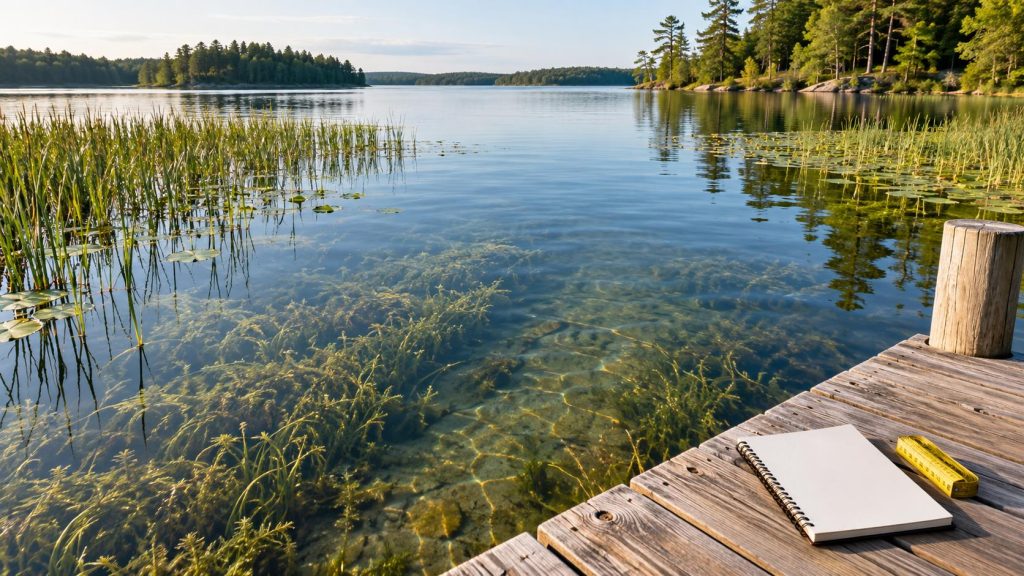
Featured image: AI-generated schematic showing plants above a sediment layer. It is illustrative, not a survey or evidence of a removal result.