Plan DIY lake weed removal around the plants, reach, cleanup, and local rules. Learn which small jobs you can handle and when to bring in outside expert help.
A patch beside the dock can look like a simple Saturday job. Then the first load turns out heavier than expected, loose stems drift away, and the area is still hard to use. The useful question is not just whether you can pull a plant out. It is whether you can complete the whole job without losing control of the work.
DIY lake weed removal makes the most sense when the task has a clear boundary and a realistic purpose. This guide helps you decide what belongs on your own work list, what to prepare, and what should prompt a different plan.
Start with one access problem you can describe
Write a plain sentence about the problem. For example: “Plants catch on the paddle when we launch a kayak from the existing dock.” That is a better starting point than “The shoreline needs cleaning.” The first statement gives you a use to restore and a place to assess.
Walk the shoreline and look at the route people actually use. A shorter launch route or a different entry point may reduce the amount of work. Sketch the dock, the plant patch, nearby open water, and the place where collected material could be carried ashore.
Avoid turning the sketch into a plan to clear everything within sight. Decide what would count as a satisfactory result. You might need room to lower a kayak and make the first few paddle strokes. Keeping that goal visible helps prevent a small project from growing each time you look up.
Identify what you are about to handle
A green tangle may contain more than one kind of plant. Take a wide photo of the patch and close views of stems and leaves before choosing a method. Record whether the plant is rooted, floating freely, or attached to the bottom in a dense mat. Those observations are clues, not a confirmed identification.
Use the lake weed identification guide to organize your observations. If the match is unclear, send useful photos to your state aquatic plant program, county Extension office, or a qualified local specialist. Ask how that particular plant responds to pulling or cutting.
Be especially careful with an unfamiliar patch that has appeared recently. Getting an identification before disturbing it can change the next step. A plan for familiar native plants may be unsuitable for a newly reported invasive species. Do not assume that something described as invasive is automatically legal to remove or transport.
Check the rules for the plant, place, and method
Hand work does not always mean permit-free work. The relevant rules may distinguish submerged plants, floating leaves, and plants that rise above the surface. They may also limit the area, shoreline width, location, or equipment.
For example, the Minnesota DNR guide to plant types and removal rules sets different conditions for different growth forms. Its submerged-plant conditions include area and width limits, disposal on land, and avoiding significant changes to the lake bottom. Emergent vegetation requires a permit. These are Minnesota examples, not nationwide allowances.
Before work, tell the responsible agency the lake name, plant, proposed area, and exact method. Save the answer or approval with your sketch. If you change from a hand tool to powered equipment, or expand the patch, check whether the earlier answer still applies. Local requirements can add another layer.
Use four checks to judge whether the job fits
University guidance supports keeping manual work focused. Mississippi State Extension’s overview of weed management describes hand removal as useful for limited areas and explains that plants can recolonize. That makes a small trial more informative than a promise to finish the entire frontage in one day.
- Reach: Can you control the tool from a stable position without stretching or leaning over an edge?
- Load: Can you retrieve and carry a small wet load comfortably, including the trip to the disposal area?
- Collection: Can you keep up with loose material as you work?
- Follow-up: Can you return to inspect the same patch and handle reasonable maintenance?
A weak answer to one check does not always rule out DIY work. It may mean you need a smaller area, a different tool, a better collection setup, or help with carrying. Several weak answers suggest that an assessment from a professional is a sensible first purchase.
Understand what pulling, cutting, and collecting accomplish
Pulling aims to remove a plant from its growing position. Cutting removes the part reached by the blade while often leaving rooted structures behind. Collecting retrieves loose material. These tasks overlap, but success at one does not prove that the others are complete.
The Pacific Northwest Pest Management Handbooks’ discussion of aquatic control methods explains that manual techniques can disturb sediment and create fragments capable of spreading. Ask about that risk for the identified plant before starting. It is particularly relevant when the patch is small and isolated.
Do not judge a trial only by how quickly the surface opens. Look at what came ashore and what remains. If stems repeatedly break before they reach the collection point, the method may need to change. If the tool brings up mostly sediment, stop and reassess instead of pulling harder.
Our lake weed rake buying guide can help you compare control and retrieval before buying. Match the equipment to the work you have confirmed.
Set up the landing and cleanup area first
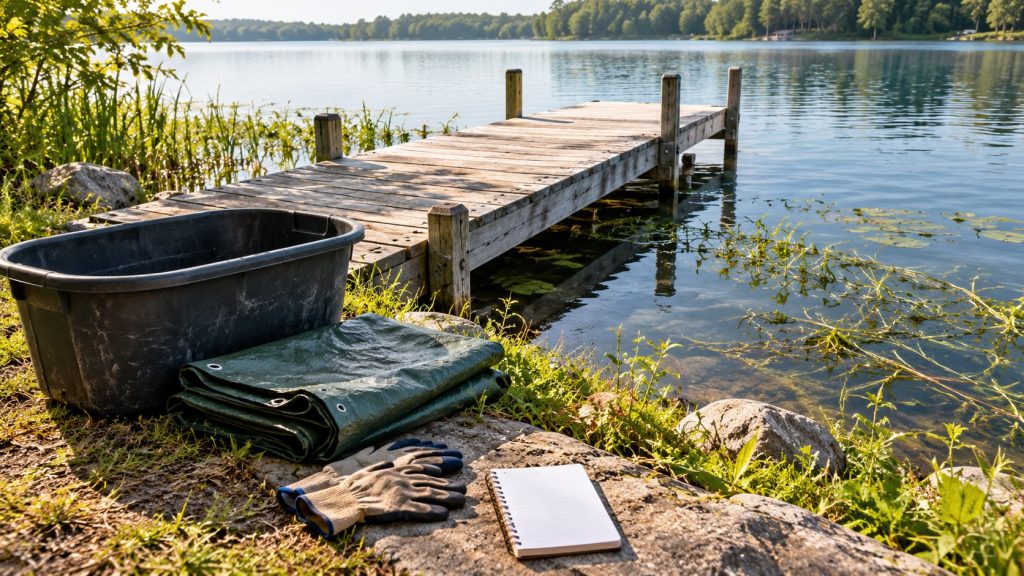
Prepare the route from water to disposal before you remove the first plant. Clear trip hazards and decide where a full container can rest without blocking the dock. Use loads small enough to carry with control. A full container is not a useful target if it becomes too heavy to lift.
Keep the collection area away from a place where rain or rising water can wash material back into the lake. Follow local guidance for invasive plants and waste acceptance. Do not assume that every yard-waste service accepts wet aquatic vegetation or that a home compost pile is appropriate.
Separate useful supplies from the wet work zone. Put the phone, notes, drinking water, and spare gloves where they stay accessible. If another person is helping, agree who retrieves, who carries, and how you signal a pause. A clear handoff reduces the urge to rush while one person waits with a loaded tool.
Run a short trial before committing your afternoon
Choose a modest part of the allowed area with conditions you can assess. Keep your stance stable and use the tool according to its instructions. Work slowly enough to see where the material goes. Finish collecting that first load before beginning another pass.
For the trial, note four things: time spent working, time spent collecting, effort needed to carry the material, and the actual change in access. Include setup and cleanup when you judge the workload. Five minutes of pulling can create much more than five minutes of hauling.
Do not multiply one easy pass into a precise forecast for the entire patch. Denser growth, deeper water, or awkward access can change the effort. Instead, use the trial to choose the next small section. If the first section already exceeds your comfortable workload, reduce the scope or stop.
Treat loose fragments as part of the job
Collection has a purpose beyond appearance. Alabama Extension’s lake and pond weed guidance explains that plant fragments may take root elsewhere, while decomposing material can affect dissolved oxygen. The response varies with the plant and site, so avoid assuming that drifting pieces will simply disappear.
Keep an eye on wind and water movement while working. If material is escaping faster than you can retrieve it, pause the removal. Reassess the collection method or wait for conditions that you can manage. Cutting more material while loose pieces move away adds to an unfinished task.
At the end of each work period, inspect the immediate area for remaining debris and check the tool, rope, footwear, and containers. Follow the applicable cleaning and transport guidance before moving equipment to another waterbody. Make that check part of packing up, rather than something you hope to remember later.
Know the conditions that call for a different plan
Stop if you cannot control the tool, cannot see or understand the footing, or need to reach beyond a stable position. A snagged tool is a reason to reassess. Do not improvise a powered pull or use a boat to apply force to equipment that was not designed for it.
The work also needs another look if the plant identification changes, wildlife activity affects the site, or the patch extends beyond the approved area. Treat those discoveries as new information. The original plan should not become a reason to keep going after its assumptions are wrong.
For larger or complicated work, a specialist can help define the scope before equipment is chosen. UF/IFAS’s guide to aquatic plants in Florida lakes discusses the importance of management suited to a particular waterbody. A useful consultation can identify which small tasks remain suitable for you and which require different resources.
Record the result without promising permanent removal
Take an after photo from the same place as the first photo. Record the part you worked, the method, and whether the intended activity is easier. “Kayak launched without catching at the dock corner” is a more useful entry than “Weeds fixed.”
Choose a follow-up date that fits the plant and local conditions, using advice from the identification or management contact when needed. At that visit, distinguish new rooted growth from loose vegetation that has drifted in. They may require different responses.
Keep a simple running total of your time, including carrying and disposal. After a few visits, the record can help you decide whether the area is practical to maintain yourself. It also makes a future service quote more useful because you can describe the actual workload.
Questions to settle before you begin
Does a DIY project have to remove the roots?
That depends on the identified plant and the goal. A short-term access task differs from a plan to suppress repeated growth. Ask what each method removes and what may remain. Do not assume that a tool retrieved roots simply because a large bundle came ashore.
Can I remove weeds and muck in the same session?
Treat sediment removal as a separate proposal. Plant management does not automatically allow digging or changing the bottom. If soft footing is the real problem, explain that during the agency or specialist conversation so the plan addresses the right issue.
How do I know when the session is finished?
Finish when the planned small section is usable, loose material is collected, and equipment is packed safely. Also stop when effort or conditions exceed the plan. A shorter completed section gives you a useful result; an oversized unfinished project creates more cleanup.
Choose a tool after the project passes the checks
If your identified plant, access area, and local rules support manual work, review the T-Weeder Tool and order it for your planned shoreline project. Compare its current product details with the reach, handling, and removal method you need. No single tool suits every aquatic plant or site.
Keep your sketch and trial notes with the practical lake weed removal guide, and explore the Lake Weed Removal articles for related tasks. A good DIY plan is specific enough that you know what to do next and when the job is complete.
Featured image: AI-generated illustration of a shoreline work setup. It does not show a documented removal result or a specific plant species.