Shared shoreline lake weed management works best with a clear map, agreed goal, and named duties. Set the work, costs, and limits before anyone starts work.
Neighbors can agree that plants are in the way while picturing very different results. One wants a kayak entry. Another wants room for a boat. A third values the plants along the edge. A short planning discussion can expose those differences before tools arrive. The goal is a project people understand, with a clear boundary and a fair way to handle decisions.
Begin with uses rather than favorite methods
Ask each household what activity is affected, where it happens, and when the problem is worst. Record the answers without choosing a tool yet. A wish for easier docking is more useful than a demand for a large cleared patch. It gives the group something concrete to assess.
Also ask what each person wants to keep. That may include a plant bed used by fish, a quiet corner, a view, or access during certain hours. Those preferences should be visible in the plan. They are easier to discuss before anyone has paid for equipment.
UW–Stevens Point Extension Lakes notes in its lake association guidance that owners and users often have different views about lake management. It encourages groups to consider a broad range of needs and the future of the lake. A single weed complaint is a useful starting point, but it should not be the only voice in the discussion.
Put the proposal on one shared map
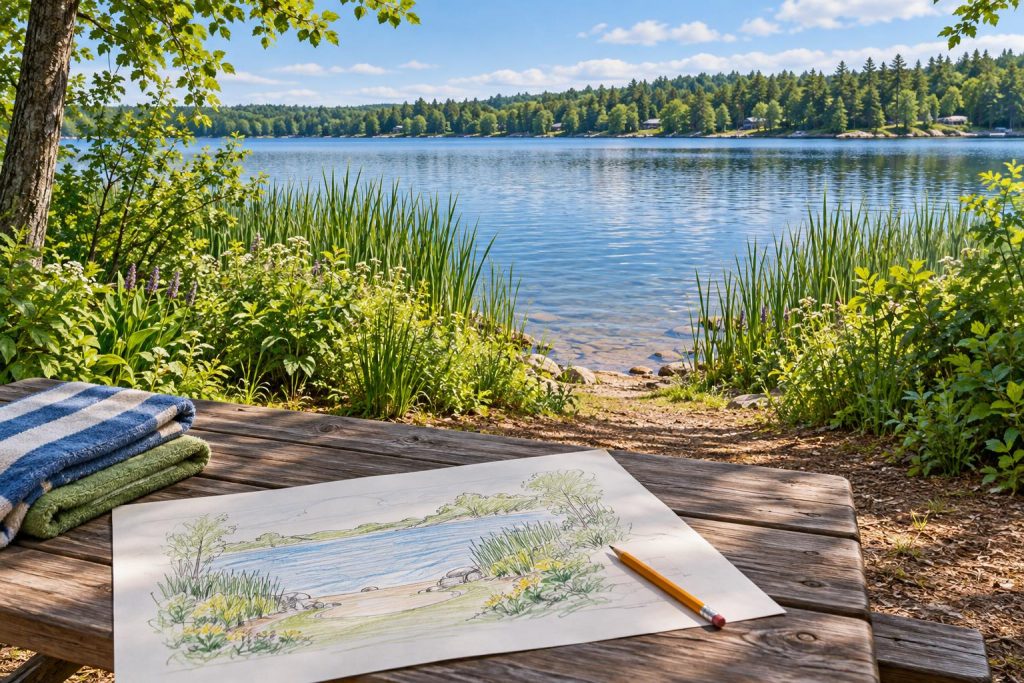
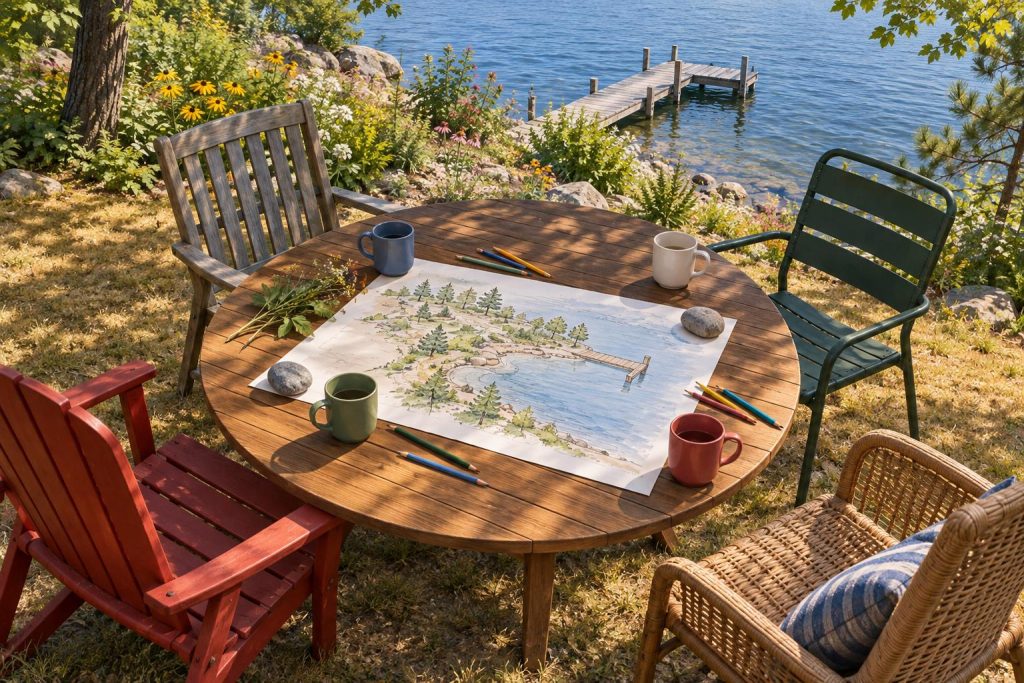
Use a wide shore photo or simple sketch that everyone can view. Mark existing docks, boat routes, swim entries, plant beds, and the area proposed for work. Show access over land and the place where collected material would be handled. Label any uncertain property or work boundary as unresolved.
Keep the map version and date on the page. If one neighbor sketches an extra strip during a later conversation, make a revised version for the whole group. Otherwise, different people may approve different projects without realizing it. A single current map is a basic but powerful way to prevent that.
For a swim entry, use the small swim-area planning guide to define the actual need. A kayak route may be smaller still; the kayak-launch guide helps frame that use. Avoid combining every preferred route into one large blank area.
Mark plants that will stay
The plan should show retained beds as clearly as the work area. Wisconsin DNR’s aquatic plant guidance explains that plants support fish and wildlife, hold bottom material in place, and soften wave effects. It generally discourages broad native-plant removal and focuses limited control on high-use access needs.
Ask for plant identification if the group is using words such as weeds, grass, or slime for several different things. The same shore may contain loose drift, rooted plants, and algae. Treating them as one problem can lead to a method that does not fit any of them well.
Agree on how the work boundary will be recognized from shore. A marked photo may be enough for discussion, though permits or a contractor may need a more precise map. Do not install markers, ropes, or barriers in the water without checking whether they are suitable and allowed.
Confirm who can approve the work
Separate three questions: who owns or controls the land used for access, who can make decisions for the shared group, and which public approvals apply to work in the water. A vote at a cookout does not answer all three.
Review the documents that govern your shared property or association. If authority is unclear or disputed, resolve it with the right professional before committing money. This planning guide does not decide property rights or replace the group’s rules. Write down who may sign a service contract and who may approve a change.
Contact the local aquatic plant agency with the shared map and proposed method. Ask what owner consent, permit, or notice is needed. Do not assume that adding several small private projects together avoids a review of the combined work.
Minnesota DNR’s invasive aquatic plant management program provides one example. It asks for a treatment map and signatures from affected landowners, with a waiver process in some cases. It also evaluates the target plant and effects on habitat. Those are Minnesota program details, not a universal consent rule for every shoreline.
Compare methods after the goal is clear
Ask a provider or plant expert to explain how each option fits the identified problem. Include setup, collection, repeat work, and any water-use limits. The discussion should be about the proposed task, not a contest between a neighbor who prefers manual tools and one who prefers treatment.
If a chemical treatment is considered, review the exact product label and permit conditions with the responsible applicator. If a device or barrier is considered, ask about placement, upkeep, and removal. A manual method also needs site access and a collection plan. No method earns a free pass simply because the group finds it familiar.
Record why the chosen option fits and what remains uncertain. This gives everyone a fair reference if the first result is limited. A group is less likely to argue about promises when the original plan already described its limits.
Agree on costs without hiding the work
List the full set of tasks before splitting the cost. Include assessment, permits, tools or service, collection, disposal, and follow-up. Use actual quotes where needed. Avoid a budget that counts only the tool purchase and leaves the rest to whoever happens to be home.
Choose a cost-sharing method the group understands. Equal shares, use-based shares, or separate work areas may each be options to discuss. Do not present one as automatically fair. People may have different access needs, physical abilities, and time available.
If volunteer labor counts toward a share, define that agreement before work. State what tasks qualify and how they are recorded. No one should feel pushed into water work or heavy lifting to avoid a fee. Useful roles also include keeping records, coordinating access, and arranging disposal.
Set a spending limit and a clear process for extra costs. For example, a provider might need another visit after finding dense growth. Decide who can approve that visit and how others will hear about it. Do not wait until the invoice arrives to have this discussion.
Assign named roles for a small project
Pick one person to keep the current plan and agency replies. Name another contact for the provider if that helps. Make it clear whether these people can make decisions or only pass along information. A contact person should not become the default payer or permanent maintenance worker by accident.
For a manual project, state who brings tools, who uses them, who collects material, and who checks cleanup. Match each task to the person’s skills and the site. Keep guests and children outside the work area. A large volunteer group is not a reason to work in a tight or unsuitable space.
If a shared tool fits an approved, accessible task, view the T-Weeder Tool and order one for the group. Check its listed design against the actual work before buying. Agree on ownership, storage, care, and replacement costs so the purchase supports the plan over time.
Set the work window and pause rules
Choose a work period that accounts for boat use, swimming, and access across the property. Tell all users what area will be unavailable. Confirm the plan again on the day, since guests and weather can change the situation.
Write down when the job stops. Examples include poor visibility, unknown lines or debris, damaged tools, a change in weather, or a task that extends beyond the approved map. Anyone should be able to point out a problem without being blamed for delaying the group.
Do not turn a plant session into lift repair, deep-water work, or shoreline digging. Those tasks need their own review. Our boat-lift site checklist explains why equipment nearby can change the plan.
Decide where collected material goes
Name the collection area and disposal destination before work. Make sure the person providing the land agrees to that use. A pile beside one neighbor’s path should not become the hidden cost of a project that benefits everyone.
Check local transport and disposal rules, especially for invasive plants. Assign the final haul or removal task to a named person or provider. Agree on when it must be finished. The work is not complete when plants leave the water but remain in everyone’s way.
Also assign tool cleaning and storage. If gear will move to another lake, check the cleaning, drying, and inspection rules for that move. Shared equipment needs a clear handoff, including whether it is ready to use or still needs care.
Review the result against the agreement
Take dated photos from the same places used in the plan. Record what work was completed, what was left, and why. Ask whether the agreed access need improved and whether the retained beds stayed outside the work. Do not judge success only by the number of bags filled.
Keep an open issue list for disagreements. Separate a difference in taste from a missed task, an unsafe condition, or a permit concern. A complaint that the lake is not completely bare may not mean the agreed small access project failed.
Set a review date before approving repeat work. Use the record to decide whether the same method, a smaller scope, or expert advice makes sense. Avoid a standing instruction that anyone may clear more whenever plants return.
Leave a plan the next person can use
Store the map, approvals, quotes, receipts, photos, and role list in one shared place. Keep personal contact details available only to the people who need them. A new owner or volunteer should be able to understand what was agreed without relying on one person’s memory.
More Docks, Swimming and Shorelines guides cover related access tasks. A good shared project has a modest goal, a visible boundary, and a workable way to change course. That agreement can be as valuable as the tool used to carry it out.
The featured image is an AI-generated illustration of a shared planning setting. It is not a real neighborhood meeting, legal agreement, or documented weed-removal result.