Compare lake weed treatment permits for herbicides and physical removal. Check the method, site, operator, and required approvals before scheduling the work.
Understanding the method matters because agencies review different effects. A herbicide application adds a pesticide to a defined site. A harvester cuts and collects plants. A tool that moves lakebed soil adds another concern. All may be sold as weed control, but the approval questions are not the same.
This guide uses United States agency sources checked on October 27, 2026. It explains how to organize the review, with clearly named state examples. Your own location and proposed work determine the requirements. A permit from another lake is not a shortcut to that answer.
Write down what the work will actually do
Describe the action in plain language before searching for forms. Will you cut stems, pull roots, collect floating plants, apply a named chemical, or install a device? Include how the work affects the bottom. A brand name alone may tell a reviewer very little.
Mark the area and the waterbody. Add the target plants, intended dates, depth, and nearby uses. Note whether swimmers, irrigation users, or drinking-water intakes may be affected. A good description gives each office the same facts, even if their forms ask different questions.
Separate optional work from the main proposal. If a contractor might add treatment after harvesting, list that as another method under consideration. Do not leave it hidden in a phrase such as ‘finish as needed.’ Reviewers can assess a clear option; they cannot assess an unknown substitute.
Start with the plant-management authority
Some states organize chemical and physical control under different rules. Wisconsin’s aquatic plant management rules page identifies NR 107 for chemical management and NR 109 for manual or mechanical management. It also points to invasive species, waterways, and discharge rules that may matter.
Michigan uses a different structure. Its Aquatic Nuisance Control FAQ explains the chemical program and directs mechanical or physical questions to EGLE Water Resources Division district offices. Contacting the chemical program does not settle every possible physical-control project.
Use these examples to recognize the need for a local route, not to copy a rule across a border. Our Wisconsin guide and Michigan guide offer more detail. For another state, locate its current agency guidance before selecting an application.
Do not assume manual work is exempt
A hand-powered method may still remove protected plants or disturb a sensitive site. Exceptions can depend on plant type, dimensions, purpose, ownership, and timing. The fact that a person holds the tool does not answer those conditions.
Minnesota’s aquatic plant regulations illustrate the distinction. Certain limited submerged-plant access work can be done without a permit, while emergent vegetation, herbicides, automated devices, and work outside applicable exceptions require review. Prohibited methods and other restrictions still apply.
Read every condition of an exception as a group. Do not stop after finding the area limit. Keep a note explaining why the proposed work fits, and ask the agency about uncertain details. A small job can still use a method that the exception does not cover.
A pesticide label answers a different question
EPA’s pesticide label guidance explains that labels are legally enforceable. They define allowed uses and required directions. A site permit does not replace those directions, and a product available for sale does not establish that your lake treatment is allowed.
Identify the exact product and registration number. Review its label for the proposed site, method, rate, timing, and water-use restrictions. Do not assume two products with a similar name have identical directions. The same active ingredient can appear in different formulations with different uses.
Keep the label with the treatment plan. If the permit and label appear hard to reconcile, ask the permitting agency and applicator before treatment. Do not choose whichever instruction seems easier. The swimming restrictions guide explains why a generic waiting period is not enough.
Check discharge coverage where it applies
The Clean Water Act adds another possible approval layer. EPA’s pesticide permitting page explains NPDES requirements for covered point-source discharges of biological pesticides and chemical pesticides that leave a residue in waters of the United States. Coverage is location-dependent.
EPA issues its permit only where it is the permitting authority. In other areas, the authorized state or territory handles the relevant program. Start with that authority rather than assuming an EPA form applies everywhere. Ask who is responsible for coverage on the proposed project.
This discharge review is separate from using the product according to its label. It also should not be confused with a state’s aquatic plant permit. A contractor may manage several requirements together, but the owner should still know which documents cover the actual method and site.
Use the permit that fits the treatment date
EPA states that its 2026 Pesticide General Permit is effective from October 31, 2026, through October 30, 2031. This article was researched on October 27, 2026, before that start date. The transition matters for work planned across the end of October.
The EPA page also explains that some operators must submit a Notice of Intent. Do not read general-permit coverage as a promise that no application, notice, or other condition applies to your job. Use the current decision tools and the authority responsible for the location.
Dates matter for state permits too. Check the period, any seasonal limits, and conditions for continuing coverage. An old approval may describe the same lake yet fail to cover the proposed date or method. Put the confirmed dates in the contractor’s work order.
Compare the questions each method raises
For a chemical proposal, ask what product will be used and how the treatment area was chosen. Ask who calculates and applies the rate, what water uses are affected, and how required notices are handled. Request a copy of the final treatment record.
For physical removal, ask which plants will be cut or pulled, how deep the equipment works, and how loose material is collected. Include access to shore, loading, transport, and disposal. Ask what happens if the operator encounters a different plant or unexpected bottom conditions.
For either method, identify the plants and habitat intended to remain. Define the useful outcome, such as a passable boat route or usable ladder area. A comparison based only on how fast the water looks clear misses whether the work fits the site’s needs and conditions.
Check the operator as well as the project
A project permit and an operator credential serve different purposes. The permit may define where and how work occurs. A licence or certification addresses who may perform a regulated service. Ask which credentials are required for the exact work in your jurisdiction.
Request the current documents and check their scope. A general business registration is not the same as aquatic pesticide certification. Likewise, experience driving a machine does not show that a commercial plant-control service meets all local requirements.
If the owner will do some work and a contractor the rest, draw a clear boundary. State who collects fragments, who posts notices, who hauls material, and who files any report. Shared responsibility becomes easier to manage when each task has a named person.
Review combinations and changes before work
Many projects consider more than one method. A plan might use harvesting in one area and a chemical treatment in another. It may also include a small manual follow-up. Tell the reviewers about the whole proposal so the work is not assessed as unrelated pieces.
Changing the product, footprint, dates, or equipment can require a revised review. Ask how amendments work before signing a flexible service contract. Do not let a crew substitute a new method simply because the first one takes longer than expected.
Consider a simple example. A quote describes stem cutting, but the operator later proposes removing soft bottom material to improve access. That is a new effect, not a small adjustment in effort. Pause and ask about the required review before the work changes.
Read the approval before accepting the schedule
When a permit arrives, compare it with your map and quote. Check the correct property, waterbody, method, and area. Read the conditions for timing, notifications, protected plants, records, and cleanup. Ask about anything that differs from what you requested.
A submitted application, payment receipt, or general discussion is not necessarily permission to begin. Confirm the required approval or coverage is in place. Keep the issued documents available for the people doing the work. Everyone should work from the same final version.
Build reasonable time into the schedule for questions and revisions. Do not rely on a promised approval date unless the agency has provided it. If weather or plant growth pushes the job beyond the approved window, check the next step rather than assuming the permit follows the contractor’s calendar.
Choose a method that fits both task and rules
Neither herbicides nor physical tools are the right answer for every patch. Compare the identified plant, useful access goal, habitat, site conditions, labor, and follow-up needs. Start with methods that can meet the applicable rules, then compare practical fit.
For an allowed task suited to manual removal, view and order the T-Weeder Tool. Match its features to your reach, footing, and collection plan. Its purchase does not create a permit exemption, and it should not be used to expand a reviewed project beyond its limits.
Keep a short decision record. Note the methods considered, why one was chosen, the approvals obtained, and the conditions that still need attention. This helps next year’s owner or crew understand the plan without relying on a sales claim or a half-remembered conversation.
After the work, record what actually happened. Save the treated or cleared area, dates, product details where relevant, and disposal information. Note whether access improved and whether another review may be needed. Good records make future choices more specific.
Find related planning help in the Permits and Invasive Plants guides. The useful question is which approvals cover this method, at this site, on these dates. Answer it before turning a proposal into scheduled work.
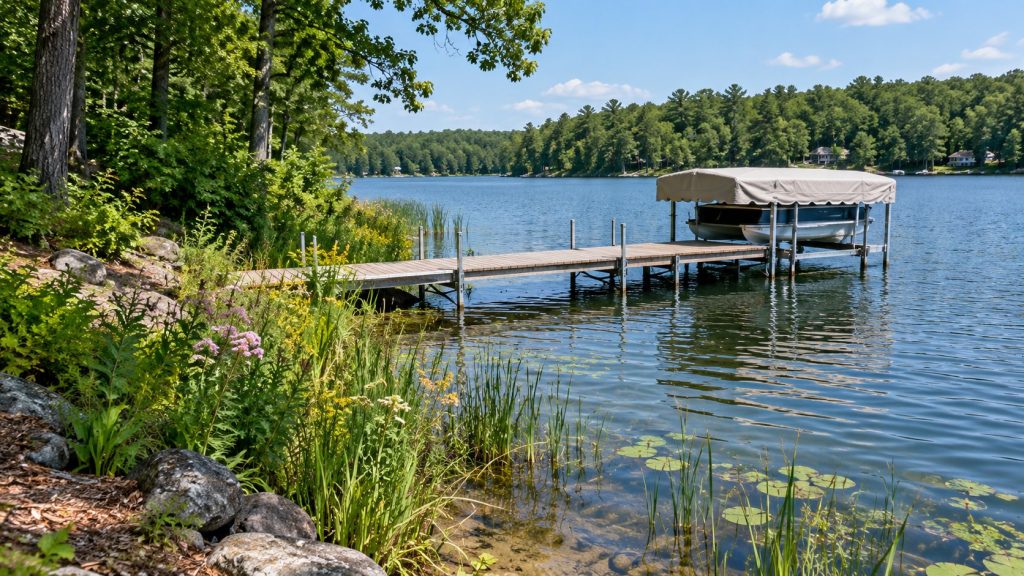
Image note: The featured planning scene is AI-generated artwork. It does not show real permits, pesticide products, or evidence that a project has been approved.