Lake weeds may return after removal because roots, buds, or seeds remain, or new plants drift in. Learn what to record before choosing your next cleanup step.
Understanding what came back makes your next decision easier. A few fresh shoots in the same bed raise different questions from a pile that appeared after a windy night. Both can make a recently cleared area look full again. They do not necessarily call for the same response.
First, decide what you mean by “back”
Look at the patch from a safe, fixed spot before doing more work. Is the new material attached to the bottom? Is it loose at the surface? Does it have the same leaf shape as the plant you removed? You may not be able to answer every question from shore. Write down the uncertainty instead of turning a guess into a plant name.
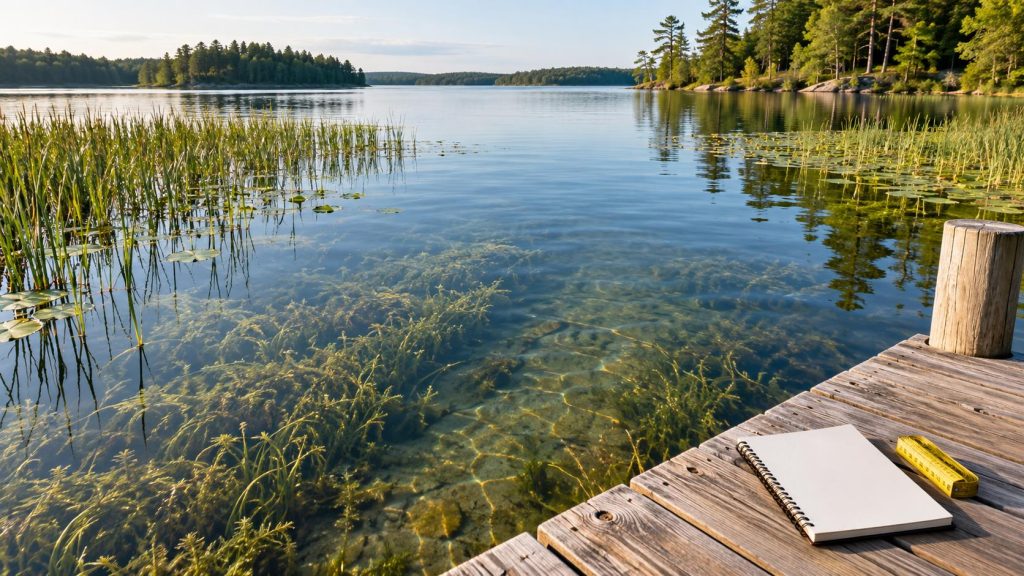
A practical record could say: “Small upright shoots visible beside the second dock post; attachment not checked.” Another might say: “Loose stems pressed against the west side of the dock after overnight wind.” Those notes describe evidence. They are more useful than “the weeds are worse again,” especially when asking a local lake manager for help.
Check whether you are comparing the same place. A patch seen from the end of a dock may look larger than it did from shore. Sun glare, water level, and viewing angle can change what you notice. Use a fixed landmark and keep photos from the same position when possible.
Cut stems can leave living parts below
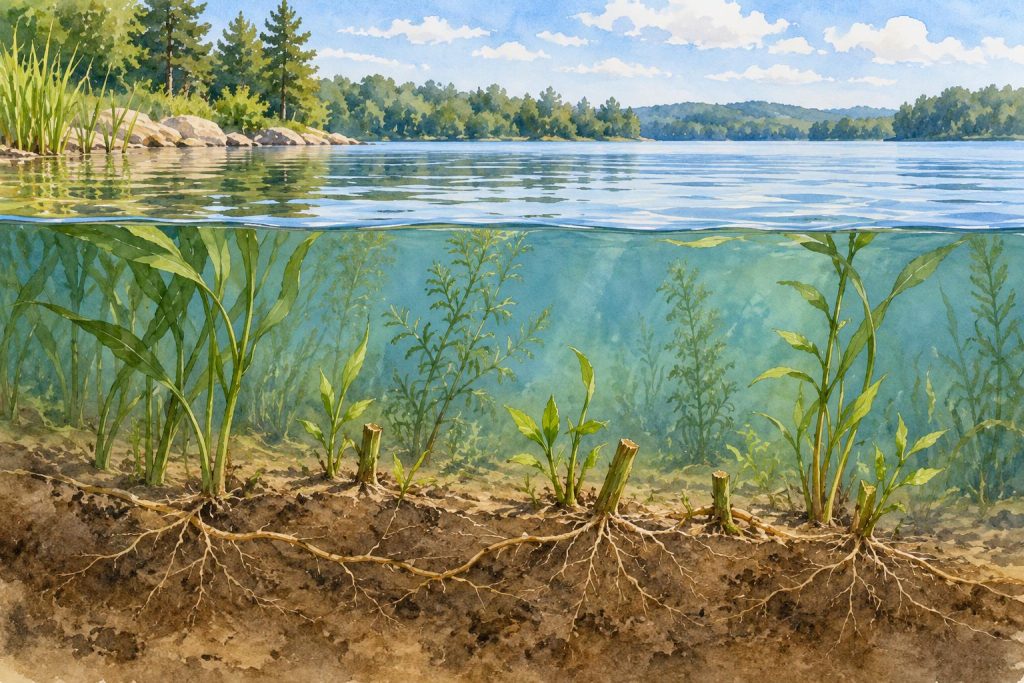
Removing the visible top of a rooted plant does not always remove the parts that can produce new growth. Depending on the species, those parts may include roots, underground stems, or buds. That is one reason a clear-looking patch is not proof that the plant has been removed for good.
Mississippi State University Extension explains that mechanical plant removal is often temporary because plants can grow again or return to the area. This is a limit to consider when setting a goal, rather than a promise about how fast any one species will return.
Cutting may still fit an approved access project. For instance, reducing tall growth could serve a different purpose from trying to remove a small, confirmed patch at its roots. What matters is that you know which result you are seeking. Read our cutting versus pulling comparison before treating the two methods as equal.
Do not respond to regrowth by digging more deeply into the lakebed. Excavating sediment can change the scope of a project and may require different permission. If the approved method is not achieving the access you need, pause and review the plan. More force is not a substitute for knowing the plant and the rules.
Some plants keep buds or tubers in reserve
Aquatic plants use several ways to survive from one growing period to the next. Some make seeds. Others make special buds or storage structures that can start new plants. These can remain after the leafy growth is gone. The details vary by species, so a general weed-removal claim cannot cover every plant.
For example, the University of Minnesota’s curlyleaf pondweed guide describes hardy buds called turions. They can remain able to grow in sediment for two or more years. The plant often grows early, dies back in midsummer, and starts growth again from turions in fall. A summer decline alone does not establish that a removal effort worked.
Hydrilla provides a different example. The U.S. Geological Survey’s hydrilla profile describes spread by plant fragments, buds, and underground tubers. It also explains that tubers can remain a source of new plants for years. These examples show why identifying the species changes the questions you need to ask.
They are not instructions to search the sediment or pull up a suspected invasive plant. If you think you have found a new invasive species, keep it in place, take clear photos, and contact the local invasive-species program. Ask how to confirm and report it before moving material or starting work.
New arrivals can look like local regrowth
An open shoreline is connected to the rest of the lake. Loose plants can arrive from elsewhere, even when nothing has changed in the small area you worked on. A floating pile and a rooted bed can also occur at the same site. Take a moment to separate those observations before choosing a tool.
Our floating lake weed guide explains how to record where loose material collects. A note about wind direction, the side of the dock, and whether the pile shifts can help describe the problem. It will not identify where each piece started or prove that another property caused it.
Broken pieces deserve attention because some species can grow from fragments. That does not mean every floating leaf will root. It means collection and cleanup should be part of a species-appropriate plan. If approved work produces pieces that you cannot contain, stop and reassess rather than letting the cleanup fall behind.
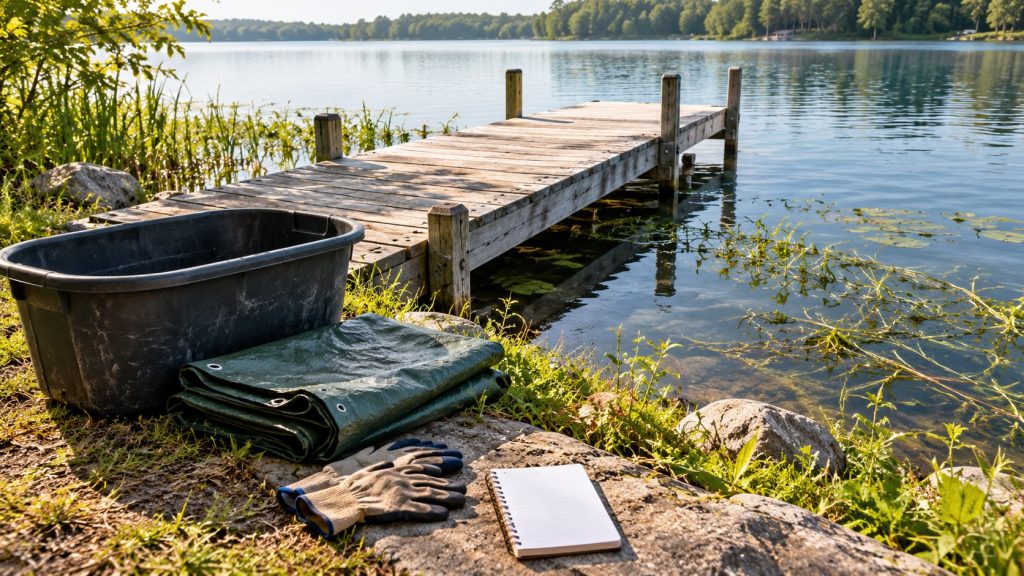
Use the cut-plant collection guide to think through reach, handling, and the landing point before another session. Collection can reduce loose material left by your work. It cannot guarantee that no new plants will ever arrive from the rest of the lake.
Compare seasons before judging the result
A plant bed can look very different in spring, midsummer, and fall. The curlyleaf example shows how a natural dieback might be mistaken for a treatment success. In other cases, new visible growth may be part of the normal season rather than a sudden failure. Matching dates makes comparisons more useful.
Keep two types of photos. Take one soon after the approved work to show the immediate result. Then take follow-up photos from the same spot. Also save a photo from a similar point in the next growing season. Those records answer different questions: what the session changed, how long access stayed useful, and what happened across years.
Record the view you could inspect. If cloudy water hides the bottom, mark the area as unseen. Do not mark it as plant-free. If the lake level drops, a plant may seem closer to the surface even without much new growth. A short note on water level and visibility helps prevent that mistake.
There is no one follow-up interval that fits every lake, species, permit, or method. Ask the person advising your project what signs to watch for and when to report them. Our spring lake weed checklist can help you build a repeatable record without turning every visit into a removal session.
Address runoff without promising a weed-free lake
Plant growth also depends on the conditions around and within a waterbody. Iowa State University’s pond guidance explains how sediment and nutrients from the watershed can support excess growth. It points to steps such as protecting a planted buffer and reducing nutrient inputs.
Start with sources you can actually see and manage. Notice whether bare soil washes toward the shore, lawn clippings land near the water, or runoff crosses a worn path. Bring those observations to a local conservation or Extension adviser. A suitable buffer plan should fit your slope, soils, shoreline rules, and access needs.
Do not assume that every returning rooted plant proves a fertilizer problem. Species, light, water level, and surviving plant structures also matter. A water sample alone will not explain every patch, and a new buffer will not instantly remove roots already in the lakebed. Shoreline care and plant management can support the same long-term goal while doing different jobs.
Healthy aquatic vegetation has value too. Plants provide habitat and can help stabilize sediment. A realistic access plan leaves useful vegetation where it does not conflict with the approved work. Turning the whole waterfront into bare bottom is not a reliable measure of lake health.
Choose a repeatable access goal
Write a goal that you can observe. “Keep the approved route beside the dock usable for launching our canoe” is clearer than “stop all weeds.” Define the route with landmarks and keep it within whatever area is allowed. Then record whether it stayed usable, not just how much material you removed.
Imagine two hypothetical visits to the same small route. After the first, you note open access and two baskets of plants. On the next, you see a few shoots but can still use the route as planned. That may call for monitoring. If a different plant now blocks the route, the useful next step could be identification, not another identical cleanup.
Include the time spent gathering pieces, moving loads, and cleaning equipment in your notes. A method that clears the route quickly but leaves hours of difficult cleanup may not fit your routine. These records can help you compare options without claiming that one visit predicts a full season.
For an allowed manual project suited to your reach and handling needs, review the T-Weeder Tool and order one for your shoreline cleanup. Check the product details against your actual task. A hand tool can be part of a maintenance plan; it does not promise to remove every underground structure or prevent future growth.
Know when the plan needs another look
Pause if the returning growth looks different, the work area is expanding, or the bottom is being disturbed more than expected. Those changes can signal that the original plan no longer fits. Keep the photos and notes so an adviser can see what changed rather than relying on a description from memory.
Ask focused questions: Is this the same species? Are the plants rooted or loose? Does the permitted method still fit? What level of regrowth was expected? Which result would justify changing the approach? Useful answers should connect the next step to the site, rather than offer a blanket promise of permanent control.
The goal is to understand what keeps returning and respond proportionately. A dated record, a confirmed plant name, and a clear access need make that possible. For more guides on collection, hand work, and planning, explore our Lake Weed Removal articles.
Featured image: AI-generated conceptual illustration of regrowth and below-ground plant parts. It is not a species identification diagram or evidence from a real removal project.