Floating lake weed removal starts with knowing what drifts in. Learn to track wind, choose a collection method, and keep gathered plants from washing back.
Watching a clean dock corner fill up again can be frustrating. Before you repeat the same work, check whether the material grew there or drifted in. The difference changes what a useful cleanup can achieve.
What is actually floating at your shoreline?
A green patch can contain whole floating plants, broken pieces of larger plants, or algae. These need different responses. Duckweed consists of tiny floating plant bodies. Watermeal is even smaller. A long leafy stem may have broken away from an underwater bed elsewhere. A floating lily leaf may still connect to a rooted plant below.
Use the lake weed growth-form guide to sort the broad groups. Take a wide photo and a closer view from a stable place. Include something that shows scale without entering questionable water. A green surface alone is too little evidence for a species name or a removal plan.
Make room for uncertainty in your notes. “Loose leafy stems beside the west dock” is a useful observation. “An invasive plant has taken over” is a conclusion that needs support. If the material is new or unfamiliar, send clear photos to your local aquatic plant specialist before disturbing a large patch.
Why the same corner fills up again
Wind can move floating plants and detached plant parts toward a downwind shore. The University of Florida’s aquatic plant guide describes several sources of these piles. Storms can loosen plants, seasonal changes can release stems and leaves, and plant-control work can leave drifting pieces.
That means a newly cleared corner can refill without any new roots growing there. Your dock may sit at the receiving end of a much larger area. A sheltered pocket can hold material after it arrives. Clearing only the patch beneath the dock will not necessarily stop the next load from drifting in.
Think of the visible pile as a delivery, then ask where it came from. Do not assume a nearby owner caused it. The direction of one breeze or the appearance of a cut stem does not prove who did what. Shared observations are more useful than an accusation based on a single morning.
Keep a drift record for a few visits
Choose one viewing point and photograph the same area each time. Note the date, wind direction, recent storms, and whether the material is loose or attached. Record where it gathers: outside the dock, against a shore corner, or along the full frontage. Use ordinary descriptions that someone else can understand.
Add what happened after a wind shift. Did the patch thin out, move to another side, or remain caught in place? You do not need to calculate a lake-wide current. You are looking for a repeat pattern that helps you schedule work and explain the problem to an adviser.
For example, your notes might read: “Monday: loose stems on the open side. Wednesday: mostly clear after wind changed. Saturday: a narrow band behind the dock.” That record supports a different plan than a rooted bed that stays in the same place all week. Keep the photos even when the change seems obvious.
Check for algae warnings before handling a green mat
Some harmful algal blooms can resemble surface mats, foam, or spilled paint. CDC’s bloom guidance says to stay out of water that is discolored, scummy, or smells bad, and keep children and pets away. A posted warning may not be present at every affected waterbody.
Do not use a rake to investigate a suspected bloom or assume that visible leaves make the whole patch harmless. Check the local health or water agency’s reports and follow its advice. Photographs taken from shore can help explain what you saw without turning the check into a cleanup task.
Keep this decision separate from the question of plant control. Removing loose vegetation does not test the water or end a beach closure. If you postpone work, record why. That prevents another household member from seeing the tools and assuming the area has been cleared for use.
Choose collection gear for the material, not the keyword
A broad rake that gathers long stems may let tiny floating plants pass through. A net that holds small material may become hard to lift when full. Compare the working head, collection opening, reach, and loaded return. The right question is whether the setup can gather your identified material and bring it ashore.
Penn State’s duckweed and watermeal guide describes netting and raking as physical removal options. It also explains that these plants can multiply quickly under favorable conditions. A method that gathers one surface patch does not by itself resolve why the plants keep growing.
Plan a small, allowed trial before buying a larger setup. Watch what the tool retains and what slips away. Stop adding material when the load becomes awkward. If collection needs finer mesh or a different head, ask for equipment suited to that job instead of improvising changes that the maker has not approved.
Work from a collection point you can manage
Pick the landing point before reaching for floating material. Check the route from the water to the container and onward to the disposal area. A low shore edge and a high dock platform create very different lifting tasks. Keep walking space clear, and use the tool within its stated limits.
Choose a small area that you can finish, including gathering loose pieces and carrying the load away. Pause if wind pushes material beyond your controlled reach. Chasing it farther out can turn a simple task into a different job. Do not enter deep or uncertain water to recover a drifting bundle.
At the end of a pass, look at the collection point again. Did material spill during the lift? Is the container too far from where you land the load? Adjust the sequence before repeating it. A modest load that reaches its destination is more useful than a large load that breaks apart on the way.
Finish the job on land
Collected plants need a destination where they will not simply wash back. Minnesota DNR’s plant-control guidance, for example, requires mechanically controlled plants to be removed from the lake. Check your own site’s rules before starting, including the rules for the identified species and the chosen method.
Do not leave a wet pile on the water’s edge and count it as finished. Choose the handling spot with the disposal plan in mind. Keep collected material away from routes where rain or wind can carry it back. Ask the receiving facility what it accepts before filling a trailer or vehicle.
Transport can involve a separate rule. Minnesota’s shoreland-resident guidance directs owners to complete the relevant permit before taking aquatic plants to a disposal location. That is a state-specific example, not a form that applies everywhere. Confirm the requirements for your origin, destination, and material.
Avoid pushing the problem into another access area
Moving a pile out of view is different from collecting it. Ask where displaced material will go before considering a device or barrier. It may collect near another dock, a launch, or an outlet. A clear photo of your shoreline does not show whether the larger problem has improved.
Do not block a channel or install a floating barrier based on a shopping-page suggestion alone. Ownership, navigation, water flow, wildlife, and local approval may all matter. Describe the proposed location and purpose to the responsible authority. The same product can raise different questions in a private pond and a shared lake.
If drift affects several properties, compare dated photos with the lake association or manager. Ask whether a recent storm, known plant bed, or scheduled control project helps explain the pattern. This is a good point for coordinated advice, especially when each owner is repeatedly collecting material from the same larger source.
Separate repeat arrivals from new growth
After collection, return to the same viewing point. A fresh band of long stems after a windy day suggests a different next question from tiny floating plants spreading across a sheltered pond. Neither observation proves the cause by itself, but the pattern helps you decide what to investigate.
For confirmed duckweed or watermeal in a pond, Penn State emphasizes nutrients and longer-term management. Review possible nutrient inputs with Extension or a local water specialist. Keep fertilizer and drainage decisions tied to the property and local guidance. Do not redirect water toward a neighboring property as a quick fix.
Measure progress by the activity you want to restore. Perhaps the launch stays usable after each small collection visit, even though some plants remain elsewhere. Record the time spent, the amount gathered, and how long access lasts. Those notes help you judge whether the effort fits your needs.
Common questions about drifting lake weeds
Does a floating pile mean my removal failed? Not always. It may be material that arrived from elsewhere. Compare the plant form, location, and timing with your earlier notes. If you cannot tell, ask for an identification review before changing methods.
Will a bigger rake solve repeat arrivals? It may gather more suitable material per pass, but it cannot stop wind or prove where the plants originate. Compare loaded handling and collection time before choosing a larger head.
Can I clear every floating leaf? First determine whether the leaf is loose, part of a free-floating plant, or attached to a rooted plant. Check the rules for that plant and site. The fact that something sits on the surface does not establish permission to remove it.
Choose the next step for your shoreline
Use the dock access guide to define the area you need. Then check the rake buying guide against your reach, lifting, and collection needs. These checks help keep the job small enough to finish.
For suitable, permitted manual work, review the T-Weeder Tool and order one for your shoreline plan. Match the tool to the actual plant material; do not assume it captures tiny duckweed or watermeal. Include collection, carrying, and disposal in your plan.
Find more practical steps in Lake Weed Removal. Your goal is a useful access area and a clear explanation of what keeps arriving. That gives each cleanup visit a purpose and makes the next equipment or management decision easier.
After strong wind or rain, use the guide to storm-drifted weeds and rooted growth to record what changed before choosing a cleanup method.
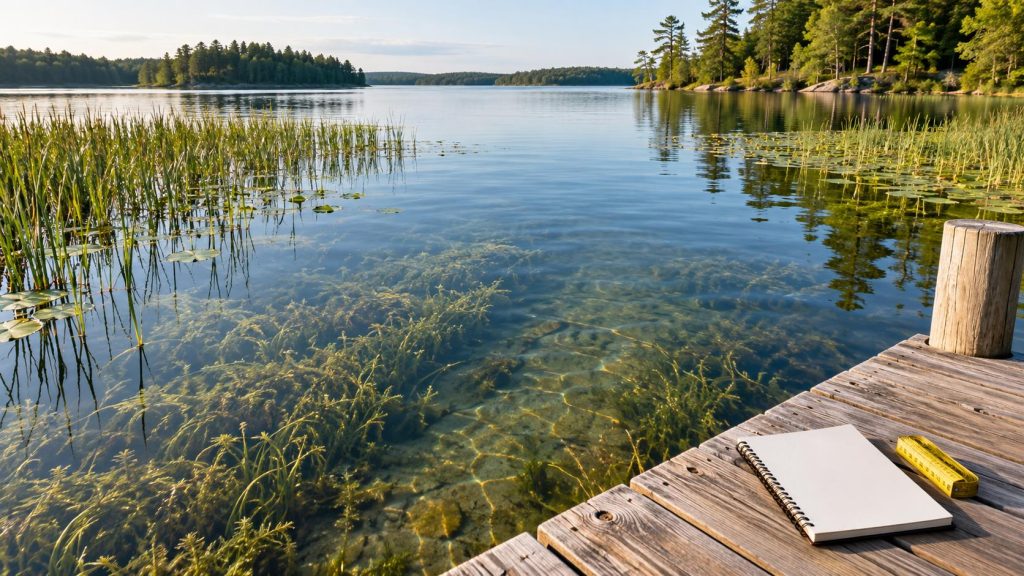
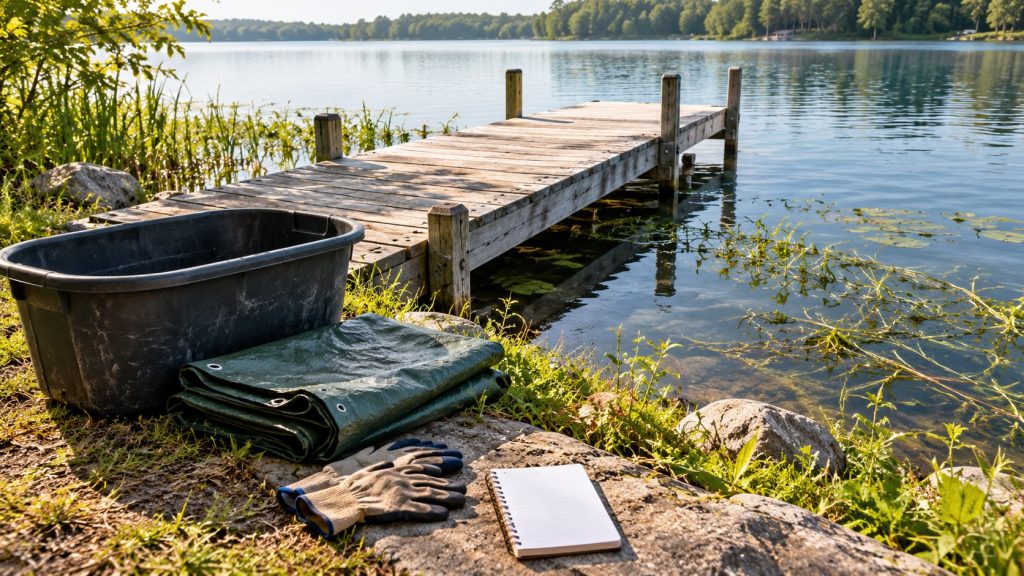
Featured image: AI-generated illustration of floating plant material gathering along a shoreline. It does not identify a species or document an actual cleanup.