Check Wisconsin lake weed removal rules before work. Learn how manual access areas, machines, protected plants, and lakebed changes affect approvals needed.
Understanding the method matters as much as knowing the size of the patch. Pulling plants by hand, running a harvester, and moving sediment with a pump are different projects. A rule that fits one does not automatically fit the others.
This guide uses Wisconsin DNR information checked on October 27, 2026. Start with the current agency pages and your local aquatic plant management coordinator. Describe the actual site and work before buying equipment or setting a start date. The goal is a clear project plan that the right office can review.
Start with the lake, the plants, and the method
Write down the lake name, county, property location, and reason for work. Add photos of the plant problem and a sketch of the proposed area. State whether the work supports a boat route, swimming access, or another specific use.
Describe how the work will happen. ‘Weed removal’ is too broad. Say whether you plan to pull by hand, use an unpowered hand tool, hire a cutting boat, or install a device. Explain whether any part will touch, loosen, suction, or move bottom material.
The DNR’s aquatic plant rules page separates manual and mechanical management under NR 109 from chemical management under NR 107. It also points to invasive-species, waterway, and discharge rules. Your project may involve more than one program.
Understand the limited manual access exception
The DNR permit application page describes a limited exception for manual removal around a dock. It concerns a single access area up to 30 feet wide along the shoreline, with the relevant recreation structures in that area. It is not a general right to clear the full waterfront.
The area cannot be a new or added clearing beside an area already controlled by another method. Check the whole proposal, including prior work. A small new patch can still raise a question when it sits outside the existing access area.
Sketch the dock, lift, swim equipment, and proposed removal together. Measure along the shore rather than treating 30 feet as a total square-foot allowance. If you cannot show how the site fits the exception, send the sketch to the coordinator before starting.
Check the exceptions to that exception
The DNR’s manual-removal permit checklist identifies cases needing review. They include undeveloped shoreline, more than one removal segment, wild rice, designated Sensitive Areas, known threatened or endangered resources, and floating bogs. Existing permitted control methods are also a reason to check.
Do not decide that an unfamiliar plant is unimportant because it looks like grass. Take clear photos and ask for help when identity is uncertain. A useful reply needs the location as well as a close view of the plant.
Check the entire work area, not only the place where you first enter the water. Include the route used to collect material and any proposed equipment location. Keep the agency’s response with the dated sketch so you can see what facts the answer relied on.
Do not split one plan into several small jobs
It can be tempting to treat each weekend as a fresh allowance. That approach misses the purpose of a single access area. Plan the season as one project, including work by other household members and any hired crew.
For example, a dock route and a separate clearing farther down the shore are two areas. Do not assume that keeping each narrow makes both exempt. Likewise, a contractor’s treatment and a new hand-cleared strip need to be discussed together.
Use our dock-access planning guide to identify the route you actually need. A narrow, useful goal makes it easier to explain the project. It also reduces the chance of expanding the job simply because plants remain elsewhere.
Ask a different question for powered work
A hand tool and a powered system should not be described as the same method. Bring the equipment name, manual, and operating description to the review. Explain what supplies the force and how the equipment contacts plants and sediment.
The DNR’s mechanized management guidance says mechanical harvesting requires a plant-management permit unless the waterbody is 10 acres or less and entirely confined to one person’s property, with that owner’s permission. That exception concerns the whole waterbody. It does not create an exempt ten-acre work area within a larger lake.
If a seller says a machine is approved, ask what that means. A product can be sold for several locations and uses. You need an answer for your waterbody, method, and installation. Save the model information so the reviewer is assessing the equipment you actually intend to use.
Separate plant collection from sediment removal
Diver-assisted suction harvesting, often called DASH, can use a hose to carry plants that a diver has picked by hand. Wisconsin DNR says that method requires a mechanical plant-management permit. The hose serves as a conveyor for selected plants.
Suctioning the lakebed to remove sediment and uproot plants is different. DNR treats that as dredging and identifies both dredging and plant-management approvals. Jetting sediment also falls under dredging. These distinctions are explained on the same mechanized management page.
Ask the contractor to describe what enters the hose. Request a clear statement about whether sediment is disturbed or removed. Do not rely only on a service name such as ‘vacuum harvesting.’ The actual work determines which question the agency needs to answer.
Check installed devices and local approvals
A device left in the water raises different questions from a tool carried away after a short job. Show its mounting point, working range, power connection, and proposed operating area. Note nearby docks, swimming areas, and travel routes.
DNR’s mechanized guidance also flags possible county zoning approvals for structures and electrical housing. Ask the county about the installation as well as asking DNR about the water work. One office’s answer may cover only part of the plan.
Before placing an order, find out whether the device can be approved at that site. A return policy may matter if it cannot. Do not install it first to demonstrate how it works. Photos, manuals, and a site sketch are better starting materials for the review.
Treat invasive plants as a specific project
Invasive plants can change the purpose and method of work, but the name ‘invasive’ does not make every approach acceptable. Confirm the identity and ask about the removal plan. The DNR’s application questionnaire directs invasive-species proposals to the local coordinator for guidance.
Explain whether native plants grow among the target plants. Show the collection and disposal plan. Ask how to avoid spreading fragments while reaching the patch, removing material, and moving equipment.
If neighbors have noticed the same growth, share observations through the lake association or coordinator. Separate a suspected sighting from a confirmed record. A coordinated response can help define the extent of the problem before several owners start different treatments.
Prepare a complete application package
Use the current application route linked by DNR. Gather the project map, property information, target plants, proposed method, and any requested owner information. Confirm who will be the applicant and who will complete the work.
Our simple mapping guide can help organize the location and photos. An application may need more detail than a casual sketch. Follow the form’s instructions and the coordinator’s requests rather than assuming your first drawing is enough.
The DNR forms page directs applicants to its online water-permit portal. It also states that permitted mechanical, manual, and DASH work requires an annual activity report. Ask which report and deadline apply to your permit, then keep work records from the first visit.
Plan debris handling before removal
A job is not finished when the plants leave the water. Decide where they will be gathered, how they will be carried, and where they will be accepted. Include this work in the schedule and quote.
The DNR permit FAQ discusses upland disposal and handling invasive material. Its landfill example includes checking whether the receiving landfill will accept the material. Do not load a trailer based only on the assumption that a waste site takes all yard debris.
Ask about the specific plant and disposal route. Keep loose pieces from escaping during handling. After work, inspect the equipment and collection area. A plan that removes plants from one access route should not create a new pile or spread problem elsewhere.
Keep chemical work on its own approval path
An exception for manual removal does not authorize herbicide use. Wisconsin DNR identifies separate chemical permits, and its FAQ explains applicator requirements and limited homeowner exceptions. Do not transfer a hand-tool answer to a bag of granules or a spray treatment.
If chemical work is part of a combined plan, disclose it when asking about the manual area. Give the reviewer the product and treatment information through the proper process. Read the issued conditions and product label before any application.
Likewise, avoid importing a nearby state’s limits. Our Minnesota rules guide covers a different jurisdiction. It can help you see why location matters, but its dimensions and exceptions do not govern a Wisconsin project.
Recheck the rules before the work season
Wisconsin has been reviewing changes to its aquatic plant rules. On the review date for this article, the DNR proposed-rules table still listed the aquatic plant proposal, WY-20-23, in the proposal process. A draft or hearing notice should not be treated as an effective rule.
Check the current agency pages and issued permit before work, especially if you planned the job months earlier. Ask about changes to the site, method, or area instead of assuming last year’s answer still fits.
If a manual tool suits the confirmed allowed task, review the T-Weeder Tool details and order one for that work after that check. Choose equipment for the approved scope and your safe reach. Find more location and invasive-plant guidance in Permits and Invasive Plants.
If your property is across the state line, use the Michigan aquatic plant approval guide instead of carrying Wisconsin’s exceptions into that project.
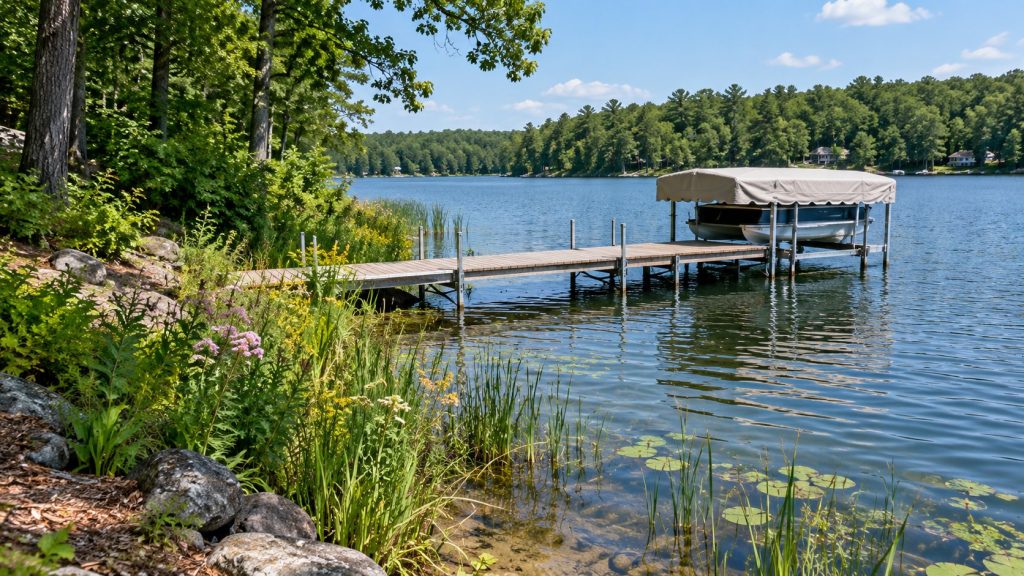
Image note: The featured image is an AI-generated lakeshore illustration. It does not depict a measured removal area, an approved project, or a specific Wisconsin lake.