Lake weed control mats and manual removal demand distinct kinds of care. Compare site fit, permissions, cleanup, and repeat work before choosing the method.
Choosing between these methods is partly about the kind of work you can manage. A mat is an installed system that needs care. Manual removal means returning to take plants out. Both require knowledge of the plants and bottom. Compare the work over a full season, including the weeks when you are away from the lake.
Give both options the same goal. For example, compare ways to keep one approved route open from the dock. A small hand-cleared lane and a large mat project do not cover the same task. Draw the area you need before seeking advice. Keep that map in view when a seller suggests a size or method.
Compare the work each method actually performs
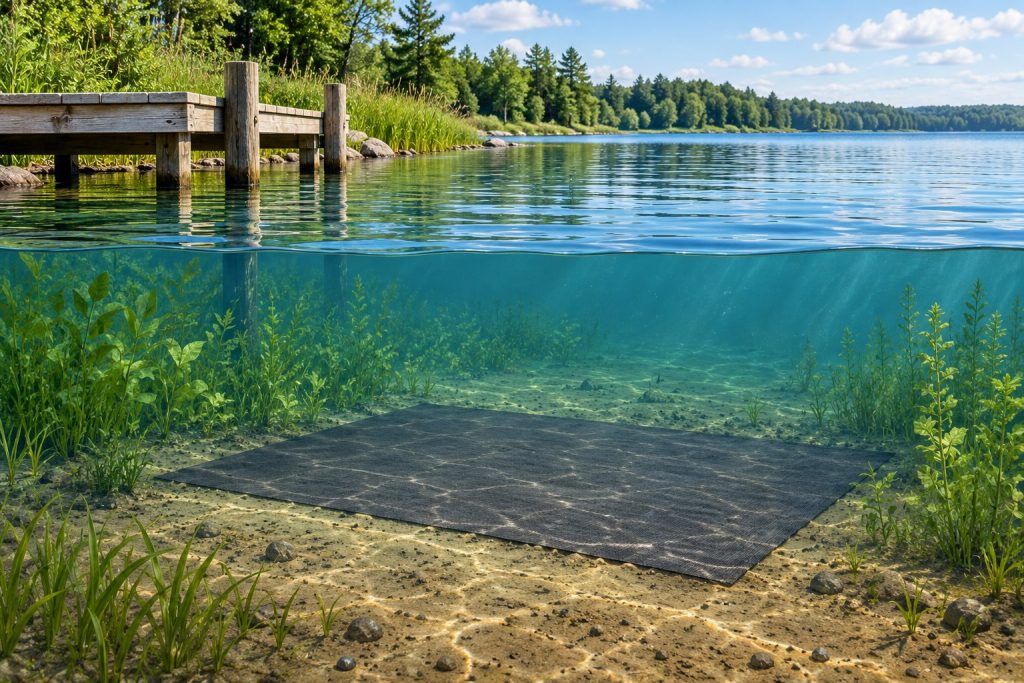
A bottom mat covers a patch of lakebed and limits light reaching rooted plants. Manual removal takes plants or loose material out of the area. Our guide to lake weed mats explains the barrier method. The difference matters: a product aimed at plants on the bottom may not solve a problem that drifts in from elsewhere.
Consider a dock that collects drifting vegetation after windy afternoons. A bottom mat below that dock does not stop incoming surface debris. A collection routine may still be needed. Conversely, removing drifted material says nothing about the rooted plants beneath it. Observe the site on several days and separate the two tasks in your plan.
Clearing plants does not create a finished swimming area. The site may still have a steep drop-off, objects under the water, or poor water quality. Define success as the plant task you can manage. Check the other swimming and access issues on their own. Neither a mat nor a hand tool answers every site question.
Decide how selective the work must be
The Pacific Northwest Extension handbook says trained hand pulling can target chosen plants. Roots and other growth below the bottom can limit lasting control. Pulling and raking may also cloud the water and create pieces that can spread. Learn which plants you have and plan to collect loose pieces as part of the work.
Selective work means choosing what to remove and what to leave. A smaller tool does not make that happen on its own. If unwanted stems grow among useful plants, ask whether careful removal is possible. Tangled growth or poor visibility may make it hard. The operator needs to see and recognize the plants while working.
For a mat, check all the plants and bottom habitat in the area it will cover. Draw around places that need to remain intact before choosing a size. A rectangular product should not dictate the clearing’s shape. Ask a qualified adviser to identify any uncertain plants. Resolve that question before covering the area or starting removal.
Check the bottom and access conditions
Nebraska Extension’s barrier guide notes issues such as deep water, soft muck, waves, and damage from boat anchors. Sediment—material that settles to the bottom—can build up on a mat. Plants may then grow above it. Look at the actual bottom and lake use before buying material or accepting a claim about low upkeep.
For hand work, decide where the person can work and how plants will reach shore. A patch that looks close may be hard to reach with a tool. A long handle does not fix poor footing or a drop-off. When diving or difficult water is involved, compare qualified professional services. Do not assume either method is a homeowner task.
For a mat, ask how the installer will check the bottom and deal with obstacles. How will the system stay in place? How will someone reach it for later care? Ask for answers tied to your dock and water depth. A demonstration in clear, shallow water may not show what the job will be like here.
Confirm permission for both options
The rules for hand removal and mats can differ. Wisconsin DNR’s permit guide describes when some hand work may be exempt from a permit. Protected resources and use with other permitted methods can change that answer. Its examples do not grant permission elsewhere. Check the rules for your own location and full project.
Send the agency a map, plant name, method, and proposed dates. Ask about each option and any plan to combine them. Include setup, care, removal, and moving a mat later. A seller may know that a product is legal in some places. You still need to know whether this use is allowed at your site.
Keep the agency’s answer with your project notes. If work is exempt from a permit only under certain terms, put those terms on the map. Recheck before enlarging the area, changing tools, or adding a method. A small change to your plans can change what is allowed. Make the check before the extra work starts.
Map the manual work from water to disposal
Collecting plants is part of removing them. Texas Parks and Wildlife’s guide explains that plants such as hydrilla can spread from cut pieces left in water. Moving pieces out of your path can move the problem to another spot. Plan how you will gather them and take them out of the water.
Decide where to hold gathered plants, how to carry them, and where they may legally go. Include the trip across the dock or lawn. Wet plants can make awkward loads. Choose a load size you can manage and allow time to move it. Follow local rules for disposing of invasive plants so they do not spread.
Record the time for setup, removal, collection, carrying, and cleanup separately during an initial authorized session. This reveals where the effort actually goes. If moving material takes longer than working the plants, buying a wider tool may not improve the project much. A better collection route could matter more.
Map the mat work beyond installation day
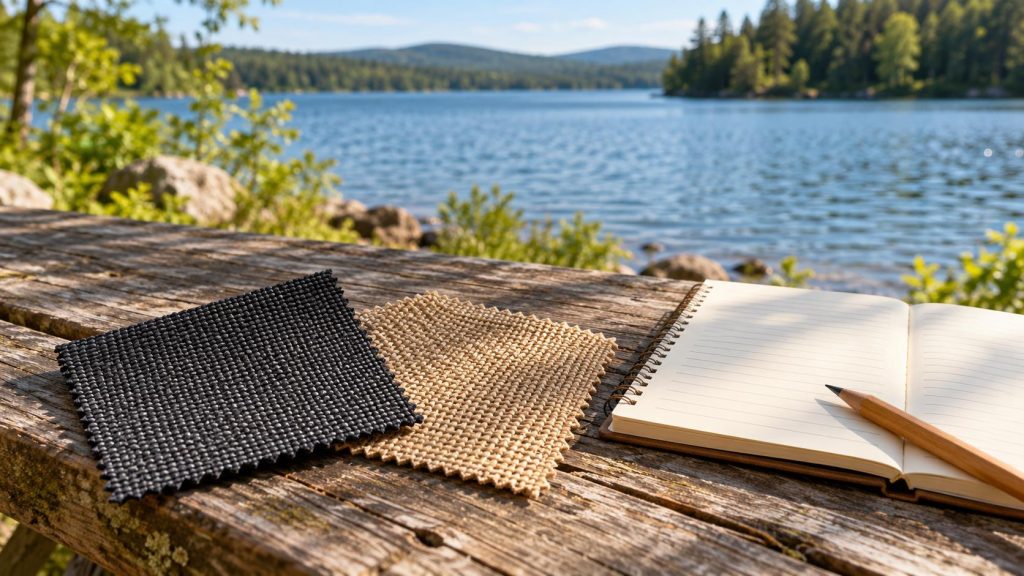
Ask for written care instructions that fit the material and site. They should say what to inspect, how to report a problem, who can repair it, and when it must come out. Make sure someone can do those tasks. A vague promise of little upkeep is not a plan for caring for an underwater system.
Think through a problem before it happens. Who can check the mat after a storm? If an edge lifts or an anchor moves, who keeps users away and arranges repair? A seasonal owner may need a local contact. Even a modest care schedule can be hard to meet when no one is nearby to carry it out.
Include the end of the season. Does the mat need to come out? Who brings it ashore, where is it cleaned, and how much storage does it take? If it stays in place, confirm that both the approval and product guidance allow this. Compare ownership through the whole year, not just the installation day.
Compare costs over the same period
Compare one growing season first. For a mat, list the material, delivery, setup, checks, repairs, removal, and storage. For hand work, list the tool, collection supplies, labor, hauling, disposal, and return visits. Add permits or expert site advice where needed. For later years, state what you assume can be reused and what will cost more.
Do not assign a zero cost to your own time unless that is a deliberate preference. Some owners enjoy occasional outdoor maintenance; others have limited time at the lake. Estimate the hours honestly and decide how they affect your choice. Avoid promising yourself an entire summer of work based on one enthusiastic afternoon.
Ask a contractor what is included and what triggers an extra charge. Does a mat quote include a return inspection? Does a removal quote include carrying vegetation off the property? Two totals become comparable only when they cover the same area, goal, and service period. Save those details with the written estimate.
Use a small-site example to test the decision
Imagine two neighbors who need the same narrow access route. One visits weekly, can work from a stable spot, and has a legal disposal route. The other comes twice each summer but has a local contractor to care for an approved mat. Their choices may differ even if the plants look much the same.
Now take away the second owner’s local help. The mat is no longer clearly the easier option; someone still has to care for it. Then change the first owner’s facts. They cannot tell useful plants from unwanted ones in the patch. They need plant advice before counting selective hand work as an advantage. Both plans have a gap.
This is a made-up example, not a claim that either method will succeed at those sites. It shows how available time, access, plant knowledge, and local help can change the answer. Try the same exercise with your site. Name the actual people who can do each task and note any help you still need.
Consider a combination only when it has a clear purpose
Some projects use hand work and an approved mat at different times or places. Combining methods is not always better. State the purpose of each step and who will do it. Mark how each changes the work area. Check that the whole plan meets local rules before starting, rather than seeking permission for only one part.
Avoid adding manual clearing around a mat simply because nearby plants look untidy. That can quietly enlarge the work area. Likewise, do not add extra mats because the first panel left a visible edge. Review whether the original access goal has been met and whether the remaining plants need any management at all.
The dock-area planning guide can help keep the route small and clear. Mark its edges on the shared map. Every person doing the work should know where to stop. That is easier to follow than a vague request to tidy the shore, especially when different people visit or maintain the site.
Choose a method you can maintain and review
Before buying, name the area, explain why the method is allowed, and choose who will do routine work. Set a time to review the result. If one answer is missing, resolve it first. These facts tell you whether the plan can work in practice. The lowest advertised price cannot answer those questions for you.
If permitted manual work fits the plants, reach, and handling demands, compare the features that matter in a lake weed rake, then order a T-Weeder tool for your planned manual project. Choose it for the defined task and include collection and repeat visits in your plan.
Take dated photos from the same spot and keep a short work log. Is the route still useful? Has the work stayed inside its planned edges? Review the actual care and labor as well as the appearance. Browse Weed Mats Rollers and Blowers for related equipment questions when the site or your needs change.
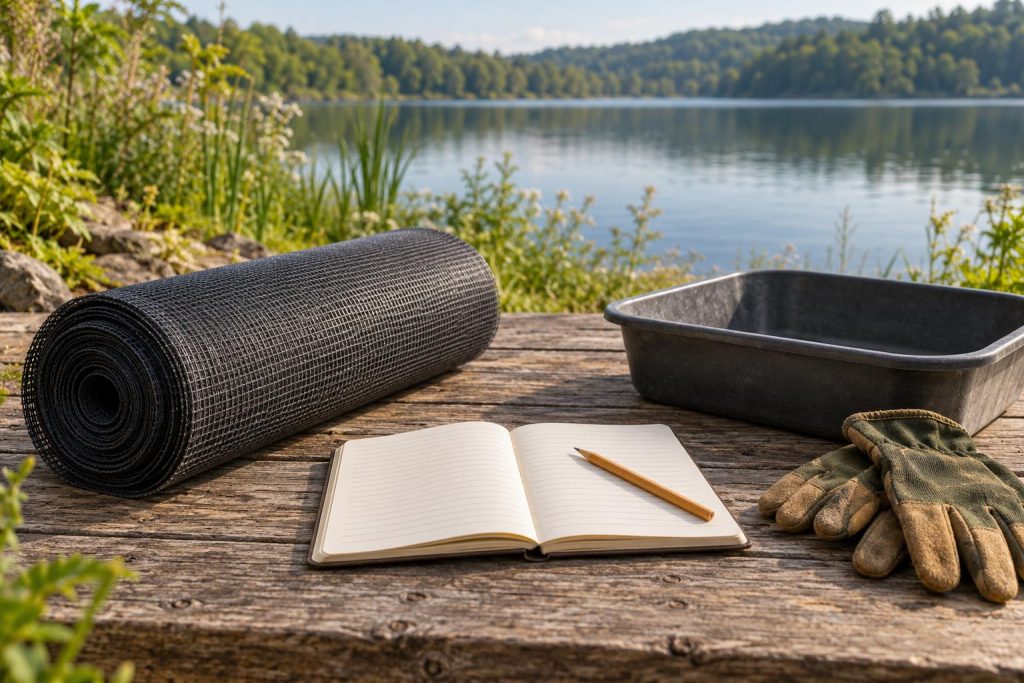
Featured image: AI-generated conceptual illustration comparing a rolled barrier material with planning and collection supplies beside a lake. It does not depict a real product, completed installation, or verified removal result.