Lake weed cleaning before guests arrive works best with a small task and time for cleanup. Check access, water notices, and tools before planning the visit.
Hosting can make a routine shoreline task feel urgent. The temptation is to clear more plants, try a new product, or keep working until the first car arrives. A better plan starts with what guests will actually use. Choose a modest, allowed task, leave time to finish it, and keep an alternative ready if the lake or weather does not suit the visit.
Pick one useful outcome for the visit
Write down the activity you hope to offer: sitting by the water, launching kayaks, boarding a boat, or swimming from an established area. Each has different access needs. A visit centered on a picnic may require a clear land path and comfortable seating more than any plant removal.
Choose one result you can judge before people arrive. That might be collecting loose drift from an approved, accessible entry and removing it from the path. Avoid a goal such as making the whole shoreline look perfect. It has no clear stopping point and can turn one small task into several unfinished ones.
If swimming is planned, use the swim-area planning guide to check the location and intended use. Plant access is only one part of that decision. A cleared area is not a promise of suitable water quality, depth, footing, or supervision.
Look at the calendar before the plant patch
Count the time available for review, any needed approval, shopping, setup, active work, collection, and storage. Then leave room for weather or a task that takes longer than expected. Do not spend the entire available period on removal and assume cleanup will somehow fit at the end.
If the visit is only a day or two away, focus on tasks already understood and allowed. A new rooted-plant project, unknown species, or unfamiliar method may need more time. It is reasonable to use another launch or keep the visit on land rather than rush a new water project.
Make the work deadline earlier than the guest arrival time. The gap lets you inspect the path, put away equipment, wash up, and shift your attention to hosting. A work zone that is still active when children arrive creates a conflict you could have avoided.
Sort the shoreline into ready, work, and wait
Mark areas that are ready for the planned use, areas with a small task, and areas that need more information. Take a few photos from dry land so a helper can see the same plan. Include where tools and collected plants will go.
The wait category is useful. Put unknown plants, poor footing, damaged structures, and deep or obstructed areas there. Do not treat this list as a set of tasks to squeeze in later. It tells you which parts of the property should stay outside the guest plan until reviewed.
Minnesota DNR’s plant-control guidance warns that owners may have unrealistic hopes of turning a soft-bottom, plant-filled shore into a swimming beach. A weekend visit is not a reason to expect that change. Work with the site you have and confirm local plant rules for any proposed task.
Avoid a last-minute treatment decision
If someone suggests a product to make the lake ready quickly, ask what plant it targets, whether it is labeled for that use, and what approvals and water-use rules apply. Ask when the expected plant response occurs and what happens to the plant material. The guest schedule cannot answer those questions.
The National Pesticide Information Center’s water and pesticide guidance stresses reading the full label before use in or near water. Labels describe precautions that protect water and sensitive organisms. A familiar brand name or a neighbor’s experience is not the full set of directions for your site.
If treatment is already part of a planned program, get the exact restrictions from the responsible applicator and current label. Read posted notices and keep guests informed. Our swimming restrictions guide explains why there is no single wait time that covers every aquatic herbicide.
Choose tools for the small approved task
For manual work, review the standing position, reach, return path, and collection point before buying. Can the task be done without leaning over an edge or entering uncertain water? Will the tool return across a guest path? Does the wet load fit what you can handle?
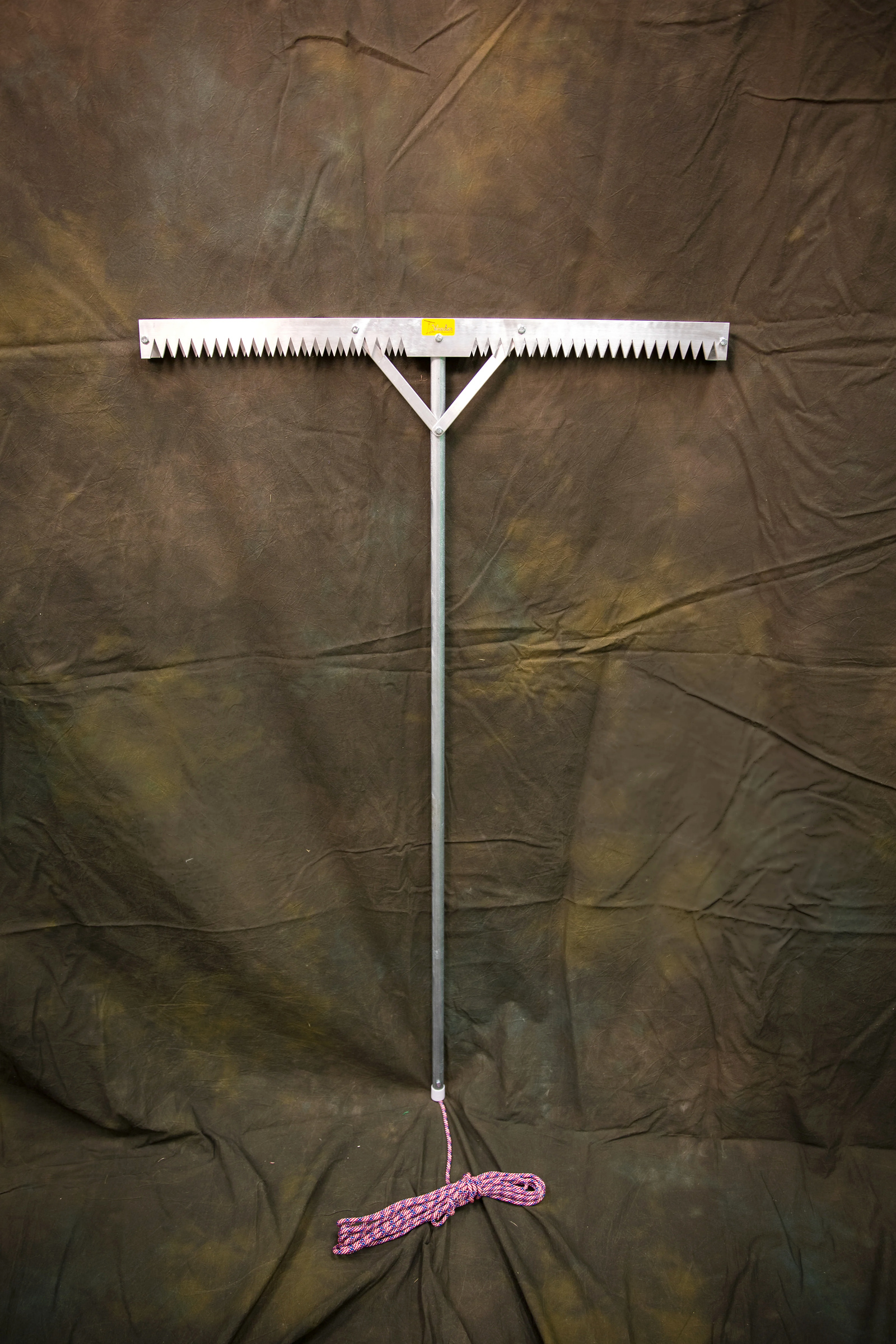
If the task fits a hand tool, view the T-Weeder Tool and order one for your planned cleanup. Compare its listed design with the actual access and collection needs. Order early enough to review the instructions and inspect the tool before the work day.
The photo below shows the real T-Weeder tool. Use the product details to decide whether its form fits your plan. The image is not evidence that it can handle every plant, water depth, or shore condition.
Leave time to collect and carry material
Set up the allowed disposal plan before the first pass. Know where plants will be placed, how they will be moved, and who will complete that job. Check local transport and invasive-plant requirements if material will leave the property.
Keep the collection point away from the route to the water and the area where guests will sit. Wet plants on a path can make the end of a project less usable than the start. A pile beside the dock is also unfinished work if it can slide or wash back into the lake.
Work in portions small enough that collection keeps pace. If the first portion produces more material than expected, reduce the remaining task. Do not open a second area while the first still needs hauling. Our plant disposal planning guide helps you think through this often-overlooked stage.
Use a firm stopping point
Decide the latest time for active work before starting. Also list the conditions that end it sooner: poor visibility, an unknown snag, damaged gear, fatigue, or a change in weather. Stopping at that point is part of the plan, even if a few plants remain.
Avoid asking an arriving guest to help finish a task they have not assessed. A willing helper may not know the footing, tool, or work boundary. If you need another person for the job, arrange that help in advance and explain the plan before work begins.
Do not combine plant work with boat launching, lift operation, or supervising children. Each needs attention. Keep the work area separate from normal use until tools, lines, and material are cleared away.
Put tools away before hosting starts
The Canadian Centre for Occupational Health and Safety’s general landscaping-tool guidance calls for safe, organized storage and keeping unused tools where they cannot injure others. It specifically warns against leaving rakes with their points upward. Apply those land-based storage principles to the end of your shoreline session.
Check the path from the parking area to the shore, not just the spot where you worked. Remove temporary cords, loose ropes, bags, and tool parts. Keep sharp equipment in its proper storage place. A visitor should not have to guess which items are safe to step around.
Leave required treatment or closure notices visible. Do not remove a sign because it looks untidy before a gathering. If an area remains unavailable, make that clear in the guest plan and direct people to the alternative activity.
Check current water information on the day
CDC’s natural-water health guidance recommends checking whether a swim area is monitored, under advisory, or closed. This is especially important after heavy rain. Unusually cloudy, discolored, or bad-smelling water and nearby draining pipes are reasons to stay out and follow local advice.
Save the relevant local page before the visit so the check is easy. Do not assume last week’s status still applies. If the lake is not suitable for the planned activity, explain the change simply and use the backup plan. The cleanup effort does not change a health notice.
Keep weather and water conditions under review during the visit too. A calm start does not promise a calm afternoon. Plan where people can go if outdoor activities need to stop, and make the choice early enough that it is practical.
Give guests a short, clear orientation
Point out the intended access route, the areas that are off limits, and where to find safety equipment. Explain any current water-use restriction. Show the place for shoes and gear so the path stays clear. Keep this simple enough that people remember it.
For children near water, assign a responsible adult to close, constant supervision. CDC’s drowning prevention guidance stresses this duty even when children have had swimming lessons. It also recommends life jackets for children in and around natural water and for weaker swimmers. Inflatable toys are not a substitute.
Make the handoff clear when the supervising adult takes a break. Hosting, cooking, and plant cleanup can all distract attention. A group of adults nearby is not the same as a named adult watching the children.
Keep a backup that still feels like a visit
Choose an alternative in advance: a meal on the lawn, a walk, a board game, or a trip to a managed access site if conditions there are suitable. Tell guests what to bring for both plans. A backup works best when it is easy to start, not when it requires a new round of errands.
Do not apologize for leaving natural plants outside the agreed access area. They are part of a lake shoreline. You can explain that the project focuses on a useful route and keeps other beds in place. That sets realistic expectations for future visits as well.
After the gathering, note what access worked, what guests needed, and how much cleanup time was realistic. More Docks, Swimming and Shorelines guides can help with the next plan. The record will make the next visit easier to prepare for without a larger last-minute project.
The featured image is an AI-generated hosting illustration. The separate T-Weeder image within the article is the site’s owned product photograph. Neither image documents a weed-removal result or certifies a swimming site.