After a storm, lake weed clean up starts with a site check. Sort loose drift from rooted plants, note damage, and plan collection before reaching for tools.
Morning light can reveal a shoreline that looks very different from the day before. A thick band of plants may have arrived at the dock, while branches and litter cover the entry. That does not prove a new plant bed grew overnight. First work out what moved, what is still growing in place, and whether the storm changed the site enough to put ordinary cleanup on hold.
Wait until the site can be assessed
Do not begin cleanup while thunder is still a concern. The National Weather Service advises waiting at least 30 minutes after the last thunder before resuming outdoor activity in its lightning safety guidance. That wait addresses lightning; it does not certify that damaged docks, high water, or the shoreline are ready for use.
Check local weather and access notices. From a safe place, look for fallen lines, damaged trees, shifted equipment, or broken structures. Stay away from hazards and use the appropriate utility, emergency, or repair service. A plant pile can wait while a damaged site is assessed.
Avoid stepping onto a dock that moved or looks damaged. Do not enter the water to find out whether its supports are still in place. Take only the photos you can get safely from land. A familiar location can have unfamiliar conditions after a storm.
Check water conditions separately from debris
Heavy rain can affect water quality as well as move plants. CDC’s guidance for natural-water visits calls for checking advisories and closures, especially after heavy rain. It also advises staying out when water is unusually cloudy, discolored, or smells bad, and near draining pipes.
Do not use clearing skies or a clean-looking surface as proof that contact with the water is suitable. Look for local health guidance for the actual lake. If an advisory or unusual condition is present, postpone water-contact work and seek the relevant advice.
Keep children and pets away from the debris while you assess it. A band of plants may contain more than stems. The first pass is an observation task, not a chance to let everyone help pull material onto shore.
Take a before photo that answers useful questions
Choose a stable viewing point on land and capture the whole area. Include the dock, shoreline, and edge of the new material. Add closer photos only where you can do so without leaning over the water. Record the date, recent wind direction if known, and whether the water is high or low compared with normal.
Compare the image with an earlier photo. Ask whether a known open area is now covered by loose material, whether a plant bed changed shape, or whether a structure shifted. This comparison is more useful than deciding that everything green must be removed.
If you have no earlier photo, start a record now. Mark your uncertainty. A later visit may reveal which material was temporary drift. Our simple mapping guide can help keep storm observations tied to locations.
Look for loose drift without pulling to test it
Loose drift may form a band along the waterline, gather on the windward side of an obstacle, or move as a mass with surface motion. It can contain mixed leaves, broken stems, and pieces from different plants. Those are clues, not a final species identification.
Rooted plants may remain attached below the surface even when their stems lean or tangle with drift. Do not assume that a mat is loose because its top moves. Avoid tugging on a dense patch just to test whether it has roots. Get a clearer view or plant advice if the distinction remains uncertain.
The guide to recurring drifted weeds explains why the arrival point and the growth site can be different. Clearing rooted plants at the arrival point may do little to reduce the next load that comes across the lake.
Make four separate task lists
Put ordinary loose plant material on the first list. These are the pieces you can identify and collect from a suitable position within the local rules. Keep the proposed cleanup area small enough that you can handle the material you bring out.
Put rooted growth on the second list. It needs its own species and method review. A storm does not automatically expand an existing removal approval. Keep the original work boundary visible in the plan until an agency confirms a change.
Put nonplant debris on the third list. Branches, lumber, litter, and damaged property may need different handling or disposal. Do not mix sharp or unknown objects into a routine plant bag. Ask the right local service about suspicious waste or material you cannot safely handle.
Put large floating masses and equipment snags on the fourth list. A rooted piece of bog, a whole tree, or a bundle wrapped around a lift is not an ordinary rake task. Photograph it from a safe place and seek advice before trying to move it.
Treat a floating bog as a separate problem
A mass of peat, roots, and living plants can look like a large pile of weeds while behaving very differently. Do not tow, cut apart, anchor, or push such a mass toward another property as an improvised cleanup method. Its movement and disposal need a plan.
Minnesota DNR’s water permit guidance says moving a floating bog away from a property requires an aquatic plant management permit. The agency provides advice and approval on where it goes. That is a Minnesota example, but it is a good reason to ask your local water agency before treating a floating land-and-root mass as loose debris.
Include its approximate size, location, and any threat to access or structures when asking for help. Do not enter the mass to measure it. A photo with familiar shore landmarks can help the agency decide what information it needs next.
Collect plants without creating more drift
For ordinary plant cleanup that is allowed and accessible, decide where material will come ashore and where it will go next. Keep the return path clear. Avoid moving a pile from one part of the water to another and calling the job finished.
Texas Parks and Wildlife notes in its plant control guidance that species such as hydrilla can grow from fragments. It stresses removing cuttings from the water. The point is not that every loose leaf will root; it is that the species and collection method matter.
Do not chop a drift pile just to make it appear smaller. Choose a method that lets you collect what you disturb. If the load is too dense or awkward to handle from a stable position, use a qualified service rather than pull harder or step farther into the lake.
Choose tools for the checked part of the job
Match the tool to the material and the site you have actually reviewed. A manual tool may fit accessible loose plants, while a lift snag or large woody object needs another response. Avoid deciding that one tool must handle every item on the storm list.
For a permitted manual task with suitable access, view the T-Weeder Tool and order one if its listed design fits the planned collection work. Keep the purchase tied to that task. It is not equipment for moving bogs, clearing electrical hazards, or repairing storm-damaged structures.
Check the tool before use and choose a place to set it down during breaks. Work in small loads and stop if a pass meets unknown resistance. The footing and visibility guide helps assess the shore position and full tool path.
Finish disposal before the next rain
Use an allowed collection spot where material will not wash back into the lake or block a path. Ask about invasive-plant handling and transport rules before hauling anything off the property. Check whether the destination accepts the material.
Make cleanup responsibilities clear if neighbors are working together. The household whose shore catches the drift should not quietly become the permanent storage site for everyone’s wet plants. Agree on collection, carrying, and final disposal before a group session starts.
Avoid pushing loose material into drains or onto a nearby shore. If the amount exceeds the plan, stop and arrange another disposal option. A small completed task is better than a large wet pile left where the next rain can move it again.
Recheck after conditions settle
Return to the same photo point after the weather and water conditions allow it. Note what drift has moved, what remains attached, and whether more material has arrived. The second look can help separate a one-time event from a recurring collection problem.
Do not rush to change the entire shoreline because of one storm. If a dock corner repeatedly traps plants, ask whether the access and maintenance plan needs review. If a rooted bed is the actual issue, treat it as a separate plant-management decision with local advice.
Keep a short record of the cleanup time, disposal effort, and unresolved items. That record can make the next storm response calmer and more realistic. It also gives a service provider useful information if the work is beyond what you can handle.
Keep the storm plan focused
A practical storm plan follows a simple order: assess the site, identify the material, confirm the allowed task, collect it, and finish disposal. Stop when the task changes. Fresh damage, a large floating mass, or unclear water deserves a different response from a handful of loose stems.
More Docks, Swimming and Shorelines guides can help with related access issues. The best result is a useful shoreline record and a completed, limited cleanup—not a rushed effort to make the lake look as though no storm occurred.
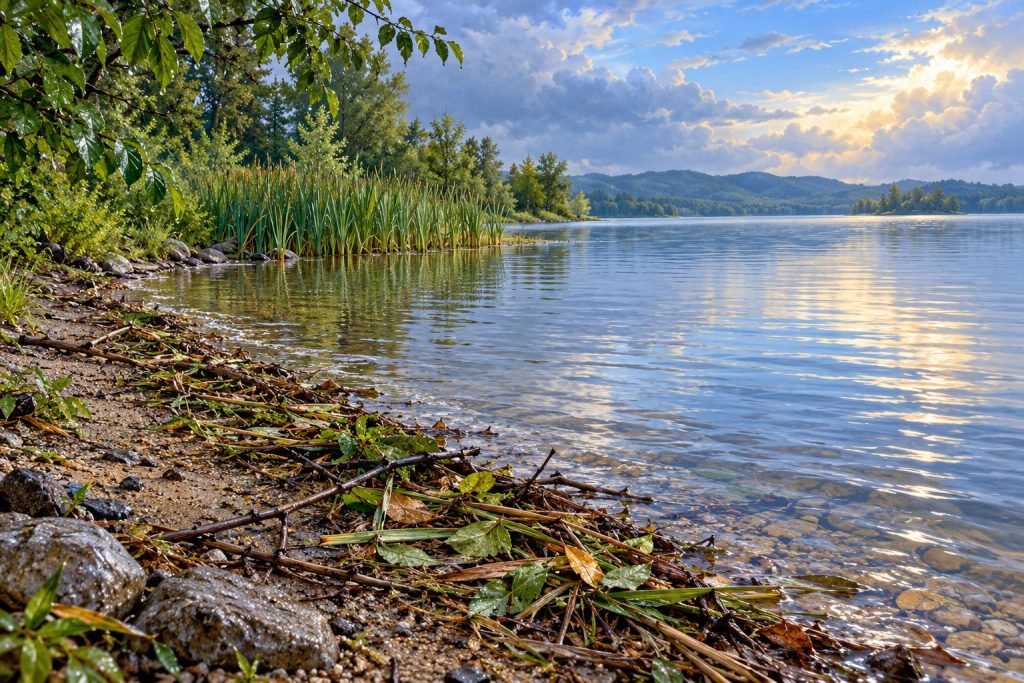
The featured image is an AI-generated post-storm shoreline illustration. It does not identify a plant species, document storm damage, or show a verified cleanup result.