Chara and starry stonewort can both look like underwater plants. Compare their structure, record a site, and ask an expert before naming a suspicious patch.
Spotting a bushy green patch on the lake bottom can start a useful conversation, but it should not end with a guess. Chara and starry stonewort belong to a group of large freshwater algae that can resemble rooted plants. Some of their most important differences are small, hidden, or hard to photograph.
For Minnesota lake weed identification, the practical goal is to recognize when a find deserves expert review. You do not need to become a specialist before making a report. You do need a clear location, honest observations, and a plan that avoids moving or scattering the material.
Understand why the two can look alike
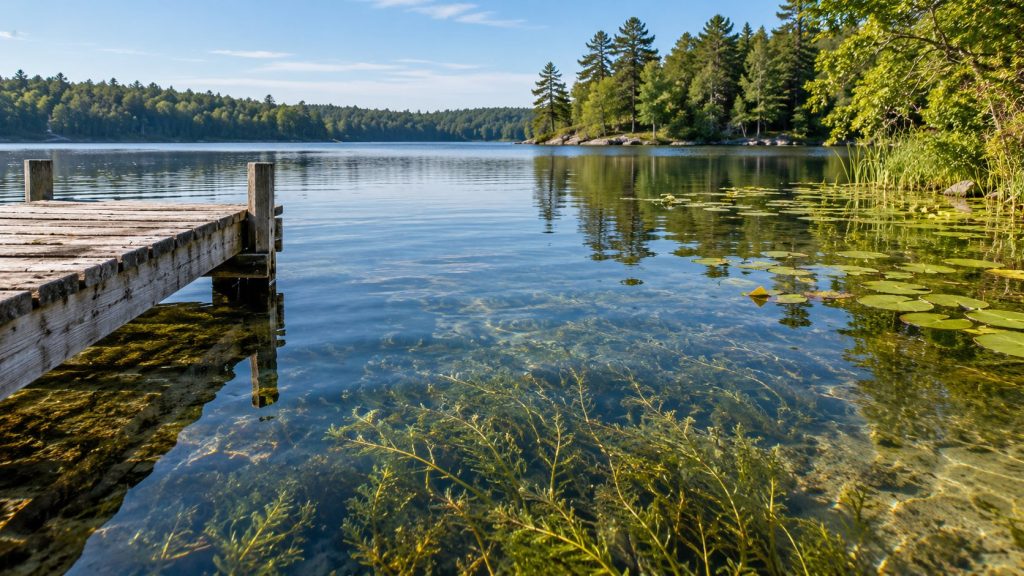
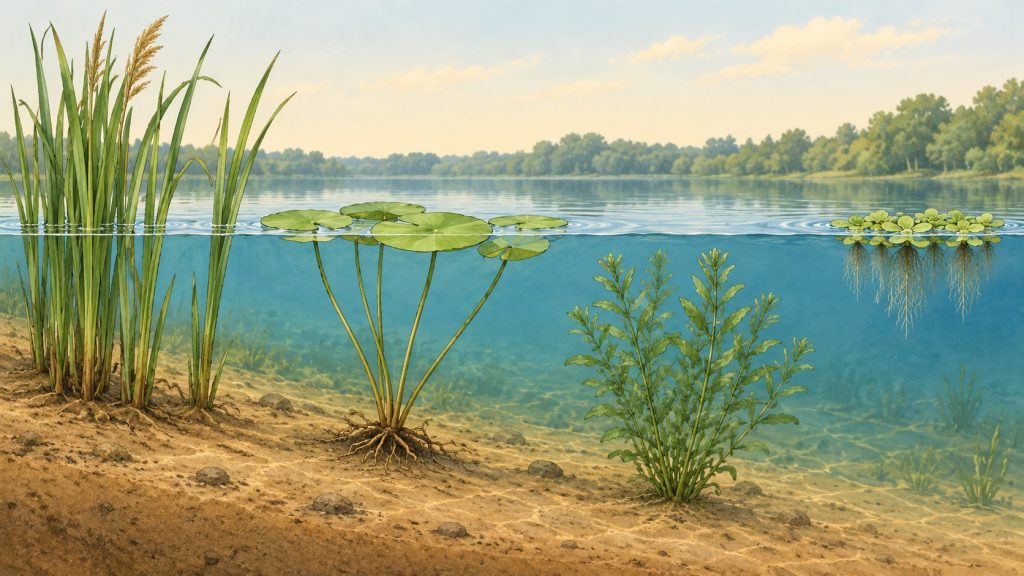
Both can have a central stem-like structure with narrow branches around it. In a dense patch, those branches overlap and create a grass-like or bushy appearance. Looking down from a dock often hides the points where the branches connect.
The University of Minnesota’s starry stonewort research overview places starry stonewort in the same broader group as native Chara and Nitella species. It notes that starry stonewort can look similar to those native forms. Size and a dense growth habit can raise a question, but they are not enough to settle the name.
A whorl is a ring of branches growing from one point. A branchlet is a small branch. These words appear in identification guides because the arrangement matters. They do not mean that every green shoot with a ring of branches is starry stonewort.
If your first impression is simply “underwater grass,” use the grass-like lake plant guide to widen the comparison. Narrow leaves, algae branchlets, and loose stems can look similar at a distance.
Know what Chara contributes to the comparison
The Minnesota DNR Chara guide describes submerged algae that can form broad beds. It notes a gritty surface from mineral deposits and a musky odor when crushed. These are familiar clues used in identification, but they should be considered with structure and expert guidance rather than used as a stand-alone home test.
Do not crush unknown material merely to see whether a smell matches an online description. Smell is subjective, and a mixed sample can contain several kinds of growth and decaying debris. A photograph and an accurate account of where the material came from are easier for another person to review.
The DNR also describes Chara’s role in stabilizing bottom sediments and supporting fish, insects, and waterfowl. That is why a mistaken invasive-species label matters. Removing a native bed because it looks unfamiliar can change a useful part of the shoreline.
If an expert confirms Chara, record that answer and the location. A later change in the patch still deserves observation, but you now have a reliable starting point rather than a repeated guess each summer.
Star-shaped bulbils are the key feature to document
The Minnesota DNR starry stonewort profile describes small, white, star-shaped structures called bulbils. They form on clear threads near the base and may be at or below the sediment surface. Bulbils can produce new growth; they are not flowers or ordinary seeds.
A bulbil close-up is useful only if it is clear enough to show the shape and its connection. A bright speck in a muddy bundle may be a reflection, debris, or something else. Include a wider view of the connected material before making a close-up, and add a scale without hiding the structure.
Do not dig through a patch to hunt for stars on your own. Ask the reviewing specialist whether a sample is needed and how to obtain it without unnecessary disturbance. The most useful next step may be for a trained person to visit the site.
If you have already found a suspicious structure while cleaning equipment, keep the observation tied to that equipment and its last location. A loose piece in a boat does not prove that it grew beside the dock where you first noticed it.
Not seeing a star does not close the case
The DNR notes that bulbils can be present through the growing season but are most obvious and plentiful in late summer. A small fragment may lack the base where they occur. Poor light, sediment, or a limited photograph can also hide useful details.
The Wisconsin DNR starry stonewort fact sheet says native Chara and Nitella can be difficult to distinguish from starry stonewort and highlights the star-shaped bulbils as a unique feature. That makes a clear sighting useful, while an unsuccessful search by a beginner remains inconclusive.
Record the difference between “no bulbils visible in this photo” and “this plant has no bulbils.” The first statement describes your evidence. The second makes a broader claim that the image may not support.
The same care applies to branch counts. A damaged or overlapping shoot can hide branches. Do not make a final identification from a number counted on one blurry node. Send the whole set of observations and let the specialist decide what carries weight.
Prepare a report that an expert can use
| Record | Why it helps |
|---|---|
| Lake name and precise location | Allows a reviewer to find the same spot |
| Date and approximate water depth | Adds context for growth stage and visibility |
| Attached growth or loose fragment | Separates a rooted location from a drift or equipment find |
| Wide photo and connected close-ups | Keeps the small detail tied to the whole sample |
| What you can see clearly | Distinguishes evidence from assumptions |
| What work or equipment movement occurred | Helps explain how the material was encountered |
A useful report might say: “Bushy green growth beside the east side of the public dock on August 18. The photo shows rings of narrow branches. I cannot see the base or confirm bulbils. No removal attempted.” This is an invented example of clear reporting, not a report of a real infestation.
If you have a possible bulbil, say “possible” until it is confirmed. Keep original image files, because messaging apps may reduce detail. Send a small, organized set rather than dozens of nearly identical pictures. The plant photo guide explains how to organize useful views.
Avoid adding a confident label to every file name before review. Use neutral names such as “east-dock-whole-shoot” and “east-dock-closeup.” That helps you preserve the evidence even if the final identification is different.
Choose the right person to review it
In Minnesota, use the invasive-species specialist contacts linked from the DNR profile for a suspected new occurrence. Outside Minnesota, contact the responsible state or provincial aquatic invasive-species program, Extension office, or local water authority. A lake association can help connect people, but an informal group vote is not a substitute for confirmation.
Tell the reviewer whether the waterbody already has a confirmed record and where your find is relative to that record, if you know. Do not assume a listed lake means every green patch is the invasive species. Native and invasive growth can occur close together.
Ask what the next step should be, who will confirm the identification, and whether the site needs a survey. If the reviewer requests a physical sample, get instructions about collection, packaging, and transport first. Do not mail or drive suspected invasive material to an office without checking.
Save the reply with the photos. Include the name of the agency or reviewer, the date, and any limits they placed on the answer. “Likely from photos” and “confirmed from specimen” are different levels of evidence.
Keep a suspected find from becoming a spreading event
Pause work in the suspicious patch while you seek guidance. Do not rake through it repeatedly to see how much comes up. A report does not require clearing a section first, and an unplanned cleanup can make it harder to assess the original location.
Inspect gear that contacted the area and follow the applicable cleaning, draining, drying, and transport requirements. Keep tools from a suspected patch from being casually borrowed for another lake. Ask the agency about any material already on the equipment.
The Minnesota DNR profile warns that small fragments and bulbils can travel with water-related gear. This is a reason to pay attention to ropes, anchors, fabric, and trapped debris as well as the obvious metal surfaces. Follow the agency’s instructions for the equipment involved rather than inventing a treatment.
A confirmed name changes the management discussion
If the find is native Chara, the discussion may be about preserving habitat while keeping one needed route usable. If it is starry stonewort, the discussion may include the size and extent of the patch, early containment, repeated checks, and approved methods. The same tool purchase should not be the automatic answer to both findings.
The University of Minnesota research overview reports that some treatments reduced visible mass while bulbils remained able to grow. It also describes promising results from sustained hand removal of early, small infestations. These findings support a careful, site-specific plan; they do not justify a blanket promise of eradication or a casual do-it-yourself trial.
Ask what outcome the proposed work is meant to achieve: better access, reduced local abundance, containment, or another goal. Then ask how that outcome will be checked. Our guide to talking with an aquatic plant specialist can help prepare those questions.
A separate, confirmed plant problem may be suitable for manual work. If a specialist-approved project fits the design, review the T-Weeder Tool and order one for your permitted shoreline project. This is not a recommendation to disturb a suspected starry stonewort patch or a claim that the tool eliminates it.
Keep the record useful next season
Return to the same viewing point when the agency or management plan calls for a check. Record the date and conditions, even if the patch looks unchanged. Use the same landmarks so a later reviewer can compare locations rather than merely comparing two green photographs.
If the patch looks larger, describe what you actually observed. A wider visible edge may reflect clearer water or a different viewing angle. Measurements or a professional survey can resolve questions that casual photographs cannot.
Find more comparisons in the Aquatic Plant Identification guides.
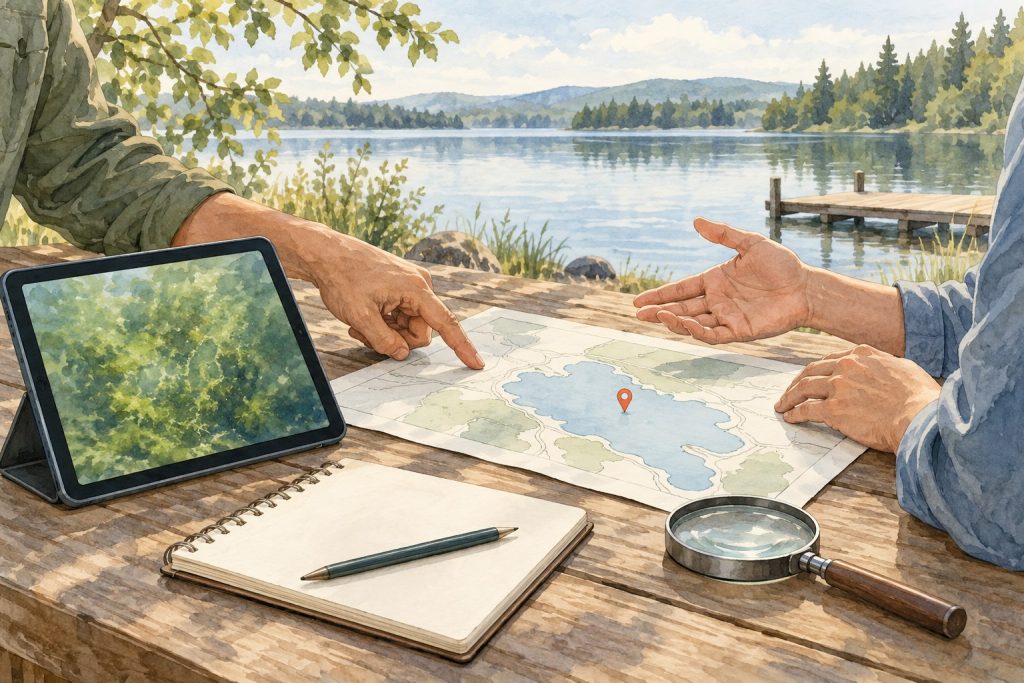
Featured image: AI-generated illustration of expert review and location recording. It contains no diagnostic specimen and must not be used to identify Chara or starry stonewort.