Before buying a lake weed fan or thruster, check the site, dock, power, water depth and local rules. A good fit starts with a plan for the whole waterfront.
Choosing the motor is only one part of buying this equipment. The mount, cord, controls, shore access, and people who use the water all affect the choice. A model that works at one dock may be a poor fit a few doors down. The same product name can also cover several packages.
Use this guide to prepare for a site visit and a written quote. It does not give wiring steps, mounting depths, or run times. Those must match the exact model, local rules, and your site. The aim is to find the questions that matter before you pay for equipment you cannot use as planned.
Describe the job before asking for a size
Begin with one clear sentence about the problem. For example, loose leaves collect beside the boat after west winds. Another owner might say rooted stems block the ladder. A third might want to remove a layer of mud. These needs should not lead straight to the same motor recommendation.
A fan or thruster generally creates water movement. Whether that movement helps your goal depends on what you want to change. Ask the seller to describe the proposed result in plain words. Avoid a quote that promises a clean shoreline without saying which material will move and where it will go.
Take a few wide photos from shore. Add close views of the nuisance when you can do so safely. Mark the part of the dock that is hard to use. Our dock weed-control guide can help you turn a broad wish for fewer weeds into a small access goal.
Map the space the equipment must share
Draw the dock, boat lift, ladder, shore steps, and usual boat approach. Include nearby docks and any shared launch. Mark water intakes or other structures you know about. Label unknown items as unknown. Do not guess at the location of cables or pipes.
Then add the ways people use the area. A child may fish at the dock corner. A visitor may step down the ladder without asking. A paddler may pass close to the lift. These are real uses that need to fit the plan. The machine should not turn a familiar route into a hidden obstacle.
A plan for a private berth may differ from one for a shared beach. Where you cannot control water access, tell the supplier before choosing a system. Ask what restrictions the manual places on people and pets entering the water. If those limits cannot be followed, choose a different approach.
Get a local answer about the intended use
Send the water agency a site sketch, product details, and a plain description of the work. Ask about plant-control rules, structures in the water, and sediment disturbance. The agency may need to assess more than one part of the plan. A seller’s permission statement does not answer every local question.
In Minnesota, DNR says hydraulic jets cannot be used to move sediment or uproot aquatic plants. The page names several common products as examples. Buying a unit in the state does not make those uses legal. Ask local staff about the actual proposed use.
In Wisconsin, DNR lists specific conditions for mixing devices. These include the supporting structure, lack of bottom disturbance, discharge position, and effects on other people. A different review may apply when those conditions are not met. This comparison shows why a national sales page cannot serve as a site permit.
Keep written replies and approvals with your quote. Note any conditions that affect where or when the unit can run. If the proposed placement changes after a site visit, ask whether the earlier answer still applies. Do this before installation, while changes to the plan are easier.
Plan around low water as well as today’s depth
Ask how the supplier will assess depth where the equipment would sit. A single measurement during high water may not describe late summer. A fixed dock and a floating dock also move differently as water levels change. These details affect the space available above and below the unit.
Share any records of low water, floods, or seasonal drawdowns. Photos showing the dock in past years can help. If you have no record, say so. The designer should explain which water levels the setup can handle and what triggers a shutdown or adjustment.
Ask for the required clearances in the exact manual. Clearance means the open space between the equipment and nearby surfaces or objects. Do not borrow a depth number from a different motor or mount. A shallow-water accessory may change the design, but it does not grant permission to disturb the bottom.
Also ask who makes adjustments and how they reach the equipment. A plan that depends on frequent entry into deep or soft-bottomed water may not suit you. Have the installer explain a safe service method. Do not improvise one after the lake level drops.
Have the dock and mount assessed together
A mounting bracket that fits around a post is not proof that the dock can support the full system. Ask the installer or dock supplier to review the proposed loads and attachment. Include normal use, wave exposure, and seasonal removal. Keep changes to the dock in the written scope of work.
Product packages can vary. The AquaThruster product page, for example, lists motor, cord, mount, and optional rotating-control choices. That illustrates why the name alone is not a complete specification. It does not mean every listed package fits every lake.
A rotating control changes the direction of flow over time. Ask whether its full planned movement stays within the approved area. A fixed-direction system has its own limits. The useful question is where water and loose material may travel, not how impressive the range looks in an animation.
Ask what happens when you remove the dock for winter. Will the equipment come out first? Does a contractor handle it? Where will the mount, motor, and controls be stored? Confirm that the planned sequence is practical for the people who already do your seasonal dock work.
Let a qualified electrician review the power plan
An outlet near the lawn does not prove that the site is ready for a water-based motor. Give a qualified electrician the exact equipment details, planned controls, and cord route. Have the review cover the whole supply, not just the plug that fits the motor.
The Electrical Safety Foundation’s dock and marina guidance calls for qualified electrical inspection and suitable ground-fault protection. A GFCI is a device that shuts off power when it detects certain current leaks. It helps protect people, but it does not replace sound wiring or safe use.
Ask how the cord will be protected from foot traffic, boat movement, and dock joints. Ask where power can be shut off from dry land. Do not use an improvised extension-cord arrangement to avoid necessary electrical work. Include needed upgrades in the cost before deciding whether the project fits your budget.
If protection trips or a cord is damaged, stop using the setup and seek qualified help. Repeatedly resetting a protective device does not fix the fault. Never reach into the water to investigate powered equipment. Make sure everyone responsible for the site knows who to call.
Separate remote control from safe water access
A timer or phone control can make starting a machine easy. It can also make the state of the equipment less obvious to a visitor. A motor that is silent at the moment may still have power connected. Build the access plan around the manufacturer’s full instructions.
For example, Kasco’s AquatiClear safety guidance says no one should enter the water while the unit operates or remains connected to power. It also discusses the moving propeller and recommends removing the unit for use of a swim area. Read that model-specific advice in full rather than assuming a guard makes contact harmless.
Ask how automatic restart is prevented during service or water access. The installer should demonstrate the required shutdown and power-disconnection process. Other powered equipment at a dock also needs attention. Disconnecting one device does not by itself establish that the whole waterfront is suitable for swimming.
Decide who controls the system when guests arrive, when a cleaner visits, or when a boat needs work. If several adults share responsibility, use one clear process. A short written routine is easier to follow than a string of informal promises.
Request a quote that covers ownership
Ask for the exact model, mount, controls, power work, delivery, and installation as separate items. Include service access and seasonal removal. Ask which parts wear, how they are replaced, and where service is available. A low base price can hide work that you still need to buy.
Request written warranty terms and return conditions before ordering. Find out whether the return policy changes after installation or water use. Ask how a supplier will assess a performance concern. Keep sales claims, site assumptions, and the final agreed result together so everyone can refer to the same plan.
Use our lake weed project cost guide to compare complete approaches. Include the time someone must spend checking the equipment. An automatic control can reduce a task, but it does not take responsibility for the site.
Keep a smaller manual option in the comparison
If a few reachable plants block access, a permitted manual cleanup may meet the goal without a permanent installation. Check local rules and safe working reach. Plan to collect the plants and dispose of them properly. Deep water, poor footing, or widespread growth may call for professional help instead.
For suitable manual work, compare the T-Weeder Tool and order one for your planned project. Review the reach and design against your actual work area. The tool does not replace an electrician, sediment specialist, or lake-management plan when those are needed.
A useful buying decision ends with clear answers about the site, allowed use, daily operation, and full cost. Keep those answers with the current manual. Browse our weed mats, rollers, and blowers guides when comparing other ways to maintain a small access area.
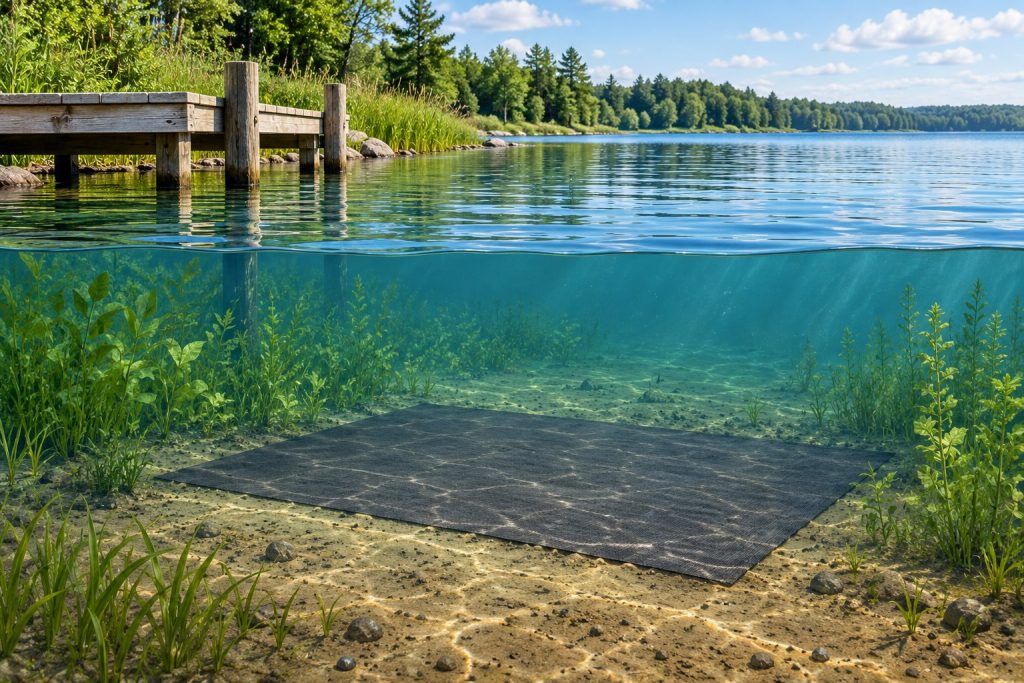
Featured image: AI-generated conceptual illustration of a shoreline planning visit. The people are fictional and do not represent an endorsement, inspection, or approved installation.