A lake weed herbicide needs to fit the plant, site, and water uses. Ask these questions before choosing treatment for your dock, pond, or swim area.
Understanding those details is more useful than starting with a bottle name. You may want fewer plants around the ladder, but someone else may use the same water for irrigation. The product, application plan, and rules need to account for the real setting.
This guide is a conversation planner, not an application recipe. It helps you gather the information a qualified aquatic plant specialist needs. It also explains where a manual approach may be worth comparing. You do not need to decide that all herbicides are good or bad to ask sensible questions.
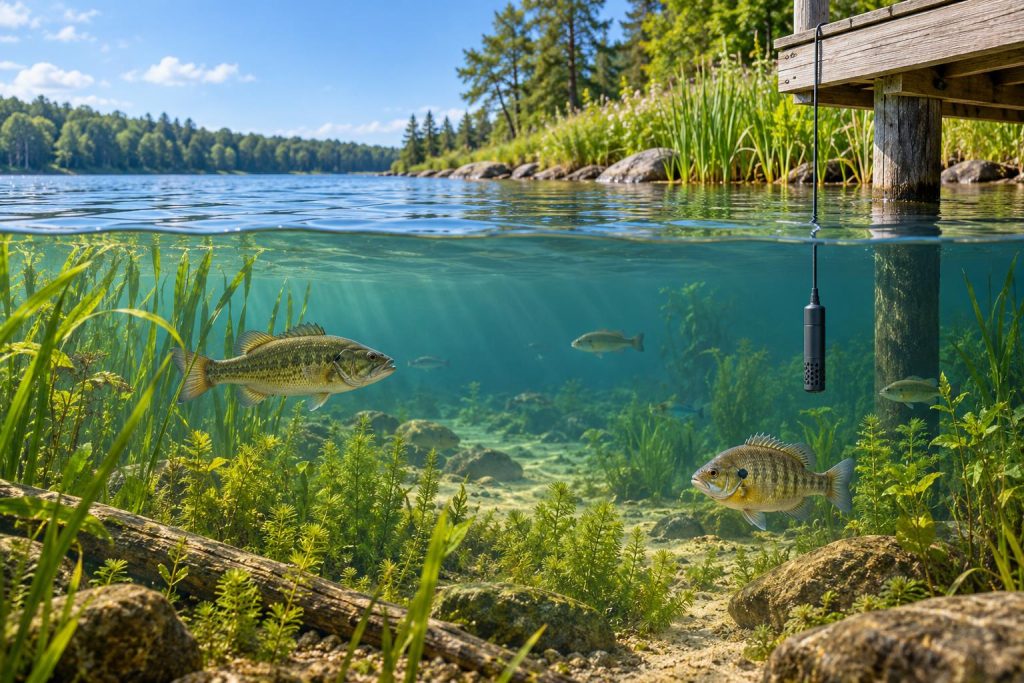
Featured image: AI-generated editorial illustration. It does not show an actual treatment site or establish that water is safe for swimming.
What plant are we trying to manage?
Start with a name you can support. A floating green layer, a rooted leafy stem, and stringy algae can look similar from a distance. A treatment chosen for one problem may not fit another. Even within a single patch, several kinds of growth may be mixed together.
Take close photos of the leaves, stems, and growth pattern. Record the date and waterbody. Use our lake weed identification guide as a first comparison, then ask for expert confirmation when the answer affects treatment or invasive-species reporting.
Also explain the problem in plain terms. Does the growth block a narrow boat route or cover most of a small pond? Those are different management questions. “Weeds are everywhere” may express your frustration, but a marked photo or simple sketch helps a specialist make a better assessment.
Is this exact product labeled for this use?
Do not rely on the active ingredient alone. The exact product and its directions matter. A product intended for land use is not automatically suitable for a lake because another aquatic product contains a familiar ingredient.
The EPA explains that pesticide labels set legally enforceable use conditions. Ask for the current label for the product being proposed. Keep it with the work plan so you can check the same version when questions arise.
Ask the applicator to point out the allowed site, target plants, restrictions, and conditions that apply to your project. You do not have to pretend to understand every technical term. A clear explanation should connect the label to your actual waterbody and intended use.
What uses of the water need to be considered?
Make a list before you talk about timing. Swimming may be the first use that comes to mind, but it may not be the only one. Include fishing, irrigation, livestock watering, and any other use that applies. Tell the specialist about nearby users rather than assuming they already know.
University of Florida Extension’s aquatic plant guide identifies water-use restrictions as a key part of herbicide selection. Treat each use as a separate question. Permission for one activity does not answer every other water-use question.
A practical note might read: “We swim by the dock, and a pump supplies our garden.” That gives the specialist two clear points to check. If you do not know where an intake is, find that out before treatment planning goes further.
When can people swim after treatment?
There is no single waiting time that fits every aquatic herbicide and every site. The answer depends on the exact label and any additional requirements attached to the work. Do not borrow a time from a different product, an old sign, or an online comment.
Ask for written instructions about swimming and other relevant uses. Include who will tell affected people, where notices will be placed if required, and how you will know that restrictions have ended. If you rent the property or expect guests, make sure the person who communicates with them has the same instructions.
Oklahoma State University Extension explains that approved products may carry different withdrawal periods for water uses. Its broader point is useful: learn the conditions for the specific treatment instead of treating “approved” as a promise that no restrictions apply.
How will the plan account for fish and decaying plants?
A treatment discussion should include what happens after the plants die. Decaying vegetation can use oxygen in the water. That is one reason a plan for a dense plant problem deserves more thought than choosing the strongest-looking product.
Texas Parks and Wildlife’s plant control guidance discusses oxygen concerns and the need to account for treatment conditions. Use that information to ask your specialist how the proposed plan handles plant density, weather, and the waterbody’s needs.
Do not turn a general article into a do-it-yourself dose or treatment schedule. Ask who will assess the conditions, what signs require attention, and whom you should contact if the site looks wrong afterward. Clear responsibilities are more useful than a vague promise that the product is “fish safe.”
What permits and local approvals apply?
Product directions and local approvals answer different questions. A suitable product does not automatically authorize work in every waterbody. Rules may cover the method, area, invasive species, or who is allowed to apply the treatment.
For Minnesota projects, the DNR aquatic plant management program lists chemical treatment among activities requiring a permit. Ask the agency or qualified contractor how the current rules apply to your specific site. In other states, contact the responsible local authority.
Keep the approval with the label and site sketch. Ask what happens if the plan changes, such as using a different product or treating a different area. Resolve those questions before the work date. It is easier to adjust a written plan than to sort out a misunderstanding after treatment.
Could a small manual project meet the same goal?
If your need is a narrow access route, compare that goal with a focused manual approach. Hand tools may let you collect material from a defined area without applying herbicide. Whether that approach fits still depends on the plant, depth, footing, and local rules.
Our lake weed removal planning guide helps you define the job before choosing equipment. The rake buying guide then explains how to compare reach and retrieval. Neither guide assumes that one tool can solve every kind of aquatic growth.
Manual work has its own limits. You need to control the tool, handle the load, and collect debris. Fragment spread may matter for some plants. If the work is too deep, too large, or too uncertain, a professional assessment may be the better next step.
What does a useful treatment proposal include?
A proposal should make the work understandable to someone who was not at the first site visit. Ask for enough detail to see what is being done, where it will happen, and how you will evaluate the result.
- The identified plant and the reason management is proposed
- A marked area or map of the planned work
- The exact product and current label, if a herbicide is used
- Who is responsible for approvals and application
- Restrictions for each relevant use of the water
- How affected people will be informed
- The follow-up visit or observation plan
- What counts as success and what is outside the scope
Notice that the list starts with the plant and goal rather than the price. Once the scope is clear, quotes are easier to compare. A low figure may leave out follow-up, while another quote includes it. Ask each provider to explain the same set of points.
What will we check after the work?
Decide what success looks like before treatment. For a dock access problem, it might mean that the existing route is usable under the approved plan. That is different from expecting every plant in sight to disappear.
Take photos from fixed points and record the date. At follow-up, describe what changed and what did not. Keep observations separate from guesses about the cause. A floating mat arriving from another area is different from growth remaining inside the treated patch.
Ask the specialist what response time to expect for the chosen method and when another assessment is appropriate. Do not add more product or repeat work based only on impatience. Follow the approved plan and label, and raise concerns with the person responsible for the treatment.
Use this script for your first conversation
You can make the call simpler by preparing a short introduction: “I have a plant patch near my dock on this lake. Here are photos and a marked area. We use the water for these activities. I want to understand the plant, legal options, and follow-up work before choosing a method.”
Then ask the specialist to explain any unclear term in everyday language. For example, if a proposal names a treatment type, ask what that means for the plants you see and the use you want to restore. Good questions are part of planning, not a sign that you should already know the answer.
Write down the person’s name, agency or business, date, and next step. If the answer depends on a better photo or a site visit, record that as an open item. Do not fill the gap with a guess simply to keep the project moving.
Common questions about lake weed herbicides
Are all aquatic herbicides dangerous for swimming?
A blanket claim is not a useful way to judge a specific treatment. Read the current label and applicable restrictions for the proposed product and site. Ask the responsible specialist to explain when swimming is allowed and how that information will reach everyone who uses the area.
Does “natural” mean a product belongs in a lake?
No descriptive word replaces the product’s permitted uses and directions. Check the exact formulation and label. Do not improvise with household products or assume that a land-use treatment is suitable for water.
Can I choose a manual tool because I prefer not to apply herbicide?
Yes, that preference can be part of the discussion. First confirm that manual removal fits the plant, site, and rules. A smaller access goal may make the work more manageable, but it does not remove the need for careful planning.
Compare a manual option for your shoreline
Prefer a hands-on approach for a suitable small access area? Explore the T-Weeder Tool and order yours for a planned manual removal project. Check the product details against your site and the method your local rules allow.
For more reading, visit our Aquatic Herbicides and Alternatives guides. Keep your plant photos, water-use list, label, and approval together. Those records help you make a clear choice and explain it to everyone who uses the shoreline.
For treatment notices and water-use questions, read the guide to swimming restrictions after lake weed treatment.
For a small access project, compare manual removal with herbicides around a swim area. If the choice still needs site advice, use the aquatic plant specialist meeting guide to prepare photos, questions, and a clear work goal.