A “lake weed killer safe for fish” claim needs context. Check the product, fish species, water chemistry, plant decay, and oxygen plan before treating a lake.
Choosing a weed treatment takes more than knowing which plant it can kill. Fish depend on the water and the habitat around them. Ask what may change during the work and as plants die back. A short fish-safe claim cannot cover all those questions. Start with the lake’s conditions and the exact product.
There are two issues to discuss. The product may have direct effects on fish. Dying plants can also change the water around them. A well-chosen aquatic herbicide—a weed killer labeled for use in water—can be part of a sound plan. Its fit depends on how, where, and when it is used.
Define the plant problem and the fish you want to protect
Draw a map and state why you want to control the plants. Is a narrow dock route blocked? Has an invasive plant spread across the lake? Is the problem dense algae, or native plants growing in the way? These are different jobs. They may need different methods even when owners search for the same product.
Take clear plant photos before choosing a product. Our lake weed identification guide shows what to record. Tell the adviser which fish live in the lake, including any you stocked. Mention past fish deaths or signs of stress. A small private pond and a lake linked to other waters may need quite different plans.
List other water uses as well. Does anyone swim, water a garden, give the water to livestock, or draw drinking water? Ask which uses affect the choice. Tell the adviser early, before an order is placed. A detail raised on treatment day may require a change that could have been planned for much sooner.
Ask about direct effects of the exact product
The active ingredient is the part that controls the plant. Its name is not the whole product description. UF/IFAS guidance includes effects on fish, other living things, water uses, and product additives among the factors to check. Get the full product name and label. Ask why that exact product suits your site.
Do not replace an aquatic product with a lawn product that has the same familiar ingredient. Other ingredients and use directions may differ. Ask the person doing the work to check the actual container’s labeled site, method, and limits. Keep a copy of that label so later questions refer to the same product and use.
When a seller says fish safe, ask what supports the claim. Which fish and water conditions does it cover? Which label rules must be followed? Ask how those conditions compare with your lake. A useful answer has limits you can check. It does not promise the same result for every fish in every body of water.
Understand why oxygen matters after plants die
Fish use oxygen dissolved in water. The breakdown of dead plants uses that oxygen too. Penn State Extension’s pond guide explains that warm water holds less oxygen. Decay after plants or algae die can leave too little for fish. This effect is separate from the product’s direct effects. A sales claim may overlook it.
The amount of growth matters. Killing a small patch and killing a thick bed across much of a pond are different jobs. Ask how much plant material is expected to die. Then ask how the plan accounts for its decay. You do not have to calculate the oxygen demand yourself to raise that question.
Describe the conditions now, not just a normal summer at the lake. Mention heat, dense growth, low water, and past oxygen problems. Share when you first noticed a change. A plan made weeks ago may need review. The date on the calendar alone does not tell the adviser what the fish are facing today.
Take water chemistry and fish sensitivity seriously
Copper shows why broad claims need care. NPIC’s copper sulfate fact sheet describes risks to aquatic life. Trout, koi, and young fish of several species can be especially sensitive. The sheet also covers oxygen loss as plants decay. This is a copper example. It does not tell you the risk of every other aquatic herbicide.
Oklahoma State Extension describes water factors that affect copper sulfate use. These include temperature, pH, alkalinity, and hardness. pH measures how acidic or basic water is. Alkalinity relates to its ability to resist acid changes; hardness relates to dissolved minerals. Ask which tests matter for the proposed product and who will read the results.
Keep each test result with its date, place, and units. Ask what the reading means for this product and site. A number without units can be misread. Mark the sample location on your map so later results can be compared fairly. Clear-looking water is not a substitute for a test that the plan calls for.
Discuss treatment size without adopting a universal recipe
Treating in stages may help some projects, but it is not a rule for every pond. The Southern Regional Aquaculture Center’s guide warns that partial treatment can still pose risks. Some herbicides do not suit partial-pond use. Follow the product directions and site plan. Do not choose a fraction of the pond from a general article.
Have the crew mark the proposed area and schedule on your map. Ask what would delay the work. What must be checked before the next stage? How do connected waters and existing plants affect the plan? Record the answers. This makes the schedule easier to review if water levels or other conditions change.
Do not repeat treatment on your own because results seem slow. Ask when this product should show a response and how the crew will assess it. Some changes take time. More product, a larger area, or an earlier return can change the job. Have the plan reviewed before adding work that it did not cover.
Set up observation and a response contact
Name the person who will check the site after treatment. Agree on where they will look, what they will record, and whom they will call about changes. Ask whether the checks need special equipment or training. If they do, include that service in the job. Do not leave it as an unspoken task for the owner.
Keep a dated log of weather, plant changes, fish behavior, and any readings taken. Photos from the same place can help show what changed. Note what was normal as well as what looked unusual. Keep the treatment record nearby. A clear sequence of events helps an adviser much more than a vague memory of last week.
If the plan includes aeration, ask who checks and runs the system. Aeration means adding or helping mix oxygen into the water. A device still needs to suit the site and work as intended. Agree on a response in advance. Do not improvise electrical work or a new lake treatment when a problem arises.
Report fish distress without guessing the cause
Fish gasping at the surface can signal low oxygen. Fish deaths can have other causes too. Minnesota DNR’s fish-death guidance discusses stress, disease, and pollution, and explains how to report an event. Use the agency for your own state or lake. If treatment took place, tell the applicator what you are seeing.
Give the location and the time you first noticed the problem. Estimate how many fish are affected and which kinds, if you know. Take photos and share the treatment record. Describe recent weather and water changes. Report what you saw without guessing the cause. Ask the agency what evidence it needs and how to collect it.
Do not add a new treatment to solve an unknown problem. Follow the agency’s advice about entering the area, handling fish, or taking samples. A fish death also does not prove that all future control methods are unsuitable. It calls for a careful review of what happened. Use that evidence to revise the plan.
Compare a smaller manual project when it fits
Sometimes the real goal is a narrow route for swimming or boats. If hand removal is allowed and practical, compare that small job with the proposed treatment. Include collecting cut or pulled plants and making return visits. Some plants can spread from loose pieces. Ask how the work will contain and remove those pieces.
Our lake weed removal guide helps define those tasks. If the plant and site suit a hand tool, compare the product details and order a T-Weeder tool for your planned manual project. Choose the tool for the work it can perform, and keep the cleared area focused on the approved goal.
Hand removal can also change habitat or disturb the bottom. Plan it with care and check the result. Useful plants may be left around a clear access route. That can be a better goal than removing every plant along the shore. Ask the local plant program where the work should stop and what should remain.
Ask for an explanation you can keep
Before agreeing to treatment, ask for a short written plan. It should name the plant, product, approved area, and key fish and water conditions. Include the expected result, who checks it, and who responds to problems. Add permit and water-use rules. These facts can fit in a brief record that everyone involved can understand.
The lake weed herbicide guide covers more product and site questions. Browse Aquatic Herbicides and Alternatives for related topics. Keep the fish plan with your other records and review it when conditions change. A reassuring phrase is only a starting point. The useful answer explains what will be done and the limits that apply.
For more on the fish-health questions, read how a large plant die-off can reduce oxygen. The pond aeration guide then explains why oxygen goals need their own measurements and should stay separate from weed-access goals.
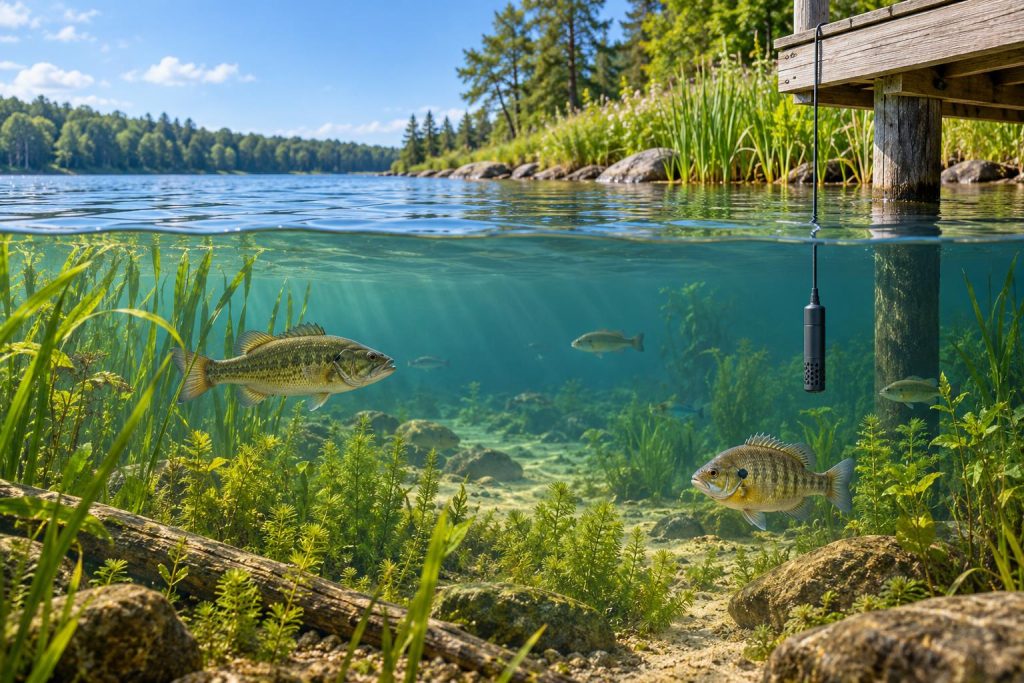
Featured image: AI-generated educational lake cutaway with fish and aquatic plants. It illustrates habitat and observation, not a tested herbicide result or a guarantee of fish safety.