Build a lake weed maintenance budget around the access you need. Include tools, cleanup, repeat work, permits, and time so the full season is easier to plan.
Start with the result you need
Budgeting for a season starts with a plain question: what needs to work at your shore? You may want to use the ladder, carry a kayak through an existing gap, or keep a permitted boat approach open. Each goal has a different footprint. A budget for one small route cannot be stretched into a promise to clear the whole waterfront.
Write the goal beside a simple sketch. Mark the area where work is proposed and the plants you plan to leave. Note the places you cannot reach safely. Add the name of the plant if it has been confirmed. If the name is uncertain, put identification help on the list before buying a control product.
Give each proposed expense a job. A rake may support a suitable manual access task. A survey may explain where invasive plants occur. Collection supplies may help get removed material to its approved destination. If you cannot explain how a purchase helps the goal, leave it in the questions column for now.
Use last season as evidence
Pull together receipts, photos, work dates, and any notes about plant growth. Record the amount paid and what the charge covered. A contractor bill marked ‘lake service’ is hard to use next year unless you know the work area, method, collection plan, and follow-up terms.
Look for what changed between visits. Did rooted plants return in the same place? Did wind deliver loose material from elsewhere? Did the water level change your reach? Those details can explain why one job cost more without proving that the method failed.
The lake weed maintenance log guide gives you a simple way to keep those facts together. If this is your first season, call your plan a starting estimate. Use the first permitted task to learn the handling time and cleanup needs, then revise the plan.
Separate purchases from repeat expenses
Make two lists. The first holds items you expect to keep: a suitable tool, storage rack, or reusable collection container. The second holds costs that may recur: inspections, service visits, replacement parts, transport, disposal, and any applicable permit renewal. Put cleaning and storage care on the list too.
A one-time purchase does not create a one-time job. Penn State Extension’s pond management guide explains that mechanical plant work may need repeating as growth returns. Its pond examples do not establish a work schedule for every public lake, but they show why one initial clearing is a poor basis for a whole-season promise.
Keep the cash budget separate from a long-term comparison. If you buy a tool this year, the full purchase price is money you need this year. You can also compare its possible use over several seasons, but label any assumed lifespan clearly. An estimate that spreads a purchase across years does not reduce the amount due at checkout.
Price the full work cycle
A useful estimate covers getting ready, doing the allowed work, collecting material, carrying it out, cleaning equipment, and storing it. The pulling or cutting stage may be only part of the effort. A long carry up a slope can matter more than a few extra feet of tool reach.
Ask where the vegetation will go before assigning a disposal cost. Confirm the receiving site’s acceptance and any transport requirements. A nearby yard-waste location may not accept wet aquatic plants or invasive material. Do not build a budget around a free disposal option that has not agreed to receive the load.
Our lake weed removal cost guide breaks down a single project. For a seasonal budget, repeat that full cycle for each planned visit. Keep a note of which visits are confirmed and which are only possible.
Leave room for checks and approvals
Before putting work on a calendar, confirm the local approval process. Some tasks need a permit or site review, while limited activities may meet specific exceptions. A neighbor’s approval does not cover your property. The type of plant and the proposed method can change the answer.
Fees are local and can vary by work type. The Minnesota DNR permit page, checked on October 27, 2026, lists different fee categories and says to wait for the program’s invoice before paying. Use that page for a Minnesota project, and use your own agency’s current schedule elsewhere. A permit fee is separate from a contractor’s price.
For an invasive-plant project, include any required survey or follow-up in the discussion. Minnesota DNR’s invasive plant guidance explains the role of seasonal surveys in defining treatment areas and checking results. It also describes established invasions as a long-term management challenge. Do not assume that one payment buys permanent eradication.
Make a small worksheet you can update
Use columns for the item, why it is needed, quoted price, expected timing, and actual cost. Add a final column for what is still unknown. A blank price should stay marked ‘awaiting quote’ rather than quietly becoming zero.
Here is an invented example to show the arithmetic. Suppose your confirmed startup purchases total $240. Four planned cleanup visits need $30 each in direct supplies and transport, or $120. Add an estimated $40 for replacement parts and a $100 reserve. The planned cash total is $500. These figures are made up, not local market prices, a T-Weeder price, or a recommendation for how often to work.
Now test one change. If two more equivalent visits become necessary, the estimate rises by $60 to $560 before any extra labor cost. That simple comparison helps you see what drives the budget. It does not show that six visits will be needed or that more visits are allowed.
Count your time without hiding it in the total
Keep a separate estimate of your hours. Include the time needed to seek advice, collect quotes, prepare tools, carry debris, and clean up. A job can require little cash and still take more weekends than you want to give it.
You do not need to invent an hourly wage for every family member. A plain note such as ‘two adults, one morning, including cleanup’ may be more useful. If you assign a value to your time for comparison, label it as your chosen value and keep it apart from money you will actually pay.
Be honest about the work you can do. Do not reduce the budget by assuming you will enter deep water, manage a heavy load, or work around powered equipment without suitable help. A smaller approved project or a qualified service may fit the available time and access better.
Compare service plans on the same basis
Ask each provider to price the same area and goal. Request a clear description of setup, plant work, collection, disposal, permits, and follow-up. A low quote may cover fewer steps, while a higher one may include work you do not need.
Find out what happens when conditions change. Ask how weather delays are handled, what counts as a return visit, and whether extra work needs your written approval. Check the cancellation and payment terms before treating a proposed date as a firm commitment.
For shared projects, write down who pays each part and who can approve a change. Keep a lake association’s larger management work separate from a household’s access task. A grant application is not confirmed income. Use awarded funding only within its stated conditions, and keep an unfunded version of the plan available.
Buy for the task you can maintain
A tool purchase should fit the identified plants, allowed method, reach, handling needs, and storage space. Include delivery and any required accessories in the comparison. Ask about replacement parts and care instructions before deciding that the lowest sticker price is the lowest seasonal cost.
If your approved plan calls for suitable manual shoreline work, view the T-Weeder Tool and order one for your project. Check the current product details and purchase terms against your site. Plan collection and equipment cleaning alongside the tool.
Keep a clear limit on what the purchase is expected to do. A manual tool does not identify an unknown plant, establish water safety, or remove the need for approvals. It may be one part of a plan that also includes observation, selective professional help, and leaving useful plants in place.
Set aside money for specific uncertainties
A reserve is more useful when it has a reason. List the questions that could change spending: an uncertain disposal charge, a worn part, an extra approved visit, or a professional identification check. Estimate what those items could add once you have a reliable quote.
Do not apply a random percentage and call every risk covered. If the largest unknown is whether the site suits manual work at all, resolve that question before buying equipment. A small reserve cannot fix a plan built around the wrong method.
Keep optional improvements on a separate list. More storage, a larger tool, or a wider project can wait while you learn what the necessary work requires. If the estimate exceeds your limit, reduce the scope or defer optional work instead of skipping collection, cleaning, or required review.
Include prevention without promising instant savings
Some useful work happens on land. The EPA’s yard-care guidance recommends avoiding unnecessary fertilizer and keeping clippings and leaves from washing into waterways. Review those habits with the people who maintain your property.
Allow time or money for practical changes that suit the site, such as better yard-waste storage or advice about a planted buffer. Do not claim these steps will remove an existing plant bed by a certain date. Their value does not depend on an immediate drop in your weed-removal bill.
The runoff and lake weed guide can help you start that review. Treat major drainage or shoreline changes as separate projects with their own advice, estimates, and approval checks.
Close the season with a useful comparison
At the end of the season, place the estimate beside the actual totals. Explain large differences in a short note. Separate a price increase from a larger work area, an extra visit, or a one-time equipment purchase.
Then compare the result with the original goal. Was the agreed access usable when needed? How much time did the work take? Which parts were difficult to maintain? A lower bill is not a success if the task remained unfinished, and a larger bill may have paid for equipment you can use again.
Carry forward the facts that will help next year: confirmed plant identity, approved work limits, itemized costs, useful photos, and the questions still open. Browse the Costs, Services and Equipment guides as those questions become clearer. A budget works best as a record you can improve, not a promise that the lake will behave exactly as planned.
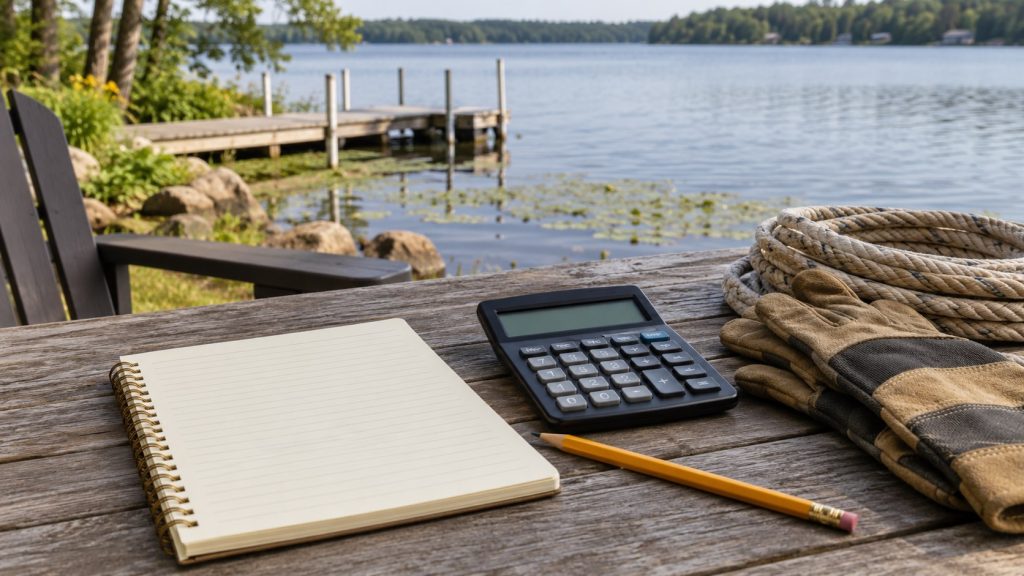
Image note: The featured image is an AI-generated budgeting illustration. It does not show actual prices, quotes, or project results.