Add runoff checks to lake weed prevention. Trace water paths, review your lawn care, protect shoreline plants, and ask which nutrient sources need attention.
Understanding where rainwater goes can change how you care for a lakefront property. The visible plant patch may draw your eye, but the land above it can also matter. Water may carry soil, leaves, pet waste, or fertilizer from a yard toward a drain or the lake.
This does not mean one yard caused all the lake’s growth. Aquatic plants are natural, and several conditions affect them. A runoff check helps you find practical steps on your property. It also gives a local expert useful facts when a larger water-quality question needs review.
Keep nutrients, algae, and rooted plants distinct
Nutrients support growth, but more nutrients do not always mean more visible rooted plants. Algae can cloud the water and reduce the light available below the surface. Plant growth also depends on depth, bottom conditions, and the species present.
The Minnesota DNR’s regional lake guide explains that added phosphorus can increase algae and reduce water clarity. In some lakes, the murkier water can limit submerged plants. This is why a bare-looking lake is not automatically healthier than a plant-rich one.
Start by describing the issue. Is there a leafy patch, loose floating material, cloudy green water, or soil washing off the bank? Those observations lead to different questions. Avoid using “weeds” for every form of growth.
Our lake weed growth-form guide can help sort the visible material. Keep the plant question and the runoff question connected without treating them as the same problem.
Trace a water path from a safe place
During a light rain, look from a sheltered, stable spot. Where does roof water go? Does water run across a driveway, down a path, or through bare soil? Do leaves collect near a drain? Make a simple sketch of the routes you can see.
Do not enter fast water, a ditch, or an unstable bank to complete the map. A dry-weather walk can also show clues. Look for small deposits of soil, worn channels, leaf piles, and muddy streaks. Mark them as clues rather than proof of a full runoff pattern.
Take photos with the date and direction of view. Include the start of a route and where it seems to go. If the path disappears underground or crosses another property, label that part unknown.
Keep the task focused on observation. Do not dig a new channel, block a drain, or redirect water toward a neighbor. Use the sketch to ask what change would fit the site and local rules.
Review fertilizer use before adding more
Look at the products used on the property and the reason for each application. Ask whether the lawn or garden needs the added nutrients. A soil test and local Extension advice can help answer that question for the plants you are growing.
The EPA’s yard-care guidance recommends using fertilizer only when needed and at the advised amount. It also warns against applying it before rain and against overwatering. These habits reduce the chance that useful nutrients leave the yard in runoff.
Keep fertilizer off hard surfaces where it can wash away. Follow the product directions and local restrictions. If you use a lawn service, ask how it sets rates, checks weather, and keeps material away from water routes.
Record the change you make and the reason. Do not promise that one skipped application will clear a lake. The useful outcome is less avoidable input from your property, combined with a wider plan where needed.
Handle leaves and clippings where they belong
Do not use the lake or a storm drain as a disposal route for yard waste. Follow local collection and composting guidance. Keep stored leaves and clippings where rain or wind will not carry the pile into the water.
The Minnesota Pollution Control Agency’s leaf guidance distinguishes natural leaf fall from larger amounts carried through storm sewers. Leaves on streets and other hard surfaces can send nutrients to lakes and rivers when runoff moves them.
That distinction matters near a natural shore. It is not a reason to remove every fallen leaf from habitat or strip the bank of plants. Focus on collected yard waste and direct routes from hard surfaces.
Check the area after yard work. Did the mower throw clippings onto a path? Did a leaf pile end up beside a drain? A brief cleanup can prevent a routine maintenance job from adding material to the next rainstorm’s flow.
Include pet waste and septic care in the review
Pick up pet waste and use the proper disposal route. Do not leave it in the yard on the assumption that rain will take care of it. Rain can move the material somewhere else, including toward water.
If the property uses a septic system, keep its records and follow local inspection and maintenance guidance. Ask a qualified service provider about the system’s needs. Do not judge its condition from the appearance of the lake.
The EPA’s septic and surface-water guide explains that a poorly functioning system can affect nearby waters. The route depends on site conditions, including groundwater flow. This is a reason for proper system care, not proof that a particular plant patch came from a septic leak.
If you see sewage surfacing or another sign of failure, contact the appropriate professional and local authority. Keep that issue separate from weed removal. A shoreline tool does not repair a wastewater problem.
Protect useful plants along the shore
A strip of plants along the water can help slow runoff and protect soil. Removing that strip may make a tidier-looking yard while weakening a useful part of the shore. Look at existing plants before planning more lawn or a wider path.
The Minnesota DNR’s buffer and lakescaping guide describes how native shoreline vegetation can intercept nutrients, reduce runoff and erosion, and support habitat. The best design for one property may differ from the next.
Ask a local conservation office which plants and layout fit your soil, slope, sun, and water levels. Include the access you need. A narrow, well-placed route may meet that need while leaving more of the shore intact.
Do not plant aquatic species, place fill, or reshape the bank without checking the rules. A water-friendly goal still needs a suitable design. Keep plans for land plants, aquatic plants, and structures clear when asking for guidance.
Treat bare soil and erosion as a design question
Bare soil beside a steep path or downspout deserves attention. Record where it is and whether water crosses it during rain. Include the route people use, since repeated foot traffic may be part of the problem.
Avoid covering every concern with loose material or digging a quick trench. The wrong change can send water faster toward the lake or move the problem to another spot. Ask for a plan that considers the whole route from source to shore.
A useful request is specific: “Water leaves this downspout, crosses this path, and carries soil toward the bank.” Add photos and approximate distances. That gives a conservation or stormwater specialist more to work with than “the shoreline is muddy.”
If a contractor proposes a repair, ask where the water will go afterward and how the soil will stay in place while plants establish. Check who handles any needed approvals and what maintenance the finished work requires.
Understand why lake response can take time
Reducing runoff is useful even when the lake does not change at once. A lake receives water and nutrients from more than one property. Material already stored in the lake can also affect conditions. A single household change cannot control every part of that system.
The Minnesota Pollution Control Agency’s lake-management guidance explains that phosphorus can come from outside the lake or from nutrient-rich bottom sediments. It notes that recovery can be slow even after outside sources are reduced.
Use this context to set fair expectations. Track whether your yard change keeps soil or leaves out of a runoff route. Do not use next week’s weed height as the only measure of success.
If the lake has a management plan, ask which sources it identifies and what work is underway. Your household steps can support that effort. They should not be presented as a substitute for lake-wide assessment where one is needed.
Choose one change and keep a simple record
Rank possible changes by what you can control and maintain. A small habit change may be ready now. A new planting area may need design help. A drainage repair may require a larger plan and approval.
Write the action, who will do it, and when you will check it. Examples include keeping clippings off pavement or asking for a buffer planting plan. Avoid vague goals such as “fix runoff” that do not name a next step.
Take the same view after later rain when it is safe. Record whether the path still carries visible soil or leaves. Keep the observation separate from any claim about nutrient levels. Measuring nutrients requires the right sampling plan and methods.
Our spring observation guide offers a useful way to date and organize photos. The same habits work for a yard-to-lake water path.
Keep access care and runoff work in one sensible plan
You may still need to manage a small access area while improving land practices. Our dock weed-control guide helps define that route. Keep it narrow enough to meet the actual need and check the plant and method rules.
If a manual method fits your site, review the T-Weeder Tool and order for a planned shoreline project. Use it only within a suitable, allowed plan. A hand tool can serve a removal task; it does not identify nutrient sources or repair runoff.
Visit the Seasonal Care and Water Quality guides for related care. Start with the water paths you can observe, make one sound change, and keep the larger lake questions tied to evidence.
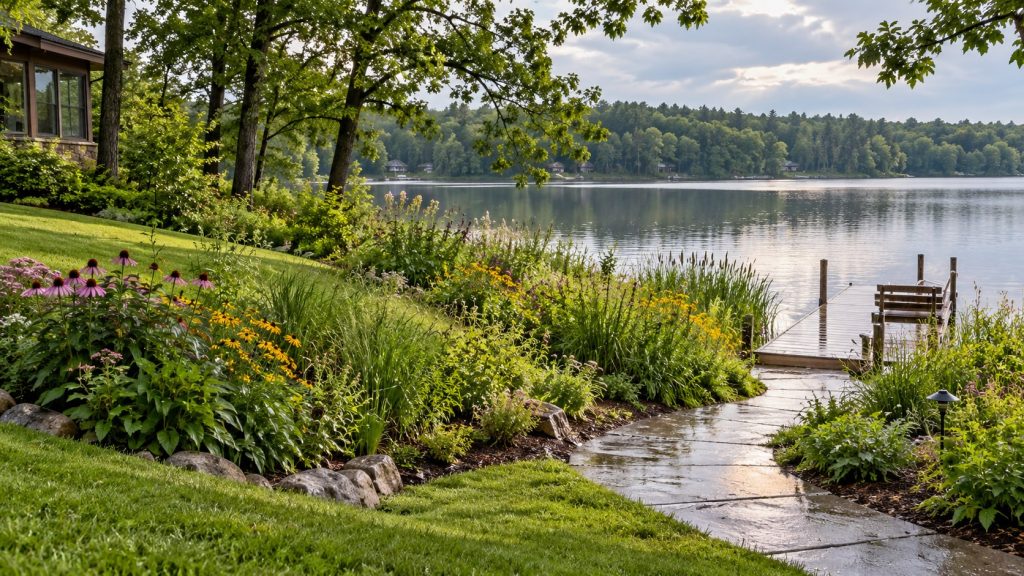
Image note: The featured image is an AI-generated shoreline illustration. It is not a measured runoff study, pollutant-removal result, or site-specific planting design.