Choosing a lake weed killer or hand tool for a small swim area? Compare plant fit, cleanup, timing, permits, and repeat work before you settle on your plan.
Before choosing a method, describe a good swim day at your shore. You may want room beside the ladder, a short path from the bank, or a place to stand. You may not need to change the whole lakefront. A small goal makes the choices easier to compare.
Manual removal and herbicides can both have a role in plant control. Neither is the best choice for every site. The right question is what each method would do to your plants, your water uses, and your weekend workload. Start with that comparison before you buy a tool or a treatment.
Define a small swim area by its use
Draw the route people use to enter and leave the water. Mark the ladder, steps, shallow ledges, drop-offs, and any boat traffic. Then mark the actual plant problem. A few stems brushing a ladder call for a different plan from a dense bed across the whole route.
Write one goal you can check later. For example: keep the approved path to the swim ladder usable. Avoid goals such as remove every weed. They leave no clear end to the work and may encourage clearing well beyond the space you need.
The Minnesota DNR’s plant control guidance notes that a soft, plant-filled shore may not become a sandy swimming beach. Plant work does not change every part of the site. If deep mud or a steep bottom is the main problem, removing plants alone will not solve it.
Find out which plants are in the way
Take close photos and a wider view of the patch. Note whether the plants have roots in the bottom or float freely. Check whether they stand above water, lie on the surface, or stay below it. Those clues help an expert identify them and explain the choices.
A drifting pile may arrive from elsewhere each windy day. A rooted bed may grow back from parts left below the surface. Those are different follow-up jobs. Do not assume the plant nearest the dock caused all the loose material that gathers there.
Ask a local plant specialist or Extension office to confirm uncertain plants before acting. Keep plants you want to preserve on the same sketch. A mixed bed may include native plants alongside the problem species. A plan should explain what stays as well as what is removed.
What manual removal offers
For a small amount of growth near a dock or beach, hand work may be practical. The UF/IFAS lake plant guide describes hand removal as a method that takes labor and often needs repeat work. Its fit depends on the plants, the amount of regrowth, and the level of control you want.
The owner can see each load leave the water. That makes it easier to keep work within a narrow route. It also makes the physical task clear: reach the plants, pull or cut them as allowed, collect the loose pieces, and move the load to a legal disposal spot.
The main limits are access and effort. A tool may reach the top of a plant but not remove all its roots. Deep water, hidden objects, soft footing, and heavy loads can make a modest-looking area hard to manage. Choose a method you can handle from a stable position without stretching or entering unsafe water.
A useful trial is one small, permitted section. Time the whole job, including cleanup and tool care. Do not judge the task only by the first few easy pulls. If the load or reach is too much, stop and review the plan instead of buying a larger tool on impulse.
What an herbicide plan must explain
An aquatic herbicide is a plant-killing product labeled for the water site where it will be used. The UF/IFAS herbicide guide stresses that plant sensitivity is only one part of product choice. Other plants, fish, water uses, and the exact product also matter. A familiar ingredient name alone is not enough.
Ask a qualified applicator to explain why the proposed product fits the confirmed plant. Get the product name, current label, planned area, and method in writing. The plan should also explain what you can expect after the work. Reduced growth is a different promise from complete, lasting removal.
For plants below the surface, some treatments depend on a suitable dose in the water for enough time. Current and mixing can affect that contact. Ask how the small swim area fits the treatment method. Do not assume a tiny patch drawn on a map is simple to treat in open lake water.
An herbicide may reduce the pulling required, but it does not lift dead plants onto shore. Ask about dead material, follow-up visits, and any cleanup you may need. Make sure those jobs appear in the quote. A treatment price that leaves them out is hard to compare with a full manual service.
Compare the time to a usable area
Manual removal can make a visible change as plants are collected. That does not mean the water is ready for swimmers during the work. Put tools and loose lines away, collect debris, and check the route afterward. Mud stirred by the work can also hide objects for a time.
Herbicide timing has several parts: permits, booking, weather, treatment, plant response, and water-use rules. A calendar date for applying a product is not the same as a date for a clear swim route. Ask about each step separately, especially when guests are coming.
Swimming rules vary by exact product and permit. Other uses of the same water may have different limits. Read our guide to swimming restrictions after weed treatment before setting a swim date. Do not use a general wait time from another lake or a different bottle.
If a family event is close, choose an honest backup plan. Another beach may be easier than rushing a project. Avoid making a deadline the reason to skip plant ID, site checks, or required notices. Those steps decide whether the work fits in the first place.
Include debris and fish in the decision
Cut or pulled pieces need a plan before work starts. Some plants can grow from fragments. Texas Parks and Wildlife’s control guidance highlights this concern for plants such as hydrilla. Letting pieces drift away can spread the problem beyond the swim area.
Set up a collection and disposal route that follows local rules. Keep the load where rain and waves cannot wash it back. Ask about rules for carrying invasive plants off the property. The fact that a plant is a nuisance does not remove limits on moving it.
After a treatment, decay can use oxygen that fish need. The amount of plant material and the water conditions affect that concern. Ask the applicator how the plan addresses it. Do not turn general advice to work in stages into your own dose or schedule.
Our fish and aquatic herbicide guide explains why product choice and oxygen are separate questions. A small swim area does not excuse poor planning. At the same time, the existence of an oxygen concern does not mean every well-planned herbicide use will harm fish.
Check rules for both methods
Contact the agency that handles aquatic plants where the lake is located. Ask about the exact plant, work area, tool, and treatment you are considering. Rules may differ for native plants, invasive plants, floating leaves, and plants that stand above water. Shared or protected shorelines may need more review.
Minnesota, for example, requires a permit for aquatic herbicide use and may require one for physical plant control. Its guidance also requires mechanically controlled plants to be taken out of the lake. These are state rules, not a nationwide allowance or ban. Check the rules that apply to your own site.
Do not treat permission for one method as permission for another. If a plan changes from hand pulling to spraying, ask what needs to change in the approval. Keep the final work boundary clear for helpers and contractors. More hands should not quietly turn a small project into a larger one.
Use the same budget for both choices
Compare one full season over the same area. For manual work, count tool cost, labor, collection, disposal, and likely return visits. For herbicide work, count site review, permits, treatment, follow-up, and any extra cleanup. Record what each quote includes so the cheaper number has some meaning.
Your available time matters too. If you visit once a month, a plan built around frequent hand work may not fit. If you enjoy brief upkeep and the growth is light, hiring a treatment crew may add steps you do not need. Neither pattern makes one method best for everyone.
Ask what would trigger a change. It might be a new plant ID, growth outside the planned route, or repeat work beyond what you can handle. Set a review point instead of assuming the first choice must last forever. Keep dated photos so you can see what actually changed.
Consider a combined plan only with clear roles
A specialist may suggest more than one method for the season. That can make sense when each has a clear job. For example, a larger approved treatment plan might be followed by limited hand cleanup where allowed. The order and timing still need review.
Do not add a second method simply because the first has not produced instant results. Extra work could break permit limits, affect a treatment, or remove plants meant to stay. Ask who is responsible for each step and when you should call before changing it.
Read the aquatic herbicide label guide if a product is part of the plan. Keep the current label with the site notes. It gives the rules for that product; a comparison article cannot replace it.
Choose the next practical step
For light, reachable growth, start by checking whether a small manual project is allowed and manageable. For hard-to-identify plants, dense beds, or a site with several water uses, seek advice before buying. Bring your photos and route sketch. They make the conversation more useful than a request to clear all weeds.
If permitted manual removal fits the plants, depth, and work you can handle, compare the T-Weeder Tool and order one for your planned swim-area project. Allow time to collect the plant material and check the route after work. Match the tool to a specific job, not a promise of a permanently bare lakebed.
Finally, remember that plant control is only one part of swimming safety. The CDC’s natural-water swimming guidance advises checking closures and health alerts. A clear-looking path does not prove that water is free of germs or other hazards.
Browse our aquatic herbicides and alternatives guides for the next step in your comparison. Keep the goal small and specific, then choose the method whose full workload and rules fit that goal.
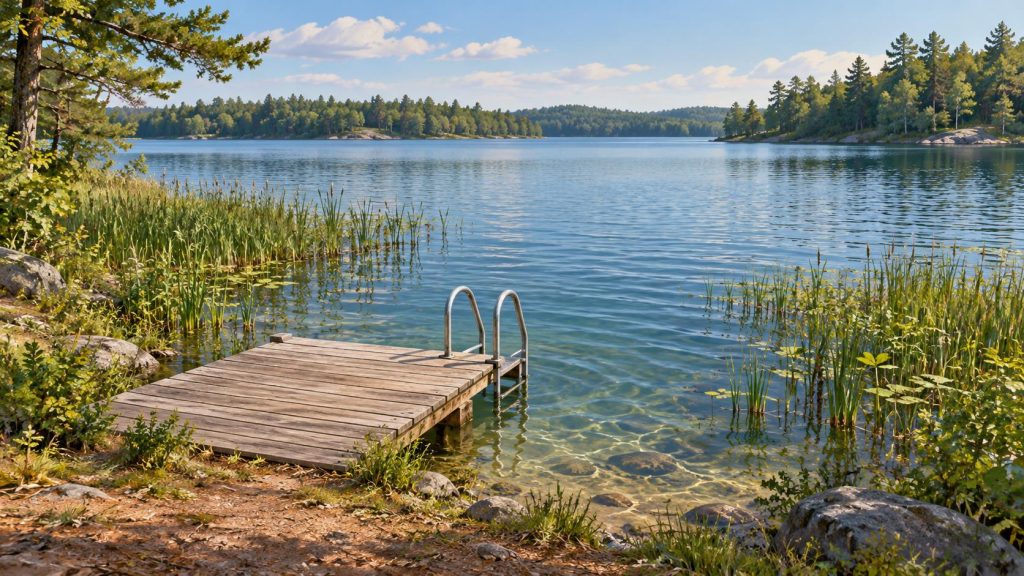
Featured image disclosure: The AI-generated illustration shows a conceptual small swim-entry area with natural plants nearby. It is not a treatment result, a tested product scene, or proof that the water is safe for swimming.