A lake shore weed killer can affect irrigation. Check the exact product, plants you irrigate, intake location, and restart criteria before treatment begins.
Watering can be overlooked when a lake treatment is planned around swimming or boats. Irrigation means watering plants or crops. The person hiring the crew may not run the sprinklers. A gardener may use a lake-fed hose without knowing its source. Find these uses before choosing a treatment date so the people involved can plan together.
Build a plan for the exact product and property. Some uses have few limits. Others need a wait, a test, or another water supply. Do not choose a general waiting time from a search result. Start with the product label, permit terms, and treatment details. Ask what each means for your own watering needs.
Treat irrigation as its own water use
UF/IFAS explains that labels can set separate rules for each water use. These can include watering plants, swimming, and mixing sprays for crops. Permission to do one does not settle the others. Read the irrigation section even if a notice says people may swim or fish. That section answers a different question.
Our swimming-restrictions guide addresses entering the water. For irrigation, ask whether your source can water your particular plants under the stated terms. Keep the two decisions on separate lines in your notes. That helps a family member or caretaker avoid treating permission to swim as permission to turn on a lake-fed hose.
Clear water, no odor, or fewer dead weeds do not prove a watering limit has ended. Those signs do not show whether a label’s terms have been met. Ask the applicator—the person applying the product—what must happen before use can resume. Record that answer. Do not replace it with a guess based on appearance.
Inventory every place the lake water goes
Trace the system from the intake, where water enters, to every outlet. List sprinklers, taps, drip lines, hoses, and shared connections. Check whether the lake also fills a tank. Include occasional uses, such as filling a watering can or adding water to a garden sprayer. They may not appear on the timer’s schedule.
List what each zone or outlet waters. Separate lawns, flower beds, shrubs, vegetables, seedlings, and pots. Note any greenhouse or nursery use. These details help the adviser find the right label section. The phrase yard watering may hide a use with different limits. Walk the site so the list reflects what is actually connected.
Ask family members and the people who maintain the yard to check the list. If a neighbor shares the pump, add their uses too. The person reading a notice may not turn on the hose. Everyone who operates the system needs clear directions for their task. Find any gaps while there is time to fix them.
Tell the applicator what plants you are protecting
Wisconsin DNR’s herbicide FAQ notes that some products can injure garden plants and some can affect grass. It tells users to follow the product’s watering limits. An answer about a lawn therefore should not be extended to every flower or vegetable. Ask about the actual plants and uses on your zone list.
Give plant names when you know them and photos when you do not. Mention new plantings and plants that would be hard to replace. Do not assume all plants respond alike. These details help the adviser identify unclear uses. They also show which questions matter most to you before the treatment plan is final.
Ask which limits are required and which extra steps are advised for this site. Get both explained in writing. If a plant or use does not clearly fit, ask the maker or a qualified specialist. Resolve that gap before watering it with lake water. A general assurance is less useful than an answer tied to the exact use.
Read a product example without borrowing its schedule
The ProcellaCOR EC label gives one example. It separates home and other non-farm watering from farm uses. It also gives specific rules for greenhouses and nurseries. Some situations call for analytical verification, meaning tests to check amounts in the water. A single brief claim about irrigation can miss these important details.
This example is not a product recommendation. Its rules cannot be borrowed for a different product or form. Obtain the label for what was actually used at your lake. Ask the adviser to point to the part that covers your plants and source. That is easier to check than an answer given from memory.
Read a table’s heading and footnotes with the adviser. Ask which treatment facts determine the entry to use. Does the site meet the table’s conditions? If the answer depends on a missing fact, leave the question open. Do not pick the shortest wait because it fits your schedule. Get the missing detail first.
Put the intake on the treatment map
Mark where water enters the system, not just where the pump sits. Include the intake’s depth if known, nearby channels, and shared supply lines. Ask which other details the specialist needs. A clear map helps link the treatment area to your water source. It also helps avoid confusion between two nearby pumps or properties.
Ask whether work elsewhere in the lake affects your source. Water does not stop at a property boundary. A notice may apply beyond the dock next to the treatment boat. Have the adviser explain the affected area on the map. Keep that answer with the notice rather than relying on distance or sight alone.
Do not move an intake to bypass a limit without expert review and any needed approval. The new spot may still be affected or create other problems. If the plan conflicts with essential watering, discuss the options before work starts. These may include a different date, another weed-control method, or a suitable backup source.
Arrange notices that reach the operator
Notice rules vary by place. Michigan EGLE’s FAQ describes advance written notices to affected shore owners and signs on treatment day. Check the process where you live. Find out how dates, products, and water-use rules will reach the person running your system. Sending a notice to the owner may not reach the gardener.
Choose a main contact and a backup. Give the organizer their current phone or email details. Ask how changed dates will be shared, since the first schedule may shift. The person receiving an update should pass it to the landscaper, caretaker, or neighbor using that source. Make this handoff part of the plan.
Put clear instructions at the controller or other control point. Name the affected source, what must stay off, whom to contact, and how restart will be confirmed. A note saying do not water today may become wrong if dates change. Use a notice that stays clear until the listed person confirms the next step.
Plan the pause before turning off a system
Have the owner or qualified irrigation provider work out how to pause the system correctly. Check automatic schedules, remote controls, manual buttons, and separate timers. Tell all users why it is off. Otherwise, someone may restart it when plants look dry. Confirm who can make changes while the pause is in place.
Plan another way to water the plants that need it. Check that the source is suitable and available, and follow local watering rules. Estimate the time to hand-water new beds or pots. If no one can do that work, revise the plan before treatment. A backup that exists only on paper will not help the plants.
Ask about water already in pipes or tanks. The applicator and irrigation provider can explain whether it needs special handling. Do not assume running a sprinkler briefly, diluting a tank, or adding a home treatment removes the problem. Follow advice for the actual situation. Include who will do any required work and where that water may go.
Use backup supplies without creating a plumbing problem
Changing the water source needs sound plumbing. EPA’s cross-connection guide explains how water can flow backward from non-drinking-water pipes into a drinking supply. This is called backflow. The guide includes a case involving a surface-water irrigation line without proper protection. Keep the two supplies protected when arranging a temporary source.
Do not improvise a link between lake pipes and home drinking-water pipes. Ask the water utility or qualified irrigation provider what separation and backflow protection are required. A convenient hose connection can create a new problem. Resolve the plumbing before switching supplies, even when the setup is meant to last only a few days.
Make sure everyone understands the temporary setup. Label which source serves each outlet and state who may change it. Record the plan for other owners and service providers. A later repair visit should not undo the protection by mistake. Keep the record until the normal system is restored through the agreed process.
Define what evidence allows irrigation to restart
Base restart on the actual directions. Check the elapsed time, required test, place, and plant use that apply. Name the person who decides those terms have been met. A neighbor turning on sprinklers does not prove your own use is allowed. Their source, plants, or treatment conditions may differ from yours.
If tests are part of the plan, arrange them before treatment. Ask which substance to measure, where and when to sample, and which lab method to use. Who will read the result? A basic water-quality test may not measure the herbicide or related substances named on the label. Confirm the test answers the required question.
Get a copy of the result and an explanation you can keep. Check the sample’s date and place. The phrase tested fine is not enough to show what was checked. If the result does not settle the question, keep using the agreed backup plan. Ask what further evidence is needed before the lake supply can resume.
Respond carefully if plants later show symptoms
If plants decline after watering, investigate rather than assuming the cause. NC State Extension’s herbicide-injury guide warns that other problems can look like herbicide damage. The plant types, pattern, treatment history, and other stresses all matter. The timing is a clue to record. By itself, it does not prove which factor caused the change.
Write down which zones were watered, dates, source, and when symptoms appeared. Photograph affected plants and nearby healthy ones. Save the notice and product details. Share the record with Extension or a plant diagnostic service, which helps identify plant problems. Follow its advice on samples. Good records give the reviewer more than a single damaged leaf.
If herbicide exposure is a concern, contact the applicator and relevant agency promptly. Ask what to do next and what evidence to keep. Do not add products as a guessed fix or discard useful samples before getting advice. The goal is to find the cause and choose a sound response based on the facts.
Include irrigation in the next management decision
Include watering needs when comparing weed-control methods. The pellets-versus-liquid guide explains why the exact product and label matter. For a small, permitted hand-work project, the DIY removal guide helps assess the task. Compare the complete work and water-use effects rather than assuming one product form settles the irrigation question.
When the plants, reach, and handling demands fit a hand tool, order a T-Weeder tool for your planned manual project. Include collection, disposal, and repeat visits in the decision. Manual work at your dock does not cancel restrictions from treatments elsewhere that affect your irrigation source.
Keep the intake map, zone list, notices, and restart record for next season. Review them when the planting or system changes. Browse Aquatic Herbicides and Alternatives for related questions. A clear plan lets the weed crew and the people caring for the yard work from the same facts, including when watering needs to pause.
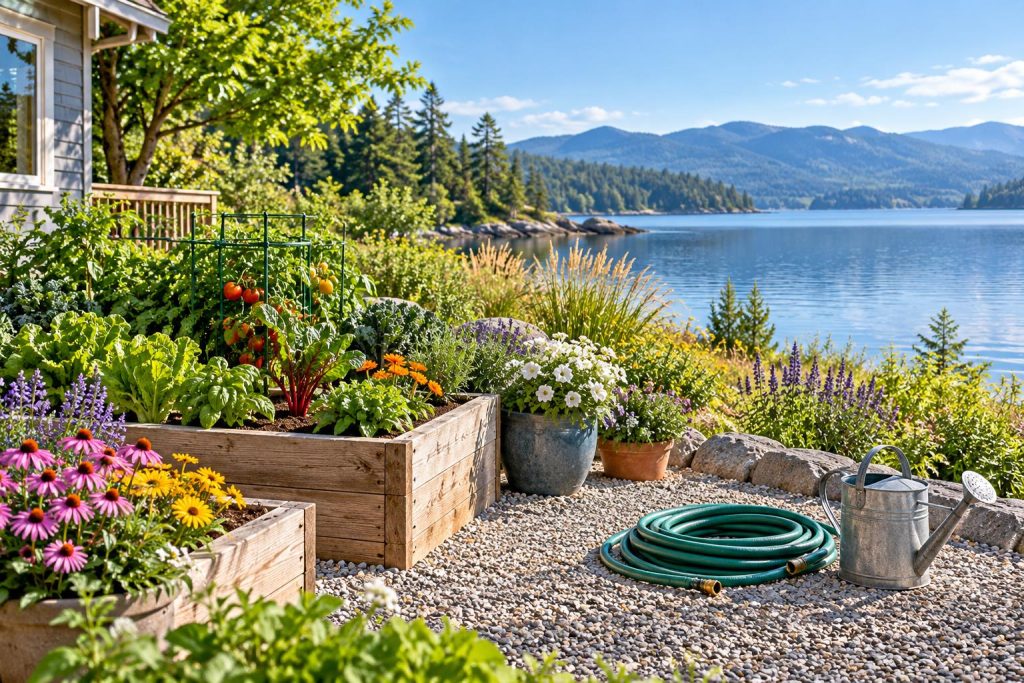
Featured image: AI-generated conceptual illustration of a lakeside garden and inactive watering equipment. It is not a real property, treatment result, or diagram for connecting irrigation plumbing.